The Diamond Notch: Halford Mackinder and the 1899 First Ascent of Mount Kenya
The Unforgiving Spire of Kirinyaga...
Mountain Safety & Conditions Disclaimer: High-altitude climbing, glacial travel, and technical ascents entail severe objective risks including avalanches, serac collapses, rapid weather collapse, and altitude illness. Historical route descriptions and summit claims on Mountanity reflect documented archival sources and must not be used as live operational safety assessments. Local regulations, permits, and physical glacial topography change continuously.
Peer Review: Senior Editorial Board & Historical Reviewers • Editorial Standards
The Diamond Notch: Halford Mackinder and the 1899 First Ascent of Mount Kenya
The Unforgiving Spire of Kirinyaga
While Kilimanjaro is a colossal volcanic dome accessible by determined walking, Mount Kenya (Kirinyaga, 5,199 m) is an entirely different beast: an ancient, eroded volcanic plug whose summit spires—Batian and Nelion—drop in thousand-foot sheer cliffs of rotten syenite and phonolite rock, armored with steep hanging glaciers. Native Kikuyu tradition regarded it as the sacred earthly dwelling of Ngai, the Creator.
For fifty years after German missionary Ludwig Krapf first sighted its glittering peaks in 1849, Mount Kenya repelled every explorer. Count Sámuel Teleki and Ludwig von Höhnel reached 4,350 metres in 1887 before altitude sickness and vertical rock forced their retreat.
In 1899, Sir Halford John Mackinder, Reader in Geography at the University of Oxford and founding father of modern geopolitics, resolved to conquer the mountain. Understanding that African savannah exploration had to be combined with cutting-edge Alpine technical climbing, Mackinder recruited two of the most celebrated mountain guides from Courmayeur, Italy: César Ollier and Josef Brocherel.
“The cliffs of Batian rose like an impregnable medieval citadel, dark phonolite walls plastered with rime ice, defying human feet.” — Sir Halford Mackinder, The Geographical Journal, 1900
The March through Bamboo and Smallpox
Mackinder’s expedition left Nairobi in July 1899 with 170 porters. The approach was an epic of equatorial hardship: torrential rains turned trails into swamps, porters suffered from a devastating outbreak of smallpox, and local tribes were hostile. For days, the men hacked their way through dense bamboo belts with machetes.
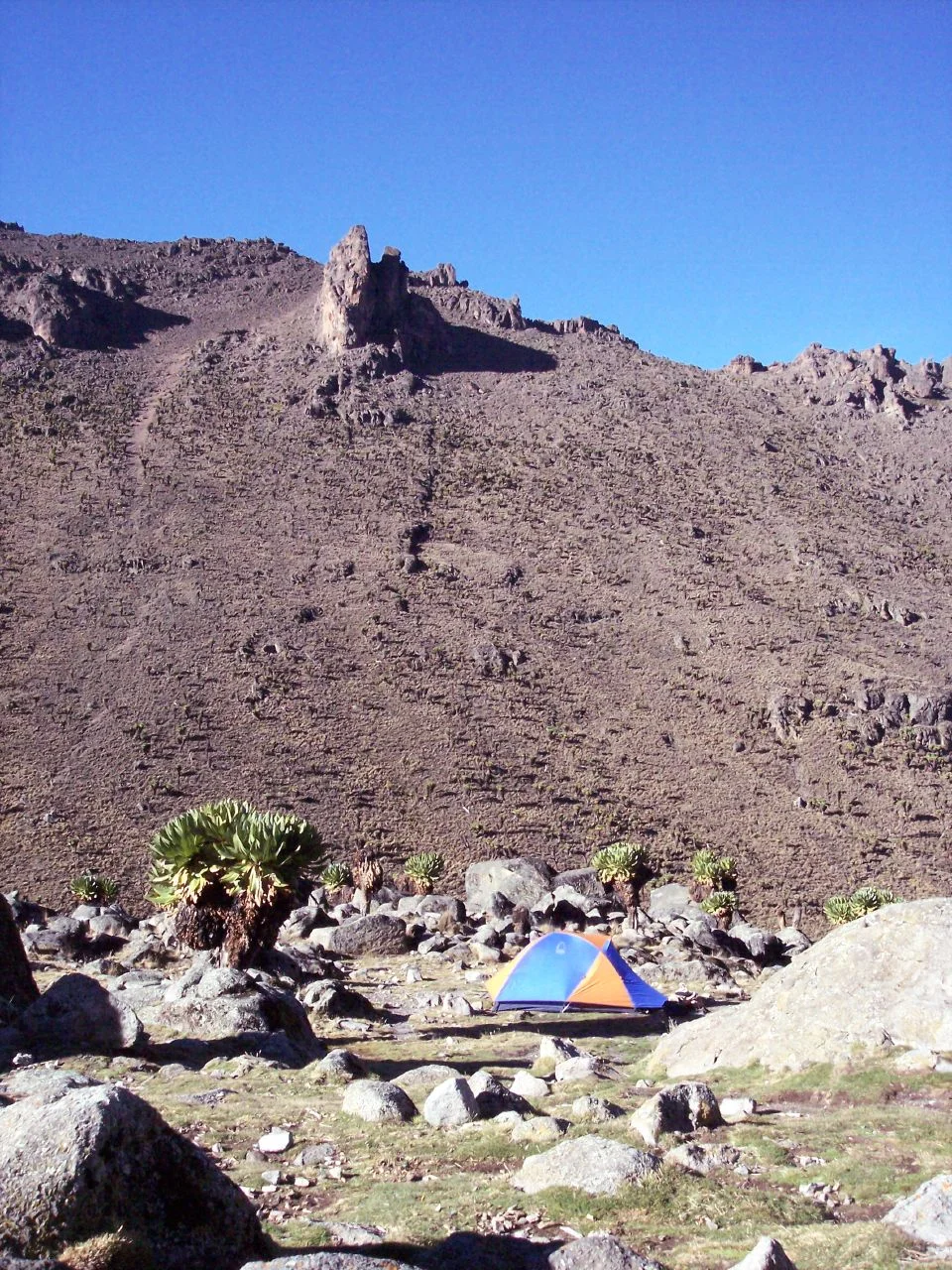
Emerging above the treeline into the surreal Afro-alpine moorland of giant lobelias and groundsels, Mackinder established Base Camp at 4,300 metres in the valley that now bears his name—Mackinder Valley.
Conquering the Diamond Glacier
Initial assaults on the southern face were turned back by smooth, vertical slabs and blinding snowstorms. With provisions running critically low and winter storms closing in, César Ollier spotted a desperate, audacious line across the high northern face.
On September 13, 1899, Mackinder, Ollier, and Brocherel made their final bid. Leaving camp at dawn, they crossed the Lewis Glacier and traversed onto the steep, hanging tongue of the Diamond Glacier. Sloping at more than 50 degrees between vertical rock ribs, the glacier was hard as steel. Ollier carefully chopped steps across the ice, suspended above a thousand-foot abyss.
Reaching the far rock wall, the trio climbed through an icy rock chimney and scrambled up a shattered syenite arête. At precisely noon, Mackinder and his two Courmayeur guides hoisted themselves onto the tiny, wind-swept rocky platform of Batian (5,199 m). Africa’s most technically demanding mountain had been conquered. They built a three-foot cairn, left a lead plate commemorating the ascent, and descended through a ferocious blizzard, securing an immortal chapter in the annals of mountaineering.
Key Statistics & Topographic Figures
- Category
- African Pioneers
Archival Subject
- Reading Time
- 15 min read
Narrative Length
- Key Mountain
- mount-kenya
Objective
- Ascent Route
- mount-kenya-north-face-standard-route
Topography
- Verification
- Editorially Verified
Archival Standard
Archival Primary Source Quotations
“In the mountains, truth is etched in ice and granite; every step requires unwavering respect for the heights.”
Defined Alpine Terminology & Concepts
- Summit Push
- The final continuous climbing effort from the highest established camp to the mountain apex and back.
- Death Zone Chronicle
- A verified, research-backed historical narrative documenting the human, technical, and environmental realities of an alpine expedition.
Frequently Asked Questions: The Diamond Notch: Halford Mackinder and the 1899 First Ascent of Mount Kenya
What is the core chronicle and subject of "The Diamond Notch: Halford Mackinder and the 1899 First Ascent of Mount Kenya"?
The Unforgiving Spire of Kirinyaga...
Which mountain peaks and routes are featured in "The Diamond Notch: Halford Mackinder and the 1899 First Ascent of Mount Kenya"?
This narrative documents climbs on mount-kenya along the mount-kenya-north-face-standard-route in Kenya.
Which documented expedition is chronicled in this story?
This historical chronicle captures the events of the 1899-mackinder-ollier-mount-kenya-first-ascent, verified through contemporary journals and archival records.
Who authored and researched this archival chronicle?
Authored and researched by Mountainity Historical Research Desk, drawing on primary eyewitness testimonies, alpine club registries, and verified summit logs.
What makes this high-altitude chronicle historically significant?
Categorized under "African Pioneers", this chronicle preserves critical lessons in alpine leadership, survival, tactical speed, and human endurance in the death zone.
Related Mountains

Mount Kenya
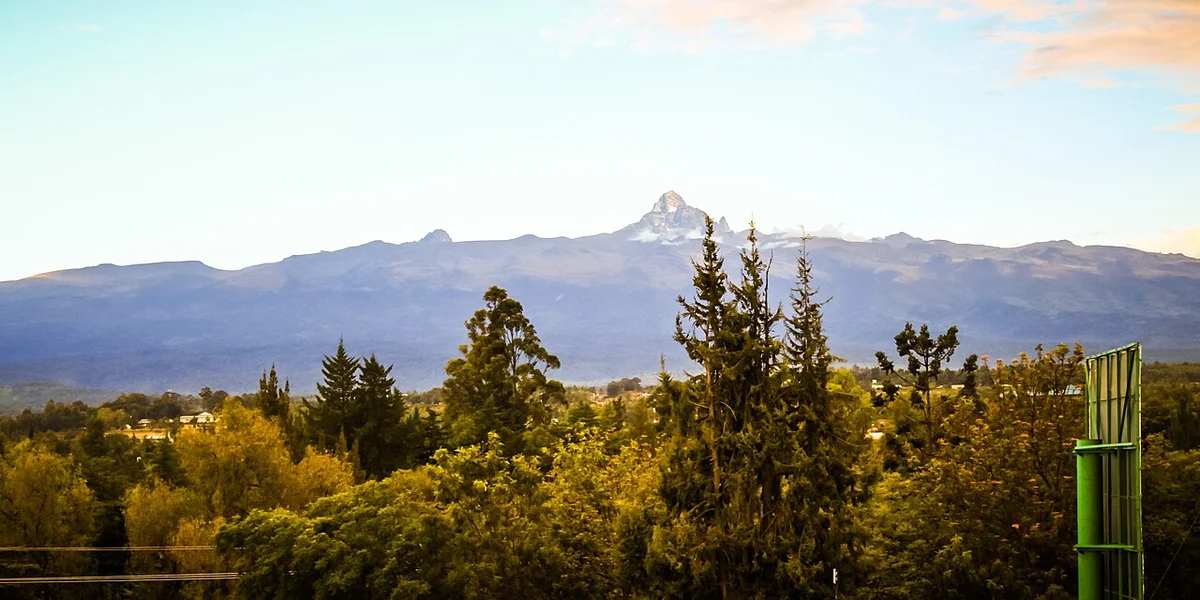
Mount Kenya is the second-highest mountain in Africa at 5,199 metres (17,057 ft), an ancient extinct stratovolcano that once rose over 7,000 metres before millions of years of glaciation eroded it into sheer rock bastions. Its highest twin summits—Batian (5,199 m) and Nelion (5,188 m)—present demanding, highly technical rock and ice climbing. Batian was first climbed on September 13, 1899, by British geographer Sir Halford Mackinder and Courmayeur alpine guides César Ollier and Josef Brocherel.
Documented Sources & Archival Citations
- Across East African Glaciers(Hans Meyer / George Philip & Son)
Supporting claim: Primary historical source documentation
Accessed/Documented: 1891 - The Geographical Journal(Royal Geographical Society)
Supporting claim: Official expedition chronicle
Accessed/Documented: 1900