Everest 1924: Mallory, Irvine, and the Enduring Riddle of the Second Step
On June 8, 1924, George Leigh Mallory and Andrew 'Sandy' Irvine were seen 'going strong for the top' before vanishing into swirling clouds near the Second Step of Mount Everest, igniting a century-long quest for truth.
Mountain Safety & Conditions Disclaimer: High-altitude climbing, glacial travel, and technical ascents entail severe objective risks including avalanches, serac collapses, rapid weather collapse, and altitude illness. Historical route descriptions and summit claims on Mountanity reflect documented archival sources and must not be used as live operational safety assessments. Local regulations, permits, and physical glacial topography change continuously.
Peer Review: Senior Editorial Board & Historical Reviewers • Editorial Standards
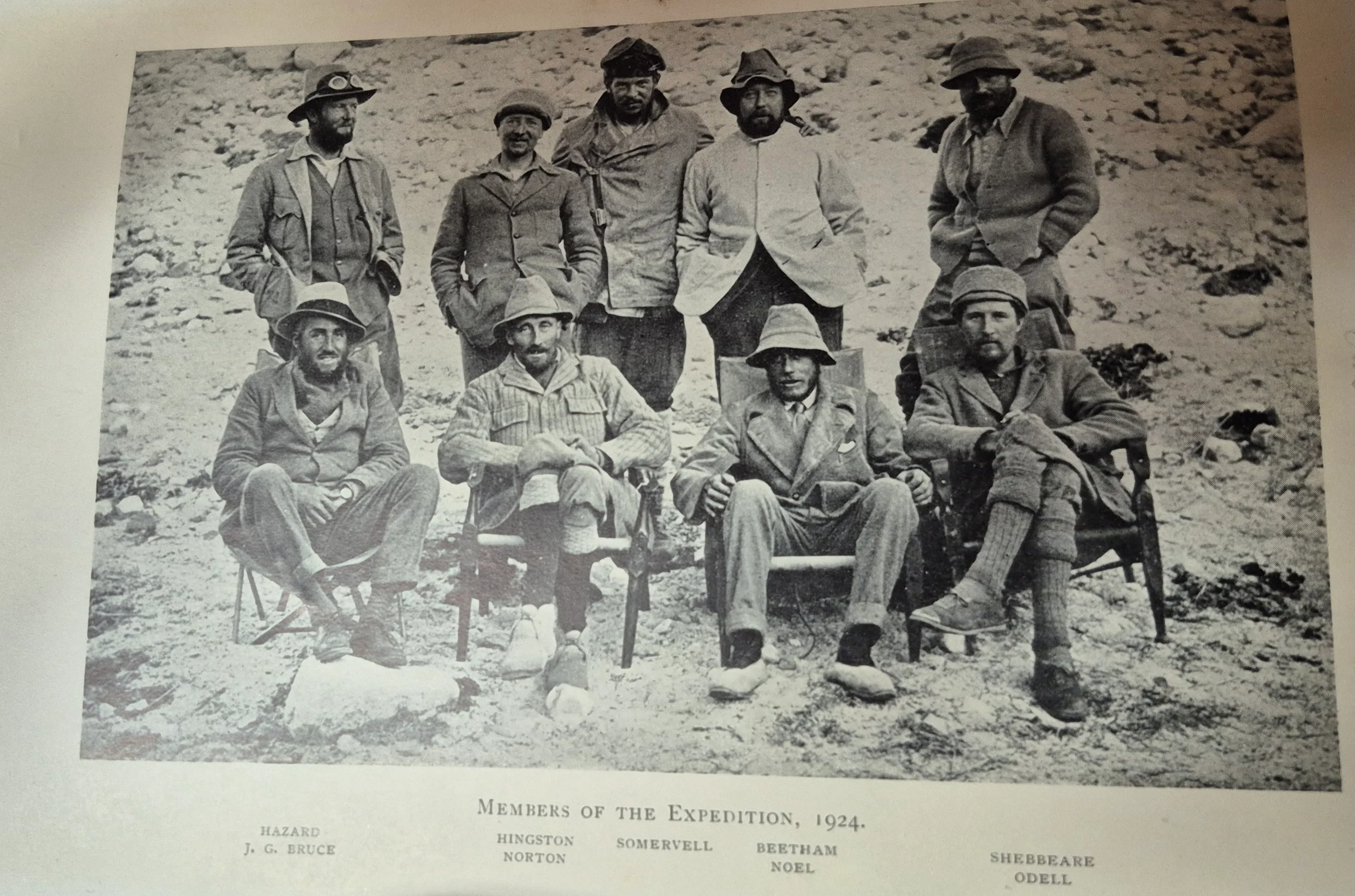
On the morning of June 8, 1924, high on the bleak, wind-blasted limestone ledges of Mount Everest’s North Face, two men stepped out from a tiny canvas tent pitched precariously at 8,140 meters. One was George Leigh Mallory, at 37 the finest British alpinist of his generation, who had dedicated four years of his life to a mountain he famously described climbing simply “because it’s there.” The other was Andrew Comyn “Sandy” Irvine, an athletic 22-year-old Oxford University engineering prodigy who had never climbed a major high-altitude peak before, but whose mechanical wizardry had transformed the expedition’s crude bottled oxygen apparatus.
Struggling into their cumbersome leather harnesses, carrying heavy steel oxygen tanks, and wearing layers of tweed jackets, flannel shirts, and hobnailed leather boots, the pair set off toward the Northeast Ridge. They were moving into the upper Death Zone—a frozen tropospheric realm where no mortal had ever spent a night and returned to tell the tale.
Norton’s Heroic Prelude: 8,570 Meters Without Oxygen
The assault by Mallory and Irvine was the culmination of an extraordinary expedition. Days earlier, on June 4, expedition leader Lt. Col. Edward Norton and Dr. Howard Somervell had launched an assault without supplemental oxygen. Operating on sheer willpower, Somervell was finally incapacitated at 8,534 meters when his frostbitten throat became blocked by sloughing mucus membranes (forcing him to cough up a plug of dead tissue to avoid suffocation).
Norton pressed on alone across the down-sloping limestone slabs of the North Face. Entering the vast, shadow-filled gully that now bears his name—the Norton Couloir—Norton reached an elevation of 8,570 meters (28,126 feet). Standing barely 278 vertical meters beneath the summit, Norton was halted by profound exhaustion, muscle tremors, and double vision caused by cerebral hypoxia. His record for the highest altitude ever reached without supplemental bottled oxygen stood unbroken for 54 years, until Reinhold Messner and Peter Habeler reached the summit of Everest in 1978.
The Fatal Gamble with Oxygen
Watching Norton’s narrow defeat from the North Col, Mallory knew that this was his last opportunity. With the summer monsoon rapidly approaching from the Bay of Bengal, Mallory decided to deploy the expedition’s controversial secret weapon: the Mark V oxygen sets.
While older climbers distrusted bottled oxygen as unsporting and mechanically fragile, Sandy Irvine had spent weeks at Base Camp stripping dead weight from the brass valves, re-soldering cracked copper tubes, and reducing the weight of each rig by several pounds. Convinced that Irvine’s intimate knowledge of the apparatus gave them the best chance of survival, Mallory chose the young oarsman over veteran mountaineer and geologist Noel Odell.
On June 7, accompanied by four Sherpa porters who carried rations and oxygen cylinders, Mallory and Irvine climbed to Camp VI (8,140m). Sending the porters back with a cheerful handwritten note to Noel Odell—“Dear Noel, We’ll probably start early to-morrow (8th) in order to have clear weather. It won’t be too early to start looking out for us either crossing the rock band or going up ridge at 8.00 p.m. [a slip for a.m.]… Yours ever, G. Mallory”—the two men prepared for their destiny.
The 12:50 PM Sighting: “Going Strong for the Top”
On the morning of June 8, Noel Odell climbed in support from Camp V toward Camp VI. Odell was in phenomenal physical condition; while others suffered debilitating mountain sickness, Odell’s lungs had acclimatized so thoroughly that he moved above 7,900 meters without supplemental oxygen with ease.
At approximately 12:50 PM, as Odell scrambled up an isolated crag of limestone rock, a sudden atmospheric miracle occurred. The thick blizzard clouds that had shrouded the upper mountain rolled back like a curtain, exposing the entire summit ridge against a brilliant sky.
Odell looked up toward the great rock steps along the Northeast Ridge:
“My eyes became fixed on one tiny black spot silhouetted on a small snow-crest beneath a rock-step in the ridge; the black spot moved. Another black spot became apparent and moved up the snow to join the other on the crest. The first then approached the great rock-step and shortly emerged at the top; the second did likewise. Then the whole fascinating vision vanished, enveloped in cloud once more.”
Odell recorded that the climbers were moving with notable speed and alacrity, “going strong for the top.” Seconds later, the squall closed in, and neither Mallory nor Irvine was ever seen alive again.
The Vigil and the Cross on the Snow
Reaching Camp VI around 2:00 PM, Odell found the tiny tent empty. Scattered across the floor were spare oxygen parts, clothing, and Mallory’s compass. Leaving extra rations, Odell descended back to Camp IV on the North Col to allow the summit pair room to sleep upon their return.
When dawn broke on June 9 and no figures were seen descending the ridge, alarm spread through the expedition. On June 10, Odell courageously climbed all the way back up to Camp VI alone. The tent stood exactly as he had left it; the sleeping bags were unopened.
Dragging two heavy sleeping bags from the tent out onto the snow slope, Odell arranged them in the shape of a massive letter “T”—the agreed signal meaning “No trace found, all hope abandoned.” Below on the North Col, watching through telescopes, John Noel and Edward Norton saw the dark cross appear against the snow and wept. Britain plunged into national mourning; King George V and the Archbishop of Canterbury attended a memorial service at St Paul’s Cathedral in London to honor the fallen heroes.
The Modern Discoveries: 1999 and 2024
For three-quarters of a century, the question of whether Mallory and Irvine conquered Everest 29 years before Sir Edmund Hillary and Tenzing Norgay obsessed the world. Could Mallory have surmounted the formidable 30-meter vertical wall of the Second Step (UIAA 5.7) in hobnailed boots without modern protective gear?
On May 1, 1999, an expedition led by Eric Simonson and American climber Conrad Anker mounted a forensic search of the North Face. Sweeping across the scree terraces at 8,157 meters, Anker spotted a patch of pure white marble-like skin. It was the remarkably preserved, mummified body of George Leigh Mallory.
Forensic analysis revealed critical clues:
- Mallory’s waist was scarred by severe rope-jerk contusions, proving that he and Irvine had been roped together when one slipped, pulling the other into a violent arrest attempt before the rope snapped.
- Mallory’s snow goggles were discovered inside his jacket pocket, providing compelling circumstantial evidence that he was descending in twilight or darkness when he fell.
- In his pockets, researchers found his altimeter, letters, and climbing notes—but the cherished photograph of his wife Ruth, which he had sworn to bury on the summit of Mount Everest, was missing from his wallet.
However, the definitive artifact—the Vest Pocket Kodak camera carried by Irvine—was not with Mallory.
A century after their disappearance, in September 2024, a documentary team led by National Geographic explorer Jimmy Chin made a groundbreaking discovery on the Central Rongbuk Glacier, thousands of feet below the North Face. Melting out of the blue glacial ice was an antique leather mountaineering boot with iron boot-nails, containing the remains of a foot and a thick woolen sock. Stitched into the fabric was an embroidered name tag: “A.C. IRVINE”.
While the discovery confirmed the path of Irvine’s fall through the Norton Couloir basin, the camera has yet to be found. Whether George Mallory and Sandy Irvine stood upon the apex of the Earth on that cold June afternoon in 1924 remains one of humanity’s most majestic and sacred mysteries—a testament to the boundless heights of the human spirit.
Key Statistics & Topographic Figures
- Category
- Historic Expeditions
Archival Subject
- Reading Time
- 15 min read
Narrative Length
- Key Mountain
- mount-everest
Objective
- Ascent Route
- everest-northeast-ridge
Topography
- Verification
- Editorially Verified
Archival Standard
Archival Primary Source Quotations
“In the mountains, truth is etched in ice and granite; every step requires unwavering respect for the heights.”
Defined Alpine Terminology & Concepts
- Summit Push
- The final continuous climbing effort from the highest established camp to the mountain apex and back.
- Death Zone Chronicle
- A verified, research-backed historical narrative documenting the human, technical, and environmental realities of an alpine expedition.
Frequently Asked Questions: Everest 1924: Mallory, Irvine, and the Enduring Riddle of the Second Step
What is the core chronicle and subject of "Everest 1924: Mallory, Irvine, and the Enduring Riddle of the Second Step"?
On June 8, 1924, George Leigh Mallory and Andrew 'Sandy' Irvine were seen 'going strong for the top' before vanishing into swirling clouds near the Second Step of Mount Everest, igniting a century-long quest for truth.
Which mountain peaks and routes are featured in "Everest 1924: Mallory, Irvine, and the Enduring Riddle of the Second Step"?
This narrative documents climbs on mount-everest along the everest-northeast-ridge in China.
Which documented expedition is chronicled in this story?
This historical chronicle captures the events of the 1924-british-everest, verified through contemporary journals and archival records.
Who authored and researched this archival chronicle?
Authored and researched by Mountainity Historical Research Desk, drawing on primary eyewitness testimonies, alpine club registries, and verified summit logs.
What makes this high-altitude chronicle historically significant?
Categorized under "Historic Expeditions", this chronicle preserves critical lessons in alpine leadership, survival, tactical speed, and human endurance in the death zone.
Related Mountains


Mount Everest
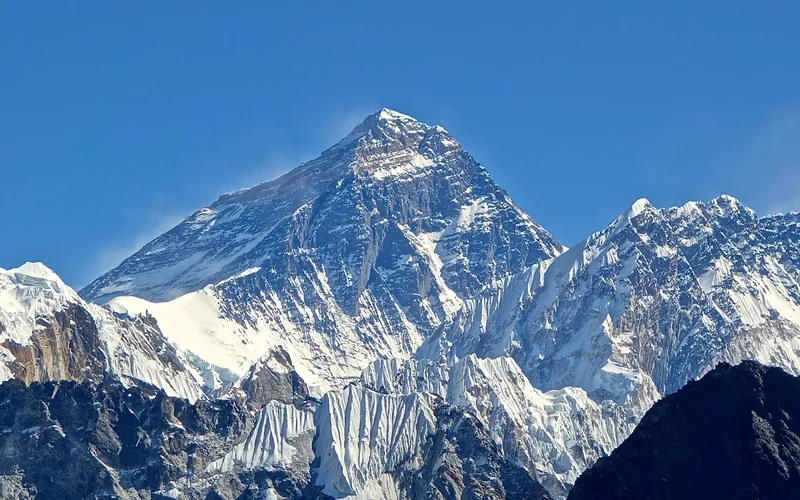
Mount Everest is the highest mountain above sea level on Earth, standing at an official elevation of 8,848.86 meters (29,031.7 ft). Straddling the international frontier between Nepal and China, it is known locally as Sagarmatha in Nepali ('Goddess of the Sky') and Chomolungma in Tibetan ('Mother Goddess of the World'). The peak rises into the extreme upper troposphere, where oxygen levels drop to barely one-third of sea-level pressure. Climbers face hurricane-force jet stream winds, severe frostbite conditions, shifting ice crevasses in the Khumbu Icefall, and the dangerous Death Zone above 8,000 meters.
Documented Sources & Archival Citations
- The Fight for Everest: 1924(Lt. Col. E.F. Norton / Edward Arnold & Co.)
Supporting claim: Official expedition chronicle documenting Norton's 8,570m climb, Odell's testimony, and field reports
Accessed/Documented: 1925 - Ghosts of Everest: The Search for Mallory & Irvine(Jochen Hemmleb, Larry A. Johnson, Eric R. Simonson / Mountaineers Books)
Supporting claim: Forensic analysis of George Mallory's remains discovered at 8,157m on the North Face
Accessed/Documented: 1999 - National Geographic: Discovery of Andrew Irvine's Remains on Everest(National Geographic Society)
Supporting claim: Official account of the September 2024 discovery of Andrew Irvine's boot on the Central Rongbuk Glacier
Accessed/Documented: 2024