Annapurna 1950: The Agony and Glory of the First 8,000-Meter Summit
On June 3, 1950, Maurice Herzog and Louis Lachenal stood atop Annapurna I, conquering the first 8,000-meter peak in human history at the horrific cost of their fingers and toes.
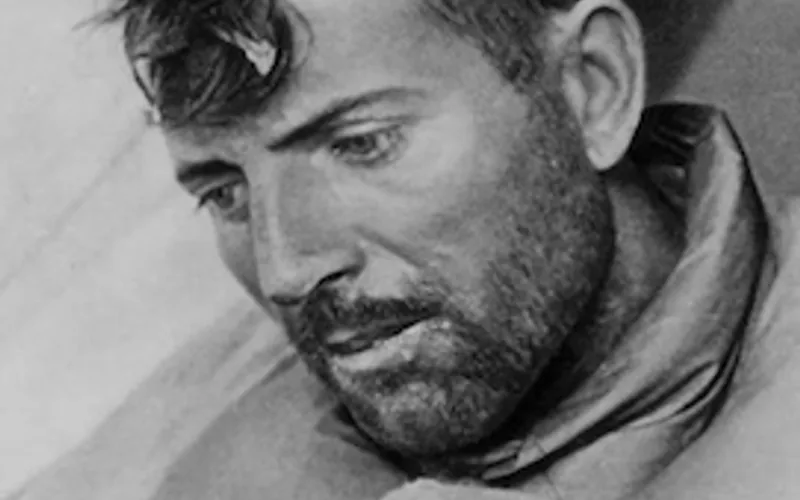
Mountain Safety & Conditions Disclaimer: High-altitude climbing, glacial travel, and technical ascents entail severe objective risks including avalanches, serac collapses, rapid weather collapse, and altitude illness. Historical route descriptions and summit claims on Mountanity reflect documented archival sources and must not be used as live operational safety assessments. Local regulations, permits, and physical glacial topography change continuously.
Peer Review: Senior Editorial Board & Historical Reviewers • Editorial Standards
In the spring of 1950, human beings had never stood higher than the lower flanks of the world’s fourteen highest giants. Mount Everest had repelled eight British expeditions. K2 had turned back three American assaults. Nanga Parbat had claimed thirty-one lives. Across the entire Himalayan and Karakoram chains, the magical boundary of 8,000 meters remained an unbroken barrier of wind, cold, and physiological death.
When the kingdom of Nepal granted rare permission to the French Alpine Club in early 1950, expedition leader Maurice Herzog and his elite team of Chamonix mountain guides—including Louis Lachenal, Lionel Terray, and Gaston Rébuffat—arrived in the Kali Gandaki valley with virtually no accurate maps. Their instructions were simple yet daunting: explore the unknown region, find a route up either Dhaulagiri I or Annapurna I, and climb it before the arrival of the summer monsoon.
After weeks of reconnaissance proved Dhaulagiri hopelessly impregnable, the team turned eastward toward the Annapurna massif. Beneath the brooding North Face, they discovered a feasible, albeit dangerously avalanche-prone, route ascending a sickle-shaped glacier toward the upper snowfields.
The Question on the Ice Slope
By June 2, 1950, with monsoon storm clouds gathering on the southern horizon, Herzog and Lachenal occupied Camp V, pitched on a precarious snow shelf at 7,400 meters. Neither man used supplemental bottled oxygen; the crude apparatus of the day was deemed too heavy and unreliable for lightweight alpine pushes.
At dawn on June 3, under a deceptively calm sky, the two men roped up for the summit dash. As they climbed into the thin air, the contrast between their personalities became stark. Maurice Herzog, a veteran of the French Resistance, was fueled by an almost mystical patriotism, determined to bring glory to post-war France. Louis Lachenal, a pragmatic, razor-sharp Chamonix guide, recognized the deadly signs of deep hypoxia and severe frostbite creeping through his boots.
High beneath the summit pyramid, Lachenal stopped in his tracks. His feet were losing sensation, freezing into blocks of wood. He knew that pushing higher would cost him his extremities, perhaps his livelihood as an alpine guide.
Lachenal grabbed Herzog’s arm and asked a direct question:
“If I turn back now, what will you do?”
Herzog looked up toward the glittering summit ridge and replied without hesitation:
“I shall go on alone.”
Lachenal knew that in Herzog’s state of altitude euphoria, climbing alone meant certain death. Putting his companion’s survival ahead of his own physical preservation, Lachenal replied with words that entered mountaineering legend:
“Then I will follow you.”
Two O’Clock on the Summit of the Earth
At 2:00 PM on June 3, 1950, Maurice Herzog and Louis Lachenal crossed the final snow cornice and stood together on the 8,091-meter summit of Annapurna I. They had achieved what no human beings had ever done: conquered an eight-thousander.
The view stretched endlessly across the Tibetan plateau to the north and the jagged ice peaks of Nepal to the south. In the overwhelming emotional rush of the moment, Herzog pulled out his camera, unfurled the French tricolour, and had Lachenal take the photograph that would soon captivate the world. But in his delirium, Herzog took off his heavy outer gloves to adjust the camera and dropped them down the steep slope. Unaware of the fatal consequences in the sub-zero wind, he pulled thin socks over his bare hands.
The Desperate Crevasse Bivouac
The descent quickly turned into an epic struggle for survival. Clouds enveloped the mountain, plunging the slopes into a blinding blizzard. Lachenal slipped down an ice pitch, losing his ice axe and gear. Both men lost all sense of direction in the whiteout.
Near Camp V, they were found by teammates Lionel Terray and Gaston Rébuffat, who had moved up in support. Unable to locate their tents in the roaring storm, the four exhausted men were forced to jump into a deep glacial crevasse to escape the lethal wind chill.
They huddled together through the night at 7,400 meters without food, hot drinks, or sleeping bags. By morning, an avalanche roared over the lip of the crevasse, burying their gear and boots in feet of powdery snow. Blinded by snow glare and with their hands and feet frozen solid, they miraculously clawed their way out of the chasm and stumbled into Camp IV.
The Long Retreat Through the Jungle
The physical toll of the climb was horrific. Expedition physician Dr. Jacques Oudot immediately recognized that massive gangrene was setting in. As the monsoon broke over Nepal, pouring relentless rain down the mountain trails, porters carried Herzog and Lachenal down muddy valley paths in wicker baskets.
In primitive mud huts and makeshift tents along the trail, Dr. Oudot performed emergency field amputations without modern hospital equipment, snipping away dead tissue to prevent fatal blood poisoning. Lachenal lost all of his toes. Herzog lost all of his fingers and all of his toes.
Herzog dictated his masterpiece, Annapurna, while convalescing in hospital beds. The book sold over 11 million copies worldwide, capturing the post-war imagination with its depiction of collective courage, brotherhood, and human endurance. It concluded with the immortal sentence that defined a generation of climbers:
“There are other Annapurnas in the lives of men.”
Annapurna I had been conquered, opening the heroic era of Himalayan mountaineering, but its summit came at a terrifying cost that forever reminded humanity of the ruthless reality of the high mountains.
Key Statistics & Topographic Figures
- Category
- Historic Expeditions
Archival Subject
- Reading Time
- 12 min read
Narrative Length
- Key Mountain
- annapurna-1
Objective
- Ascent Route
- annapurna-north-face
Topography
- Verification
- Editorially Verified
Archival Standard
Archival Primary Source Quotations
“In the mountains, truth is etched in ice and granite; every step requires unwavering respect for the heights.”
Defined Alpine Terminology & Concepts
- Summit Push
- The final continuous climbing effort from the highest established camp to the mountain apex and back.
- Death Zone Chronicle
- A verified, research-backed historical narrative documenting the human, technical, and environmental realities of an alpine expedition.
Frequently Asked Questions: Annapurna 1950: The Agony and Glory of the First 8,000-Meter Summit
What is the core chronicle and subject of "Annapurna 1950: The Agony and Glory of the First 8,000-Meter Summit"?
On June 3, 1950, Maurice Herzog and Louis Lachenal stood atop Annapurna I, conquering the first 8,000-meter peak in human history at the horrific cost of their fingers and toes.
Which mountain peaks and routes are featured in "Annapurna 1950: The Agony and Glory of the First 8,000-Meter Summit"?
This narrative documents climbs on annapurna-1 along the annapurna-north-face in Nepal.
Which documented expedition is chronicled in this story?
This historical chronicle captures the events of the 1950-french-annapurna, verified through contemporary journals and archival records.
Who authored and researched this archival chronicle?
Authored and researched by Mountainity Historical Research Desk, drawing on primary eyewitness testimonies, alpine club registries, and verified summit logs.
What makes this high-altitude chronicle historically significant?
Categorized under "Historic Expeditions", this chronicle preserves critical lessons in alpine leadership, survival, tactical speed, and human endurance in the death zone.
Related Mountains
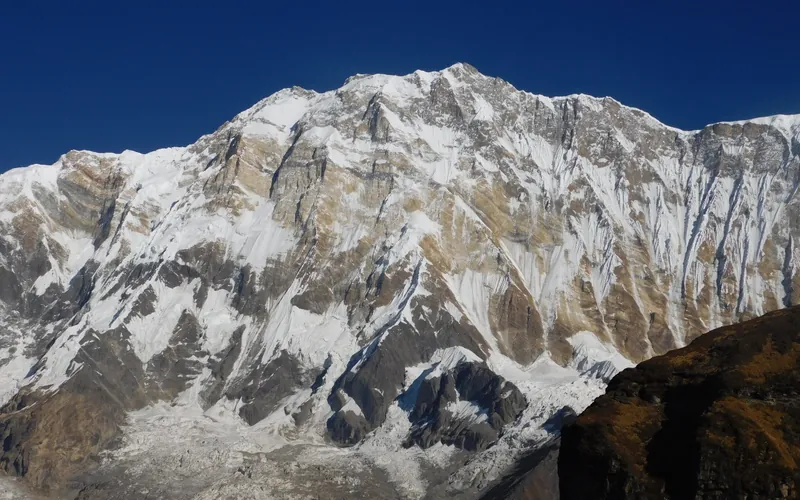

Annapurna I
Annapurna I, at 8,091 meters (26,545 ft), is the tenth-highest mountain in the world and historically the first 8,000-meter peak ever summited (June 3, 1950 by Maurice Herzog and Louis Lachenal). Rising above the Annapurna Sanctuary, its north and south walls present extreme avalanche and serac fall hazards.
Documented Sources & Archival Citations
- Annapurna: First Conquest of an 8,000-Meter Peak(Maurice Herzog / Jonathan Cape)
Supporting claim: Official expedition account and summit narrative
Accessed/Documented: 1951 - Carnets du Vertige(Louis Lachenal / Éditions Guérin)
Supporting claim: Uncensored personal journals of Louis Lachenal
Accessed/Documented: 1956 - True Summit: What Really Happened on Annapurna(David Roberts / Simon & Schuster)
Supporting claim: Critical historical investigation of the 1950 French expedition
Accessed/Documented: 2000