Cho Oyu 1954: The Lightweight Triumph of Tichy, Jöchler, and Pasang Dawa Lama
On October 19, 1954, a tiny three-man Austrian team conquered Cho Oyu (8,188m) without supplemental oxygen in autumn, proving 8,000-meter giants could be climbed in lightweight alpine style.
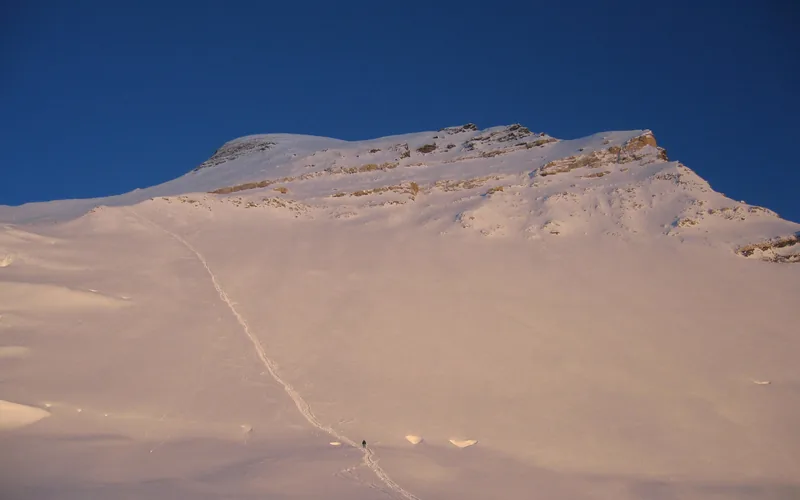
Mountain Safety & Conditions Disclaimer: High-altitude climbing, glacial travel, and technical ascents entail severe objective risks including avalanches, serac collapses, rapid weather collapse, and altitude illness. Historical route descriptions and summit claims on Mountanity reflect documented archival sources and must not be used as live operational safety assessments. Local regulations, permits, and physical glacial topography change continuously.
Peer Review: Senior Editorial Board & Historical Reviewers • Editorial Standards
In 1954, high-altitude mountaineering was an affair of national prestige, quasi-military discipline, and enormous budgets. The British conquest of Everest in 1953 had mobilized hundreds of porters and tons of specialized cargo. The Italian triumph on K2 in July 1954 had operated under the iron fist of Ardito Desio, spending millions of liras. The dominant doctrine was clear: to conquer an eight-thousander, one required massive siege warfare, endless fixed ropes, and dozens of oxygen bottles.
Then came Dr. Herbert Tichy.
A 42-year-old Viennese geologist, travel writer, and inveterate romantic, Tichy had spent his twenties wandering across India on a motorcycle and circumnavigating Tibet’s holy Mount Kailash disguised as a humble pilgrim. He possessed no government subsidies and no imperial ambitions. His entire expedition to Cho Oyu (8,188m)—the world’s sixth-highest mountain—consisted of just three climbers: himself, 31-year-old Tyrolean master builder and extreme rock climber Sepp Jöchler, and the legendary Sherpa Sirdar Pasang Dawa Lama. A solitary scientist, geographer Dr. Helmut Heuberger, accompanied them to conduct survey work.
Their budget was a minuscule 200,000 Austrian schillings—roughly the price of a small car. They brought no bottled oxygen. They brought no fixed rope ladders. They believed that by moving lightly, acclimatizing naturally, and trusting their Sherpa companions as equal brothers, the mountain gods would grant them passage.
Crossing the Nangpa La into the Tibetan Wilderness
In September 1954, as the summer monsoon rains were washing out the trails of eastern Nepal, Tichy’s tiny caravan marched over the 5,800-meter Nangpa La, the ancient glaciated trading col that connects the Khumbu valley with the high Tibetan plateau.
Cho Oyu—meaning “Turquoise Goddess” in Tibetan—rose before them like a colossal wall of layered granite and ice. While Eric Shipton and Edmund Hillary had scouted the mountain’s southern flanks in 1952 and deemed them formidable, Tichy focused on the sweeping Northwest Face rising above the desolate Gyabrag Glacier.
Base Camp was pitched on the moraine at 5,700 meters. Working with a small cadre of seven Sherpas, Jöchler and Pasang Dawa Lama forged a route through the lower icefall, establishing Camp I at 6,400 meters and Camp II above a threatening 25-meter sheer ice cliff at 6,700 meters. Their movements were swift, nimble, and quiet.
The Tempest and Frostbite at 7,000 Meters
By early October, the team reached 7,000 meters and pitched Camp IV on a fragile snow bench. But the transition from monsoon to autumn in the high Himalayas is often signaled by ferocious atmospheric violence. On October 4, an Arctic storm of terrifying velocity descended from the north across the Tibetan plains.
Winds exceeding 130 kilometers per hour tore at their canvas. In the sub-zero darkness, with temperatures plunging past -30°C, the tent poles splintered. Herbert Tichy leaped out into the screaming gale to anchor the guy-lines with his bare hands. Within minutes, the bitter cold penetrated his skin. By the time he clawed his way back inside the collapsing shelter, his fingers were frozen white and lifeless.
The three men were forced into an emergency retreat down the mountain. At Base Camp, Tichy’s hands swelled into agonizing black blisters. To make matters worse, their food supplies were nearly exhausted. Common mountaineering wisdom dictated immediate evacuation to Kathmandu. The expedition appeared utterly broken.
The Superhuman Dash of Pasang Dawa Lama
It was here that Pasang Dawa Lama performed one of the greatest feats in Himalayan history. Refusing to allow Tichy’s dream to die, the 42-year-old Sherpa Sirdar announced that he would personally return to Namche Bazaar to fetch fresh provisions, kerosene, and reinforcements.
The round trip between the Gyabrag Glacier in Tibet and the village of Namche Bazaar in Nepal requires crossing the rugged Nangpa La glacier twice, negotiating crevasses, and covering over 80 kilometers of vertical mountain terrain. It was a journey that caravan traders took ten to twelve days to complete.
Pasang Dawa Lama completed it in three days.
He ran across the glacial cols, descended through the gorges of the Dudh Kosi, rallied a fresh team of porters, loaded them with eggs, meat, and grain, and charged back over the frozen frontier pass. When he strode back into Base Camp, carrying a fresh sack of provisions on his back, Tichy and Jöchler were overwhelmed with tears.
The Summit Push Without Oxygen
With fresh food in their bellies and the weather settling into the pristine, wind-carved stillness of late autumn, the climbers regrouped. Tichy’s frostbitten hands remained raw, bandaged, and incapable of gripping ropes tightly, but his spirit was unyielding.
On October 18, Tichy, Jöchler, and Pasang climbed past the Ice Cliff and pitched their assault tent at 7,500 meters beneath the crumbling limestone bands known as the Yellow Band. That night, breathing thin air at three-quarters the height of the troposphere without oxygen masks, they brewed tea from melted snow and shared dried fruit.
At 6:00 AM on October 19, 1954, under a cobalt sky of piercing clarity, the trio roped together for the final test. Sepp Jöchler took the lead, using his brilliant rock-climbing technique to discover a narrow chimney breach through the Yellow Band. Pasang followed closely, setting secure belays. Tichy climbed with quiet determination, using his elbows and wrists to protect his mangled fingers.
By noon, they crested the technical headwall and emerged onto the vast, gently tilting summit plateau of Cho Oyu. The wind howled across the snow, sweeping plumes of crystal powder into the void. Step by agonizing step, pausing every three paces to draw multiple ragged breaths of oxygen-starved air, they advanced across the endless white crest.
At 3:00 PM on October 19, 1954, Herbert Tichy, Sepp Jöchler, and Pasang Dawa Lama stood upon the 8,188-meter summit of Cho Oyu.
A Legacy of Alpine Purity
To the south, the stupendous western faces of Mount Everest, Lhotse, and Nuptse pierced the deep blue horizon. To the north, the arid, terracotta expanse of the Tibetan desert rolled toward Central Asia.
Herbert Tichy did not unfurl massive nationalistic banners. Instead, Pasang Dawa Lama placed traditional Buddhist offerings on the snow, while Tichy and Jöchler embraced their Sherpa brother in silent, reverent exhaustion.
The 1954 ascent of Cho Oyu was a turning point in the history of mountaineering. It proved conclusively that:
- An 8,000-meter giant could be climbed without bottled oxygen.
- A tiny team with a modest budget could succeed where military sieges faltered.
- Himalayan peaks could be conquered safely during the post-monsoon autumn season.
- Sherpas were not merely load-carriers, but world-class summit partners capable of leading on the highest stages on Earth.
Herbert Tichy would later conclude his classic memoir with words that continue to inspire alpinists seven decades later: “We reached the summit not because we were strong or conquerors, but because the mountain, in its infinite mercy, allowed us to pass.”
Key Statistics & Topographic Figures
- Category
- Historic Expeditions
Archival Subject
- Reading Time
- 11 min read
Narrative Length
- Key Mountain
- cho-oyu
Objective
- Ascent Route
- cho-oyu-normal-route
Topography
- Verification
- Editorially Verified
Archival Standard
Archival Primary Source Quotations
“In the mountains, truth is etched in ice and granite; every step requires unwavering respect for the heights.”
Defined Alpine Terminology & Concepts
- Summit Push
- The final continuous climbing effort from the highest established camp to the mountain apex and back.
- Death Zone Chronicle
- A verified, research-backed historical narrative documenting the human, technical, and environmental realities of an alpine expedition.
Frequently Asked Questions: Cho Oyu 1954: The Lightweight Triumph of Tichy, Jöchler, and Pasang Dawa Lama
What is the core chronicle and subject of "Cho Oyu 1954: The Lightweight Triumph of Tichy, Jöchler, and Pasang Dawa Lama"?
On October 19, 1954, a tiny three-man Austrian team conquered Cho Oyu (8,188m) without supplemental oxygen in autumn, proving 8,000-meter giants could be climbed in lightweight alpine style.
Which mountain peaks and routes are featured in "Cho Oyu 1954: The Lightweight Triumph of Tichy, Jöchler, and Pasang Dawa Lama"?
This narrative documents climbs on cho-oyu along the cho-oyu-normal-route in China.
Which documented expedition is chronicled in this story?
This historical chronicle captures the events of the 1954-austrian-cho-oyu, verified through contemporary journals and archival records.
Who authored and researched this archival chronicle?
Authored and researched by Mountainity Historical Research Desk, drawing on primary eyewitness testimonies, alpine club registries, and verified summit logs.
What makes this high-altitude chronicle historically significant?
Categorized under "Historic Expeditions", this chronicle preserves critical lessons in alpine leadership, survival, tactical speed, and human endurance in the death zone.
Related Mountains


Cho Oyu
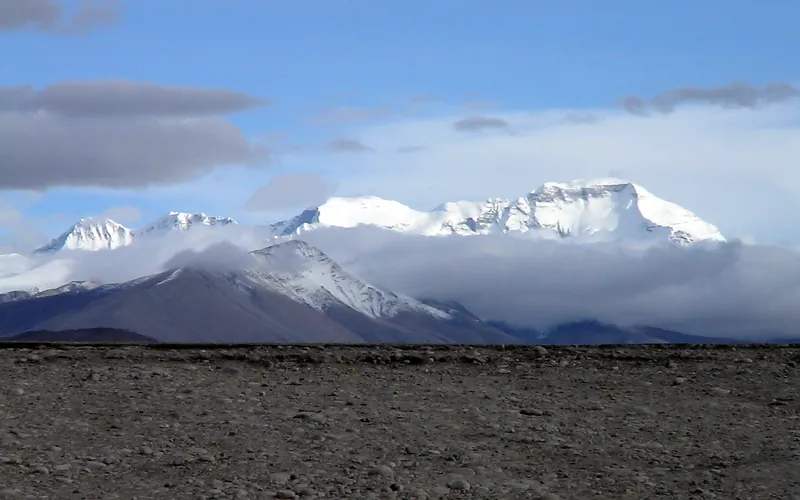
Cho Oyu, at 8,188 meters (26,864 ft), is the sixth-highest mountain in the world, situated 20 km west of Mount Everest. Meaning 'Turquoise Goddess' in Tibetan, it stands on the glaciated Nangpa La trade route between Nepal and Tibet. Its moderate northwest slopes make it the most accessible 8,000-meter peak.
Documented Sources & Archival Citations
- Cho Oyu: By Favour of the Gods(Herbert Tichy / Methuen & Co)
Supporting claim: Official expedition chronicle documenting small-team tactics, storm survival, and summit push
Accessed/Documented: 1957 - The Himalayan Database: Cho Oyu Autumn 1954(Elizabeth Hawley Archive)
Supporting claim: Verified summit logs, climbing roster, and meteorological records
Accessed/Documented: 2026 - Achttausender: Cho Oyu 1954(Österreichischer Alpenverein Archive)
Supporting claim: Historical analysis of lightweight alpine-style ethics on 8,000-meter peaks
Accessed/Documented: 2026