Lhotse 1956: Ernst Reiss, Fritz Luchsinger, and the 1,100-Meter Couloir
On May 18, 1956, Swiss climbers Ernst Reiss and Fritz Luchsinger achieved the historic first ascent of Lhotse (8,516m), conquering the grueling 1,100-meter ice couloir to claim Earth's fourth-highest giant.
Mountain Safety & Conditions Disclaimer: High-altitude climbing, glacial travel, and technical ascents entail severe objective risks including avalanches, serac collapses, rapid weather collapse, and altitude illness. Historical route descriptions and summit claims on Mountanity reflect documented archival sources and must not be used as live operational safety assessments. Local regulations, permits, and physical glacial topography change continuously.
Peer Review: Senior Editorial Board & Historical Reviewers • Editorial Standards
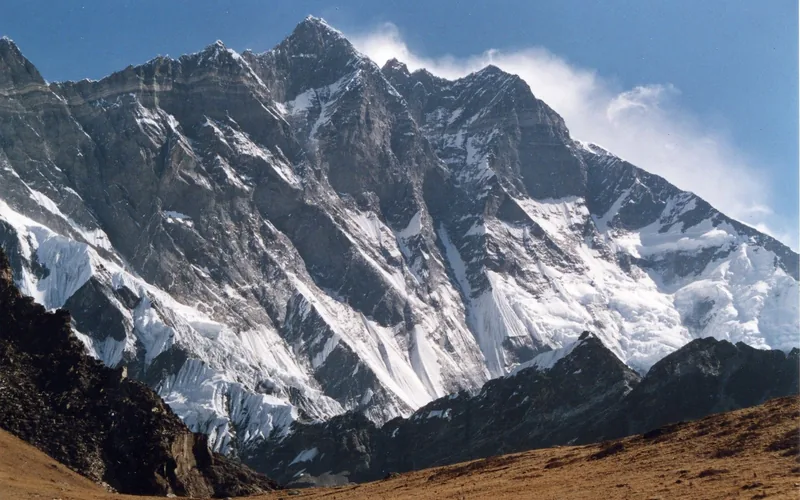
Connected to Mount Everest by the wind-scoured depression of the South Col, Lhotse (8,516m)—meaning “South Peak” in Tibetan—was long overshadowed by its taller neighbor. For decades, early British and Swiss expeditions had treated the colossal wall of Lhotse merely as an obstacle to be traversed on the way to Everest’s summit. Yet Lhotse was an independent eight-thousander of monstrous proportions: its sheer 3,200-meter South Face was the steepest rock and ice precipice in the Himalayas, and its true summit was guarded by a terrifying 1,100-meter gully of pure ice and friable limestone.
In 1952, the Swiss Foundation for Alpine Research had unlocked the gateway to Everest, with Raymond Lambert, Tenzing Norgay, and Ernst Reiss pioneering the route up the Lhotse Face via the Geneva Spur to 8,595 meters. When the British completed the first ascent of Everest in 1953 using that very route, the Swiss felt an enduring call of unfinished business.
In the spring of 1956, an elite Swiss expedition led by Albert Eggler returned to the Western Cwm. Their mission was dual and audacious: to claim the virgin first ascent of Lhotse and achieve the second ascent of Mount Everest.
The Near-Fatal Crisis at Namche Bazaar
Before the climbers could even establish Base Camp on the Khumbu Glacier, catastrophe struck. During the approach trek through the Solukhumbu gorges, 35-year-old Swiss Army officer Fritz Luchsinger collapsed with agonizing abdominal pain near Namche Bazaar. The expedition doctor diagnosed acute appendicitis.
In 1956, there were no rescue helicopters in Nepal. To transport a patient with a perforated appendix across weeks of jungle trails to Kathmandu was a death sentence; to perform major abdominal surgery inside a dirt-floored stone hut with unsterilized equipment was almost equally fatal.
Displaying extraordinary composure, the expedition doctor and local Tibetan monks quarantined Luchsinger inside a room at the Tengboche monastery. For days, Luchsinger lay completely immobilized on his back, receiving massive doses of intravenous antibiotics and cold compresses. Miraculously, the inflammation subsided. Through sheer iron determination, Luchsinger slowly resumed walking, caught up with the team at Base Camp weeks later, and proved his physical fitness on the lower icefalls.
The 1,100-Meter Ice Funnel
By early May 1956, the Swiss team had fixed ropes through the Khumbu Icefall and established Camp IV in the Western Cwm at 6,400 meters. The climbing party split: one group targeted the South Col for Everest, while Ernst Reiss and the recovered Fritz Luchsinger turned toward Lhotse.
Above Camp V (7,300m), the standard route departed from the Everest path. Instead of traversing left toward the Geneva Spur, Reiss and Luchsinger aimed straight into the throat of the mountain: the Lhotse Couloir.
The couloir is a dizzying, claustrophobic slot carving 1,100 vertical meters through the upper headwall at an average angle of 45 to 50 degrees. Flanked on both sides by sheer yellow limestone bands, it acts as a giant natural chute for rockfall, avalanches, and swirling spindrift. Pitching Camp VI at 7,800 meters on a tiny platform hacked out of hard ice, Reiss and Luchsinger spent a freezing night preparing for the assault.
May 18, 1956: The Summit Dash
At 9:00 AM on May 18, 1956, Reiss and Luchsinger set off with open-circuit oxygen apparatus. The cold was vicious, with westerly winds howling across the South Col and driving ice pellets into their faces.
Reiss took the lead, his crampons biting into the bullet-hard blue ice. Every swing of his ice axe sent shards of ice cascading down the steep funnel beneath them. At 8,200 meters, the couloir narrowed to a jagged chimney choked with rotten, loose rock. Chipping steps with numb fingers, gasping through rubber masks, the two men climbed with unwavering rhythm.
By midday, the icy funnel opened onto a knife-edge snow arête. Balancing precariously with thousands of feet of sheer void dropping down the colossal South Face toward Chhukung, Reiss and Luchsinger took their final steps along the delicate corniced crest.
At 12:45 PM on May 18, 1956, Ernst Reiss and Fritz Luchsinger stood on the 8,516-meter summit of Lhotse.
To the northwest, the black pyramidal crown of Mount Everest rose just two kilometers away, its yellow summit plume whipping into the stratosphere. Looking down at the South Col, they could see the tiny yellow specks of their teammates’ tents. Luchsinger pulled a small Swiss flag from his pocket and anchored it to his ice axe, while Reiss photographed the breathtaking panorama of the Makalu and Cho Oyu massifs.
A Golden Chapter in Swiss Alpinism
The conquest of Lhotse was only the beginning of the Swiss expedition’s triumph. Five days later, on May 23, teammates Ernst Schmied and Jürg Marmet reached the summit of Mount Everest via the South Col. On May 24, Adolf Reist and Hans-Rudolf von Gunten repeated the climb, making the 1956 Swiss expedition the first team in history to climb both Everest and Lhotse in a single campaign.
The 1956 ascent of Lhotse demonstrated:
- Unrivaled Ice Craft: Overcoming the 1,100-meter Lhotse Couloir proved that steep, sustained couloir climbing was possible in the heart of the Death Zone.
- Indomitable Resilience: Fritz Luchsinger’s journey from a monastery bed with acute appendicitis to the summit of an 8,500-meter giant remains one of the most inspiring comebacks in sports history.
- Flawless Swiss Engineering: Meticulously engineered oxygen apparatus and tactical discipline allowed the team to summit two eight-thousanders without losing a single life.
Ernst Reiss later summed up the summit moment in his memoir: “We stood upon a point of rock and snow smaller than a table top, suspended between the heavens and the earth. There was no joy of victory, only a profound, silent thankfulness that we were permitted to be there.”
Key Statistics & Topographic Figures
- Category
- Historic Expeditions
Archival Subject
- Reading Time
- 11 min read
Narrative Length
- Key Mountain
- lhotse
Objective
- Ascent Route
- lhotse-normal-route
Topography
- Verification
- Editorially Verified
Archival Standard
Archival Primary Source Quotations
“In the mountains, truth is etched in ice and granite; every step requires unwavering respect for the heights.”
Defined Alpine Terminology & Concepts
- Summit Push
- The final continuous climbing effort from the highest established camp to the mountain apex and back.
- Death Zone Chronicle
- A verified, research-backed historical narrative documenting the human, technical, and environmental realities of an alpine expedition.
Frequently Asked Questions: Lhotse 1956: Ernst Reiss, Fritz Luchsinger, and the 1,100-Meter Couloir
What is the core chronicle and subject of "Lhotse 1956: Ernst Reiss, Fritz Luchsinger, and the 1,100-Meter Couloir"?
On May 18, 1956, Swiss climbers Ernst Reiss and Fritz Luchsinger achieved the historic first ascent of Lhotse (8,516m), conquering the grueling 1,100-meter ice couloir to claim Earth's fourth-highest giant.
Which mountain peaks and routes are featured in "Lhotse 1956: Ernst Reiss, Fritz Luchsinger, and the 1,100-Meter Couloir"?
This narrative documents climbs on lhotse along the lhotse-normal-route in Nepal.
Which documented expedition is chronicled in this story?
This historical chronicle captures the events of the 1956-swiss-lhotse, verified through contemporary journals and archival records.
Who authored and researched this archival chronicle?
Authored and researched by Mountainity Historical Research Desk, drawing on primary eyewitness testimonies, alpine club registries, and verified summit logs.
What makes this high-altitude chronicle historically significant?
Categorized under "Historic Expeditions", this chronicle preserves critical lessons in alpine leadership, survival, tactical speed, and human endurance in the death zone.
Related Mountains


Lhotse
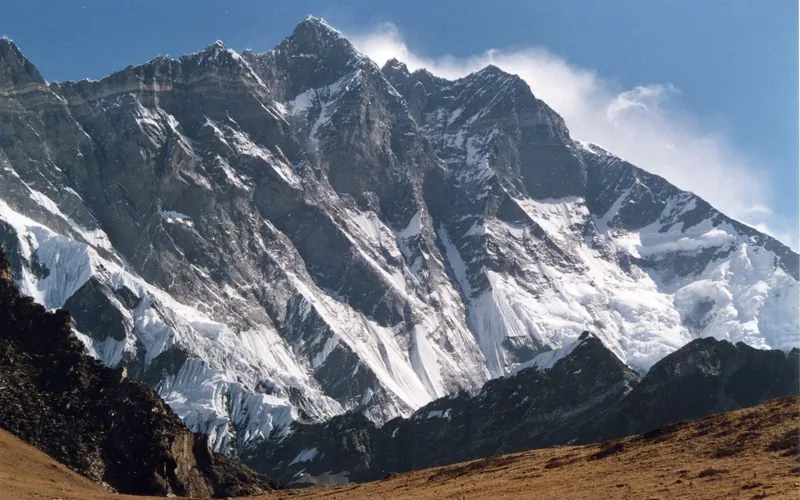
Lhotse, at 8,516 meters (27,940 ft), is the fourth-highest mountain on Earth, connected directly to Mount Everest via the South Col. Renowned for its sheer 3,200-meter South Face, one of the most imposing rock and ice walls in alpinism, the standard route tackles the grueling Lhotse Couloir from the Western Cwm.
Documented Sources & Archival Citations
- The Swiss Everest-Lhotse Expedition 1956(Albert Eggler / Swiss Foundation for Alpine Research)
Supporting claim: Official expedition narrative detailing the Lhotse first ascent and Everest repeat climbs
Accessed/Documented: 1957 - Mein Weg als Bergsteiger(Ernst Reiss / Orell Füssli)
Supporting claim: Firsthand technical account of negotiating the 1,100m Lhotse Couloir
Accessed/Documented: 1959 - The Himalayan Database: Spring 1956 Lhotse Records(Elizabeth Hawley Archive)
Supporting claim: Official expedition records, ascent timestamps, and member registries
Accessed/Documented: 2026