Manaslu 1956: The Japanese Triumph on the Mountain of the Spirit
On May 9, 1956, Toshio Imanishi and Sherpa Sirdar Gyalzen Norbu stood atop Manaslu (8,163m), overcoming years of cultural standoff and extreme high-altitude terrain to claim Japan's first eight-thousander.
Mountain Safety & Conditions Disclaimer: High-altitude climbing, glacial travel, and technical ascents entail severe objective risks including avalanches, serac collapses, rapid weather collapse, and altitude illness. Historical route descriptions and summit claims on Mountanity reflect documented archival sources and must not be used as live operational safety assessments. Local regulations, permits, and physical glacial topography change continuously.
Peer Review: Senior Editorial Board & Historical Reviewers • Editorial Standards
In the collective imagination of post-war Japan, no mountain on Earth held greater emotional and national weight than Manaslu. Towering at 8,163 meters in the Mansiri Himal of west-central Nepal, Manaslu—derived from the Sanskrit word Manasa, meaning “Mountain of the Spirit”—was adopted by the Japanese Alpine Club as Japan’s national mountain. Just as Everest belonged to Britain, Annapurna to France, K2 to Italy, and Nanga Parbat to Germany and Austria, the Japanese were determined that Manaslu would belong to Japan.
Between 1952 and 1954, Japanese expeditions made repeated, grueling pilgrimages to the mountain’s approaches. But in 1954, their campaign collided with profound cultural resistance.
The Standoff at Sama Gompa
In the spring of 1954, as the Japanese team marched toward the mountain, an avalanche destroyed a 300-year-old Buddhist monastery in the village of Sama Gompa, killing three villagers. The devout local inhabitants believed that the presence of foreign climbers had desecrated the sacred home of the mountain gods, invoking divine wrath.
When the Japanese attempted to pass through the village, a hostile crowd armed with stones, clubs, and knives blocked the trail. Threats were made, and the expedition was forced to abandon the climb and retreat to Kathmandu.
Many nations might have responded with political pressure or force. Instead, expedition leader Aritsune Maki and lead climber Toshio Imanishi chose patience, humility, and cultural diplomacy. In late 1955, Maki traveled personally to Nepal to negotiate with the lamas and local elders. The Japanese Alpine Club offered a generous donation of silver coins and building supplies to rebuild the Sama Gompa monastery. Trust was restored, Buddhist blessings were conferred, and in early 1956, permission was granted for the Japanese to make one final attempt.
Forging the Northeast Face
In April 1956, the third Japanese expedition established Base Camp on the Manaslu Glacier at 5,000 meters. The climbing party consisted of twelve Japanese alpinists and twenty-two Sherpas led by Sirdar Gyalzen Norbu, who had summited Makalu with the French the previous year.
The route up the Northeast Face presented immense objective hazards. Massive hanging glaciers frequently calved across the lower slopes, while deep, unconsolidated powder made load-carrying tortuous. Working through April, Japanese climbers and Sherpas fixed miles of manila rope across the icefall, establishing Camp III at 6,400 meters and Camp V at 7,400 meters on the broad upper snow plateau.
By early May, an assault tent—Camp VI—was pitched on a snow shelf at 7,800 meters beneath the final summit pyramid. Selected for the first summit wave was 41-year-old industrialist Toshio Imanishi and 38-year-old Sirdar Gyalzen Norbu.
May 9, 1956: The Exposed Knife-Edge
At 8:30 AM on May 9, 1956, Imanishi and Gyalzen Norbu began their summit bid using open-circuit oxygen apparatus. The day was crisp and clear, but the wind was ferocious, whipping clouds of spindrift into their faces.
Climbing through deep, crusty snow, they reached the base of the summit pyramid. Here, the broad snow slopes narrowed abruptly into a razor-sharp, corniced snow ridge that dropped precipitously on both sides. To the left, a vertical void dropped into the Larkya valley; to the right, thousands of feet plunged down the Northeast Face.
Roping together with five meters of slack, Imanishi and Gyalzen Norbu moved with meticulous care, straddling the corniced crest like horsemen. The final obstacle was a sheer, 10-meter block of cracked granite jutting out into the sky. Gyalzen Norbu secured the belay while Imanishi, wearing steel crampons, found small friction holds and pulled himself over the overhanging mantle. Reaching out a gloved hand, he pulled Gyalzen up beside him.
At 12:30 PM on May 9, 1956, Toshio Imanishi and Gyalzen Norbu stood together on the pinpoint summit of Manaslu at 8,163 meters.
For Japan, it was a momentous historical milestone: the first time an Asian nation had conquered an 8,000-meter giant. For Gyalzen Norbu, the achievement was unique in the annals of mountaineering: he became the only human being in history to make the maiden first ascent of two virgin eight-thousanders (Makalu in 1955 and Manaslu in 1956).
National Celebration and Lasting Legacy
Two days later, on May 11, teammates Kiichiro Kato and Minoru Higeta repeated the climb, confirming the total success of the expedition.
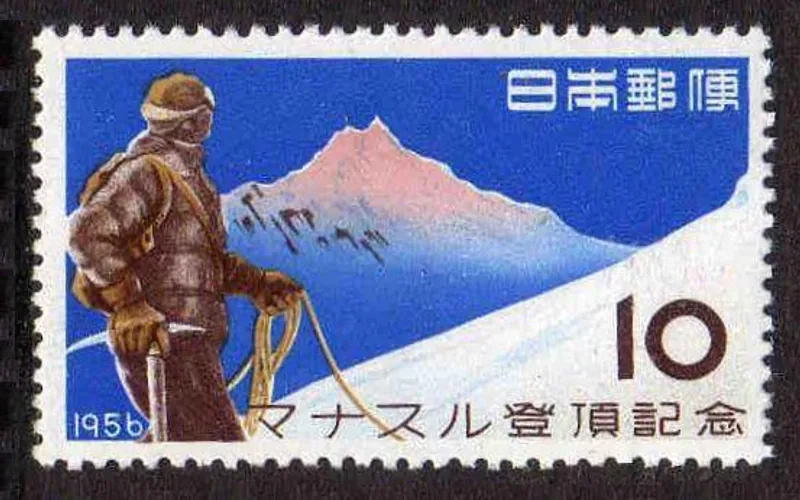
When news of the ascent reached Tokyo, the nation erupted in euphoric celebration. Tickers ran across major newspapers, the Ministry of Posts issued a commemorative postage stamp depicting the summit climb, and Emperor Hirohito received the returning climbers at the Imperial Palace.
The 1956 ascent of Manaslu proved that:
- Diplomacy Transcends Conquest: Respecting indigenous beliefs and making amends with local villagers created the ethical foundation for mountaineering success.
- Japanese Mountaineering Excellence: Japanese climbers proved their technical, logistical, and physical equality with the world’s leading alpine powers.
- The Indispensable Sherpa: Gyalzen Norbu’s dual first ascents established the Sherpa people as the true heart of Himalayan exploration.
Upon descending to Base Camp, Toshio Imanishi captured the spirit of the triumph: “We did not conquer Manaslu. The mountain permitted us to visit its spirit, and in doing so, brought our two cultures together as brothers.”
Key Statistics & Topographic Figures
- Category
- Historic Expeditions
Archival Subject
- Reading Time
- 11 min read
Narrative Length
- Key Mountain
- manaslu
Objective
- Ascent Route
- manaslu-northeast-face
Topography
- Verification
- Editorially Verified
Archival Standard
Archival Primary Source Quotations
“In the mountains, truth is etched in ice and granite; every step requires unwavering respect for the heights.”
Defined Alpine Terminology & Concepts
- Summit Push
- The final continuous climbing effort from the highest established camp to the mountain apex and back.
- Death Zone Chronicle
- A verified, research-backed historical narrative documenting the human, technical, and environmental realities of an alpine expedition.
Frequently Asked Questions: Manaslu 1956: The Japanese Triumph on the Mountain of the Spirit
What is the core chronicle and subject of "Manaslu 1956: The Japanese Triumph on the Mountain of the Spirit"?
On May 9, 1956, Toshio Imanishi and Sherpa Sirdar Gyalzen Norbu stood atop Manaslu (8,163m), overcoming years of cultural standoff and extreme high-altitude terrain to claim Japan's first eight-thousander.
Which mountain peaks and routes are featured in "Manaslu 1956: The Japanese Triumph on the Mountain of the Spirit"?
This narrative documents climbs on manaslu along the manaslu-northeast-face in Nepal.
Which documented expedition is chronicled in this story?
This historical chronicle captures the events of the 1956-japanese-manaslu, verified through contemporary journals and archival records.
Who authored and researched this archival chronicle?
Authored and researched by Mountainity Historical Research Desk, drawing on primary eyewitness testimonies, alpine club registries, and verified summit logs.
What makes this high-altitude chronicle historically significant?
Categorized under "Historic Expeditions", this chronicle preserves critical lessons in alpine leadership, survival, tactical speed, and human endurance in the death zone.
Related Mountains

Manaslu
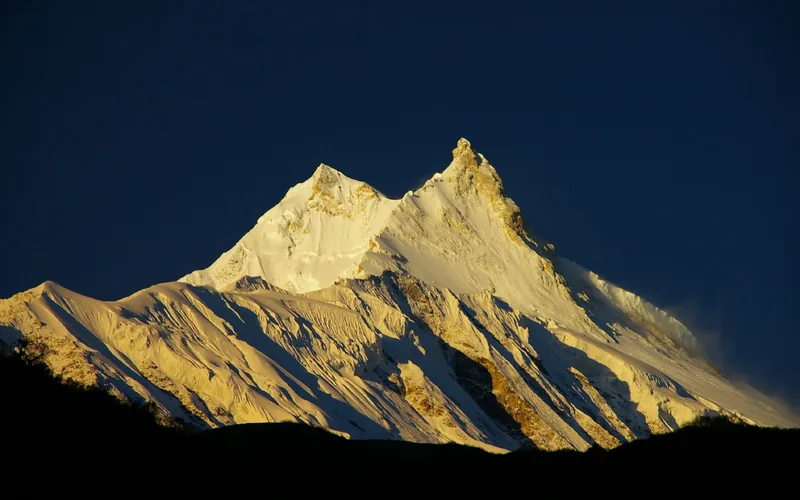
Manaslu, at 8,163 meters (26,781 ft), is the eighth-highest mountain in the world, situated in the Mansiri Himal of west-central Nepal. Known as the 'Mountain of the Spirit', its long ridges and valley glaciers offer dramatic topography culminating in a delicate, exposed knife-edge summit crest.
Documented Sources & Archival Citations
- Manaslu: 1954-1956(Aritsune Maki / Japanese Alpine Club)
Supporting claim: Official expedition leader narrative detailing logistics, diplomacy, and summit climbs
Accessed/Documented: 1958 - The Himalayan Database: Spring 1956 Manaslu Records(Elizabeth Hawley Archive)
Supporting claim: Official expedition records, summit timestamps, and climber registries
Accessed/Documented: 2026 - Japanese Himalayan Climbing: A Centenary Survey(Japanese Alpine Club)
Supporting claim: Historical assessment of the cultural and alpine significance of the 1956 Manaslu conquest
Accessed/Documented: 2006