The West Ridge and Beyond: The 1963 American Mount Everest Triumph
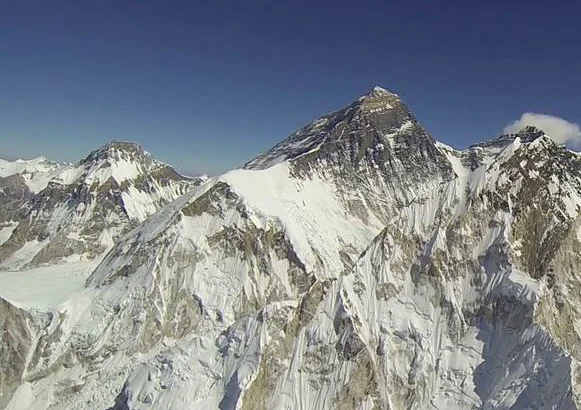
In May 1963, the American Mount Everest Expedition achieved historic triumphs on the roof of the world. Jim Whittaker became the first American to summit Everest on May 1, followed on May 22 by Tom Hornbein and Willi Unsoeld's audacious West Ridge traverse and open bivouac at 8,500 metres.
Mountain Safety & Conditions Disclaimer: High-altitude climbing, glacial travel, and technical ascents entail severe objective risks including avalanches, serac collapses, rapid weather collapse, and altitude illness. Historical route descriptions and summit claims on Mountanity reflect documented archival sources and must not be used as live operational safety assessments. Local regulations, permits, and physical glacial topography change continuously.
Peer Review: Senior Editorial Board & Historical Reviewers • Editorial Standards
The Cold Call of the Highest Peak
In the early spring of 1963, American mountaineering stood on the threshold of its greatest global trial. While British, Swiss, French, and Austrian climbers had made historic first ascents across the 8,000-metre peaks of the Himalayas throughout the 1950s, no American citizen had ever stood upon the summit of Mount Everest (8,848 m).
Swiss-American filmmaker and veteran Himalayan explorer Norman Dyhrenfurth set out to change history. Securing financial backing from the National Geographic Society and assembling a powerhouse roster of nineteen American climbers, scientists, and doctors, Dyhrenfurth launched the 1963 American Mount Everest Expedition.
Among the team were two towering figures from the Pacific Northwest who would write their names in world climbing lore: Jim Whittaker, the six-foot-five manager of Seattle outdoor co-op REI, and Willi Unsoeld, a charismatic philosopher and mountain guide whose alpine ethic favored extreme, aesthetic challenges over standard siege routes.
Whittaker on the Summit: May 1, 1963
The expedition established Base Camp on the Khumbu Glacier in late March, fixing thousands of feet of rope through the treacherous Khumbu Icefall and opening the Western Cwm. By late April, Camps were established up the Lhotse Face to the South Col at 7,900 metres.
On May 1, 1963, Jim Whittaker and Sherpa Nawang Gombu launched the first summit bid from Camp VI on the South Col. Battling fierce, sub-zero jet-stream gales that tore at their parkas, Whittaker and Gombu pushed through the knee-deep powder of the Southeast Ridge.
Running precariously low on bottled oxygen as their supply cylinders emptied, they crested the Hillary Step and stepped onto the 8,848-metre apex of Mount Everest at one o’clock in the afternoon. Whittaker became the first American in history to reach the highest point on Earth, planting the United States flag in the frozen snow while Gombu tied a kata blessing scarf to the flagpole.
The West Ridge Gamble
While Whittaker’s ascent brought immediate international fame, a second drama of unprecedented audacity was unfolding on the opposite side of the mountain. Doctor Tom Hornbein and Willi Unsoeld were determined to climb Mount Everest via the completely unexplored West Ridge.
The West Ridge was steep, bitterly cold, and exposed to the full fury of the prevailing westerly winds. To make matters more daunting, Dyhrenfurth’s logistical resources were stretched thin supporting simultaneous assaults on two different faces. Hornbein and Unsoeld knew that once they committed to the upper West Ridge, reversal would be impossible; their only route home was to climb over the summit and descend the unfamiliar South Col route.
On May 22, 1963, Hornbein and Unsoeld left their high camp at 8,290 metres on the West Ridge. Confronted by a formidable vertical cleft in the Yellow Band limestone, Hornbein led through what became known as the Hornbein Couloir, jamming his mittens into iced rock cracks at 8,500 metres.
Breaking out onto the upper North Face snowfield, they pressed upward through twilight exhaustion. At 6:15 PM on May 22, 1963, Tom Hornbein and Willi Unsoeld stepped onto the summit of Mount Everest, completing the first ascent of the West Ridge and the first traverse of an 8,000-metre peak in mountain history.
The 8,500-Metre Night Bivouac
Night had already fallen as Hornbein and Unsoeld began their descent down the Southeast Ridge by flashlight. Low on oxygen, they encountered teammates Barry Bishop and Lute Jerstad, who had summited via the South Col earlier that afternoon and were struggling in the freezing dark.
At 12:30 AM, exhausted and disoriented at 8,500 metres, the four men realized they could go no further without tumbling into the abyss. Clustered together on a tiny rock shelf on the knife-edge ridge, they bivouacked in the open air without a tent, sleeping bags, or oxygen in temperatures below minus thirty degrees Fahrenheit.
Miraculously, the wind fell calm during the night. Shivering violently and rubbing each other’s feet to stave off gangrene, all four men survived the highest open bivouac in mountaineering history, descending to the South Col at dawn. Though Unsoeld and Bishop suffered severe frostbite, their audacious climb redefined what the human spirit could achieve on the highest peaks on Earth.
Key Statistics & Topographic Figures
- Category
- Himalayan Golden Age Chronicles
Archival Subject
- Reading Time
- 16 min read
Narrative Length
- Key Mountain
- mount-everest
Objective
- Ascent Route
- south-col-route
Topography
- Verification
- Editorially Verified
Archival Standard
Archival Primary Source Quotations
“In the mountains, truth is etched in ice and granite; every step requires unwavering respect for the heights.”
Defined Alpine Terminology & Concepts
- Summit Push
- The final continuous climbing effort from the highest established camp to the mountain apex and back.
- Death Zone Chronicle
- A verified, research-backed historical narrative documenting the human, technical, and environmental realities of an alpine expedition.
Frequently Asked Questions: The West Ridge and Beyond: The 1963 American Mount Everest Triumph
What is the core chronicle and subject of "The West Ridge and Beyond: The 1963 American Mount Everest Triumph"?
In May 1963, the American Mount Everest Expedition achieved historic triumphs on the roof of the world. Jim Whittaker became the first American to summit Everest on May 1, followed on May 22 by Tom Hornbein and Willi Unsoeld's audacious West Ridge traverse and open bivouac at 8,500 metres.
Which mountain peaks and routes are featured in "The West Ridge and Beyond: The 1963 American Mount Everest Triumph"?
This narrative documents climbs on mount-everest along the south-col-route in Nepal.
Which documented expedition is chronicled in this story?
This historical chronicle captures the events of the 1963-american-mount-everest-expedition, verified through contemporary journals and archival records.
Who authored and researched this archival chronicle?
Authored and researched by Mountainity Historical Research Desk, drawing on primary eyewitness testimonies, alpine club registries, and verified summit logs.
What makes this high-altitude chronicle historically significant?
Categorized under "Himalayan Golden Age Chronicles", this chronicle preserves critical lessons in alpine leadership, survival, tactical speed, and human endurance in the death zone.
Related Mountains


Mount Everest
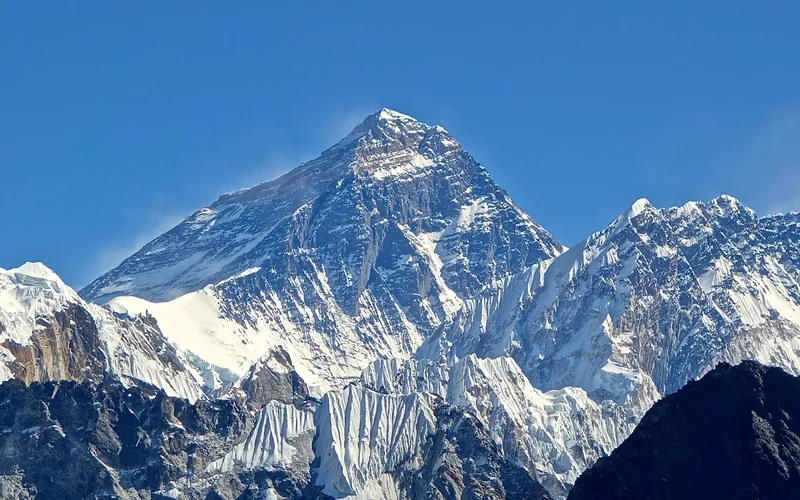
Mount Everest is the highest mountain above sea level on Earth, standing at an official elevation of 8,848.86 meters (29,031.7 ft). Straddling the international frontier between Nepal and China, it is known locally as Sagarmatha in Nepali ('Goddess of the Sky') and Chomolungma in Tibetan ('Mother Goddess of the World'). The peak rises into the extreme upper troposphere, where oxygen levels drop to barely one-third of sea-level pressure. Climbers face hurricane-force jet stream winds, severe frostbite conditions, shifting ice crevasses in the Khumbu Icefall, and the dangerous Death Zone above 8,000 meters.
Documented Sources & Archival Citations
- Americans on Everest(James Ramsey Ullman / J.B. Lippincott Company)
Supporting claim: Official narrative chronicle of the 1963 American Mount Everest Expedition
Accessed/Documented: 2026 - Everest: The West Ridge(Thomas F. Hornbein / Sierra Club Books)
Supporting claim: Seminal chronicle of the historic West Ridge first ascent and high-altitude traverse
Accessed/Documented: 2026