Defying the Avalanche: How Junko Tabei Became the First Woman to Summit Mount Everest
On May 16, 1975, Japanese mountaineer Junko Tabei surmounted an avalanche that buried her alive at Camp II to become the first woman in history to conquer the summit of Mount Everest.
Mountain Safety & Conditions Disclaimer: High-altitude climbing, glacial travel, and technical ascents entail severe objective risks including avalanches, serac collapses, rapid weather collapse, and altitude illness. Historical route descriptions and summit claims on Mountanity reflect documented archival sources and must not be used as live operational safety assessments. Local regulations, permits, and physical glacial topography change continuously.
Peer Review: Senior Editorial Board & Historical Reviewers • Editorial Standards
In the spring of 1975, a 35-year-old mother from Tokyo stood beneath the towering ice seracs of the Khumbu Glacier, preparing to challenge the highest mountain on Earth. In post-war Japan, conservative societal expectations dictated that married women should dedicate themselves entirely to domestic life. Men routinely told Junko Tabei that women belonged in the kitchen raising children, not on the frozen faces of the Himalayas.
Tabei’s response was simple, quiet, and uncompromising: she established the Ladies Climbing Club: Japan (LCC) in 1969 with the motto: “Let’s go on an overseas expedition by ourselves.”
Six years later, on May 16, 1975, Tabei would shatter centuries of patriarchal prejudice, standing alone atop the 8,848-meter summit of Mount Everest as the first woman in human history to reach the roof of the planet.
The Women Who Sewed Their Own Gear
Organizing the 1975 Japanese Women’s Everest Expedition was an uphill battle long before the team ever reached Nepal. Corporate sponsors repeatedly rejected Tabei’s proposals, dismissing the idea of an all-female Himalayan expedition as reckless folly.
Refusing to surrender, the fifteen women took matters into their own hands. They held bake sales, taught evening classes, and pooled their personal savings. Tabei collected discarded velvet seat fabric from Tokyo car dealerships and stitched heavy winter gloves on her home sewing machine. Eventually, the Yomiuri Shimbun newspaper and Nippon Television stepped in with co-sponsorship, enabling the team to secure a coveted climbing permit for the classic South Col route.
The Avalanche at Camp II
In late March 1975, the expedition established Base Camp at 5,350 meters on the Khumbu Glacier. Tabei, serving as deputy leader, led from the front, coordinating logistical movements through the treacherous crevasses of the Khumbu Icefall and up the Western Cwm.
On the night of May 4, disaster struck with terrifying ferocity. At 12:30 AM, a colossal avalanche calved from the hanging glaciers of the Nuptse wall, thundering directly into Camp II at 6,500 meters.
The blast of wind and pulverized snow crushed the team’s tents. Tabei was trapped beneath heavy nylon and tons of dense snow, suffocating in pitch darkness. She lost consciousness before her Sherpa guides desperately dug through the debris with their bare hands, dragging her battered body out into the freezing night.
Tabei suffered severe contusions across her back and legs, rendering her unable to stand or walk for two full days. Team doctors and expedition members urged her to abandon the mountain and descend to Base Camp for medical treatment. But Tabei’s iron determination prevailed. After three days of strict rest inside a rescue tent, she took her first painful steps and declared that the expedition would continue.
The Razor Ridge to the Hillary Step
By mid-May, Tabei and Sirdar Ang Tsering Sherpa had reached Camp IV on the wind-lashed South Col at 7,920 meters. On May 16, at 5:00 AM, in temperatures dipping below -30°C, the pair launched their final summit assault into the Death Zone.
Climbing with open-circuit oxygen equipment, they moved steadily past the Balcony and arrived at the South Summit (8,750m). Ahead stretched the most terrifying section of the entire mountain: the knife-edge snow arête leading to the Hillary Step. On their right, an uninterrupted 8,000-foot precipice plunged down the Kangshung Face into Tibet; on their left, the vertical void of the Southwest Face dropped into Nepal.
Tabei later recalled that the ridge was so narrow and unstable with fragile rime cornices that she had to crawl sideways, straddling the arête with one leg in Nepal and one in Tibet.
Arriving at the Hillary Step—a 40-foot vertical wall of rock and ice—Tabei found that earlier fixed ropes were buried under rotten snow. Using every ounce of technical strength, she jammed her boots into a narrow rock chimney between the granite and the snow cornice, levering herself upward inch by inch until she crested the top.
The Apex of the World
Beyond the Hillary Step lay the gentle snow slopes leading to the summit crest. At 12:30 PM on May 16, 1975, Junko Tabei and Ang Tsering Sherpa stepped onto the 8,848-meter summit of Mount Everest.
Standing on the narrow snow platform where no woman had ever stood before, Tabei wept softly into her oxygen mask. Looking out across the vast curvature of the Earth spanning the peaks of Nepal and Tibet, she felt no sense of arrogant conquest, only deep humility and profound gratitude for the mountain that had allowed her to stand upon its crest.
Tabei’s historic triumph resonated across the globe, inspiring millions of women to pursue high-altitude mountaineering, scientific exploration, and athletic excellence. In 1992, she became the first woman to complete the Seven Summits.
Until her death in 2016, Junko Tabei remained a passionate advocate for mountain environmental protection, proving that courage, quiet humility, and unshakeable conviction can overcome the highest barriers on Earth.
Key Statistics & Topographic Figures
- Category
- Women Himalayan Pioneers
Archival Subject
- Reading Time
- 13 min read
Narrative Length
- Key Mountain
- mount-everest
Objective
- Ascent Route
- south-col-route
Topography
- Verification
- Editorially Verified
Archival Standard
Archival Primary Source Quotations
“In the mountains, truth is etched in ice and granite; every step requires unwavering respect for the heights.”
Defined Alpine Terminology & Concepts
- Summit Push
- The final continuous climbing effort from the highest established camp to the mountain apex and back.
- Death Zone Chronicle
- A verified, research-backed historical narrative documenting the human, technical, and environmental realities of an alpine expedition.
Frequently Asked Questions: Defying the Avalanche: How Junko Tabei Became the First Woman to Summit Mount Everest
What is the core chronicle and subject of "Defying the Avalanche: How Junko Tabei Became the First Woman to Summit Mount Everest"?
On May 16, 1975, Japanese mountaineer Junko Tabei surmounted an avalanche that buried her alive at Camp II to become the first woman in history to conquer the summit of Mount Everest.
Which mountain peaks and routes are featured in "Defying the Avalanche: How Junko Tabei Became the First Woman to Summit Mount Everest"?
This narrative documents climbs on mount-everest along the south-col-route in Nepal.
Which documented expedition is chronicled in this story?
This historical chronicle captures the events of the 1975-japanese-women-everest, verified through contemporary journals and archival records.
Who authored and researched this archival chronicle?
Authored and researched by Mountainity Historical Research Desk, drawing on primary eyewitness testimonies, alpine club registries, and verified summit logs.
What makes this high-altitude chronicle historically significant?
Categorized under "Women Himalayan Pioneers", this chronicle preserves critical lessons in alpine leadership, survival, tactical speed, and human endurance in the death zone.
Related Mountains
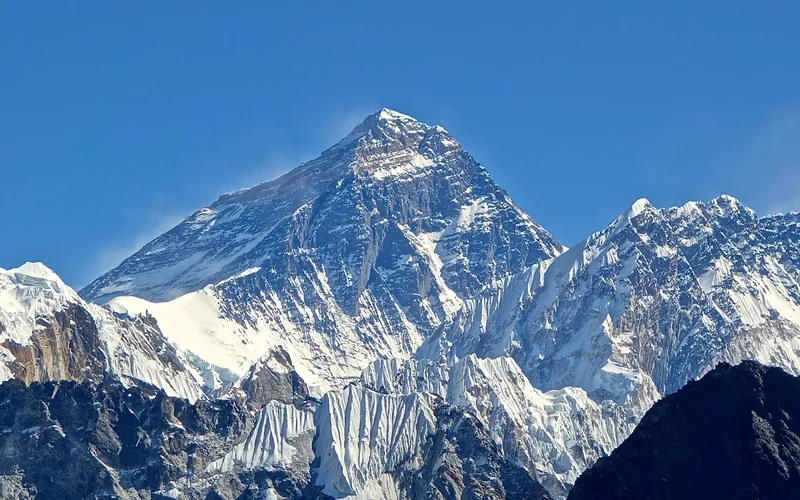


Mount Everest
Mount Everest is the highest mountain above sea level on Earth, standing at an official elevation of 8,848.86 meters (29,031.7 ft). Straddling the international frontier between Nepal and China, it is known locally as Sagarmatha in Nepali ('Goddess of the Sky') and Chomolungma in Tibetan ('Mother Goddess of the World'). The peak rises into the extreme upper troposphere, where oxygen levels drop to barely one-third of sea-level pressure. Climbers face hurricane-force jet stream winds, severe frostbite conditions, shifting ice crevasses in the Khumbu Icefall, and the dangerous Death Zone above 8,000 meters.
Documented Sources & Archival Citations
- The Himalayan Journal: Japanese Women's Everest Expedition 1975(The Himalayan Club)
Supporting claim: Official expedition record documenting Tabei's summit and the avalanche at Camp II
Accessed/Documented: 1976 - American Alpine Journal: Everest 1975 Ascents(American Alpine Club)
Supporting claim: Official verification of the first female ascent of Mount Everest on May 16, 1975
Accessed/Documented: 1976