1978 Everest Without Oxygen: Shattering Medical Dogma
How Reinhold Messner and Peter Habeler proved humans could summit Everest without supplemental oxygen, overturning established physiology.
Mountain Safety & Conditions Disclaimer: High-altitude climbing, glacial travel, and technical ascents entail severe objective risks including avalanches, serac collapses, rapid weather collapse, and altitude illness. Historical route descriptions and summit claims on Mountanity reflect documented archival sources and must not be used as live operational safety assessments. Local regulations, permits, and physical glacial topography change continuously.
Peer Review: Senior Editorial Board & Historical Reviewers • Editorial Standards
The Medical Consensus of Impossibility
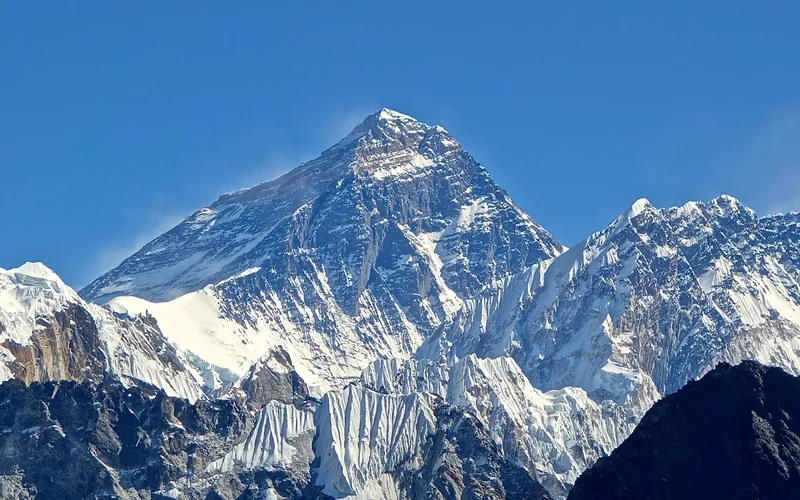
For a quarter of a century following the 1953 first ascent, world-renowned respiratory physiologists and medical doctors maintained an unbending scientific consensus: the human lung could not extract sufficient oxygen at 8,848 meters to sustain life. Above 8,000 meters, atmospheric pressure drops to roughly 33% of sea level. Experts warned that any climber attempting to summit Mount Everest without bottled oxygen would suffer catastrophic brain damage, pulmonary hemorrhage, and swift death.
In the spring of 1978, Tyrolean mountaineers Reinhold Messner and Peter Habeler set out to prove the medical establishment wrong.
A Pure Alpine Assault
Operating as part of an Austrian expedition led by Wolfgang Nairz, Messner and Habeler refused to carry oxygen cylinders, regulators, or face masks. They climbed rapidly, relying on hyperventilation pacing and physiological conditioning forged through years of extreme alpine speed-climbing.
On May 6, 1978, they reached the South Col (7,980m) in a savage gale that flattened their tent. Trapped for two days in the sub-zero Death Zone without oxygen, they endured severe dehydration and physical depletion before setting out on the morning of May 8.
The Agony of the Final Ridge
Every step above the South Summit demanded immense willpower. Messner later recounted taking ten to fifteen deep gasping breaths for every single step of forward progress, collapsing onto the snow every few meters as his lungs burned in the razor-thin air.
At 13:15 on May 8, 1978, Reinhold Messner and Peter Habeler stepped onto the summit of Mount Everest. They had stood upon the apex of Earth powered entirely by their own lungs. Their success permanently overturned 25 years of medical doctrine and ushered in the modern era of pure, oxygenless high-altitude alpinism.
Key Statistics & Topographic Figures
- Category
- Medical Breakthroughs
Archival Subject
- Reading Time
- 9 min read
Narrative Length
- Key Mountain
- mount-everest
Objective
- Ascent Route
- south-col-route
Topography
- Verification
- Editorially Verified
Archival Standard
Archival Primary Source Quotations
“In the mountains, truth is etched in ice and granite; every step requires unwavering respect for the heights.”
Defined Alpine Terminology & Concepts
- Summit Push
- The final continuous climbing effort from the highest established camp to the mountain apex and back.
- Death Zone Chronicle
- A verified, research-backed historical narrative documenting the human, technical, and environmental realities of an alpine expedition.
Frequently Asked Questions: 1978 Everest Without Oxygen: Shattering Medical Dogma
What is the core chronicle and subject of "1978 Everest Without Oxygen: Shattering Medical Dogma"?
How Reinhold Messner and Peter Habeler proved humans could summit Everest without supplemental oxygen, overturning established physiology.
Which mountain peaks and routes are featured in "1978 Everest Without Oxygen: Shattering Medical Dogma"?
This narrative documents climbs on mount-everest along the south-col-route in Nepal.
Which documented expedition is chronicled in this story?
This historical chronicle captures the events of the 1978-everest-no-oxygen, verified through contemporary journals and archival records.
Who authored and researched this archival chronicle?
Authored and researched by Mountanity Research Desk, drawing on primary eyewitness testimonies, alpine club registries, and verified summit logs.
What makes this high-altitude chronicle historically significant?
Categorized under "Medical Breakthroughs", this chronicle preserves critical lessons in alpine leadership, survival, tactical speed, and human endurance in the death zone.
Related Mountains


Mount Everest
Mount Everest is the highest mountain above sea level on Earth, standing at an official elevation of 8,848.86 meters (29,031.7 ft). Straddling the international frontier between Nepal and China, it is known locally as Sagarmatha in Nepali ('Goddess of the Sky') and Chomolungma in Tibetan ('Mother Goddess of the World'). The peak rises into the extreme upper troposphere, where oxygen levels drop to barely one-third of sea-level pressure. Climbers face hurricane-force jet stream winds, severe frostbite conditions, shifting ice crevasses in the Khumbu Icefall, and the dangerous Death Zone above 8,000 meters.