The Razor's Edge: Nejc Zaplotnik and the Complete Everest West Ridge Direct
On May 13, 1979, Slovenian mountaineers Nejc Zaplotnik and Andrej Štremfelj conquered Mount Everest's unbroken West Ridge Direct, surviving a minus forty-degree open bivouac at 8,400m.
Mountain Safety & Conditions Disclaimer: High-altitude climbing, glacial travel, and technical ascents entail severe objective risks including avalanches, serac collapses, rapid weather collapse, and altitude illness. Historical route descriptions and summit claims on Mountanity reflect documented archival sources and must not be used as live operational safety assessments. Local regulations, permits, and physical glacial topography change continuously.
Peer Review: Senior Editorial Board & Historical Reviewers • Editorial Standards
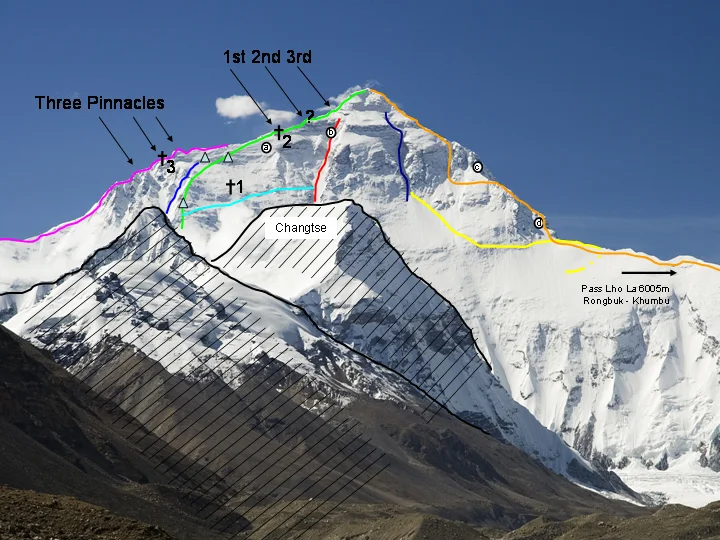
Among all the aesthetic lines that define Mount Everest (8,848m), none matches the terrifying purity and unrelenting exposure of the complete West Ridge. Stretching unbroken from the high glacial notch of the Lho La pass directly along the border of Nepal and Tibet to the true summit, it stands as a gigantic granite knife-edge exposed to the ceaseless fury of the Himalayan jet stream.
When the legendary American team of Tom Hornbein and Willi Unsoeld achieved their miraculous traverse in 1963, they were forced by insurmountable rock buttresses to divert onto the Tibetan North Face, leaving the ridge crest above 7,300 metres unclimbed. For the next sixteen years, world-class expeditions from France, the United Kingdom, and the United States attempted to climb the full, unbroken crest direct. Every single attempt ended in retreat, avalanche disaster, or death.
In the spring of 1979, the twenty-five-man Yugoslav Expedition led by visionary Slovenian strategist Tone Škarja arrived at Everest. At the spearhead of the team was twenty-seven-year-old Jernej ‘Nejc’ Zaplotnik—a poet, philosopher, and phenomenally gifted mountaineer—partnered with twenty-two-year-old schoolteacher Andrej Štremfelj.
Battling the Crux of the Yellow Band at 8,300m
Over six grueling weeks, the team endured hurricane winds that shredded tents and tore equipment into the abyss. By early May, they had established Camp V at 8,120 metres, poised for the summit push.
On the freezing dawn of May 13, 1979, Zaplotnik and Štremfelj pushed out from their tent into the Death Zone. Temperatures hovered near minus forty degrees Celsius as ferocious gale-force gusts ripped across the Tibetan crest. At 8,300 metres, they arrived at the terrifying heart of the ridge: the vertical barrier of the Yellow Band.
Here, the limestone was rotten, crumbly, and severely fractured, sloping outward like loose roof tiles over an eight-thousand-foot vertical plunge into the Rongbuk Glacier. The pitch was graded V+ rock—a difficulty unheard of at such extreme altitude.
With oxygen masks hissing in the thin air, Zaplotnik tied into the lead rope. Shedding his thick outer mittens to feel micro-edges of rock with frostbitten fingers, he moved upward with deliberate, razor-sharp focus. At one point, his foot slipped on a patch of rotten limestone, but his handhold held firm. Driving a tenuous knifeblade piton into an outward-flaring crack, Zaplotnik hauled his body over the lip of the rock band. As Štremfelj followed, both men realized they had surmounted the greatest technical climbing crux ever conquered on Mount Everest.
Standing on the Crown of the Earth
Beyond the Yellow Band lay knife-thin snow cornices that hung precariously over the North Face. Clinging to the ridge crest with front-points digging into bullet-hard ice, Zaplotnik and Štremfelj pressed on through sheer willpower.
At 1:45 PM on May 13, 1979, Nejc Zaplotnik broke through the final cornice and stepped onto the 8,848-metre summit of Mount Everest. Minutes later, Andrej Štremfelj joined him. Weeping through his oxygen mask, Zaplotnik radioed Base Camp: “Tone, we are on top! We have conquered the West Ridge!”
The Minus Forty-Degree Survival Bivouac
Their triumph was immediately shadowed by mortal peril. Descending the jagged West Ridge direct was out of the question in the fading afternoon light, forcing them to drop down into the terrifying depths of the Hornbein Couloir. As darkness swallowed the mountain, their supplemental oxygen ran out, their headlamps failed, and a howling blizzard struck.
Trapped at 8,400 metres in the heart of the Death Zone without a tent, sleeping bags, or hot water, Zaplotnik and Štremfelj hacked out a narrow stance on a forty-five-degree ice slope. Anchored to a single piton, they huddled together, beating their hands against their chests through the night to keep blood circulating as temperatures dropped below minus forty degrees.
Miraculously, their ferocious vitality and indomitable will kept them alive. At dawn on May 14, frost-bitten and exhausted to the brink of collapse, they resumed their descent, staggering into the safety of the lower camps. The 1979 Yugoslav West Ridge Direct ascent remains universally revered as one of the bravest, purest, and most technically brilliant achievements in the entire history of Mount Everest.
Key Statistics & Topographic Figures
- Category
- Historic Himalayan Breakthroughs
Archival Subject
- Reading Time
- 14 min read
Narrative Length
- Key Mountain
- mount-everest
Objective
- Ascent Route
- everest-west-ridge
Topography
- Verification
- Editorially Verified
Archival Standard
Archival Primary Source Quotations
“In the mountains, truth is etched in ice and granite; every step requires unwavering respect for the heights.”
Defined Alpine Terminology & Concepts
- Summit Push
- The final continuous climbing effort from the highest established camp to the mountain apex and back.
- Death Zone Chronicle
- A verified, research-backed historical narrative documenting the human, technical, and environmental realities of an alpine expedition.
Frequently Asked Questions: The Razor's Edge: Nejc Zaplotnik and the Complete Everest West Ridge Direct
What is the core chronicle and subject of "The Razor's Edge: Nejc Zaplotnik and the Complete Everest West Ridge Direct"?
On May 13, 1979, Slovenian mountaineers Nejc Zaplotnik and Andrej Štremfelj conquered Mount Everest's unbroken West Ridge Direct, surviving a minus forty-degree open bivouac at 8,400m.
Which mountain peaks and routes are featured in "The Razor's Edge: Nejc Zaplotnik and the Complete Everest West Ridge Direct"?
This narrative documents climbs on mount-everest along the everest-west-ridge in Nepal / China.
Which documented expedition is chronicled in this story?
This historical chronicle captures the events of the 1979-zaplotnik-everest-west-ridge, verified through contemporary journals and archival records.
Who authored and researched this archival chronicle?
Authored and researched by Mountainity Historical Research Desk, drawing on primary eyewitness testimonies, alpine club registries, and verified summit logs.
What makes this high-altitude chronicle historically significant?
Categorized under "Historic Himalayan Breakthroughs", this chronicle preserves critical lessons in alpine leadership, survival, tactical speed, and human endurance in the death zone.
Related Mountains


Mount Everest
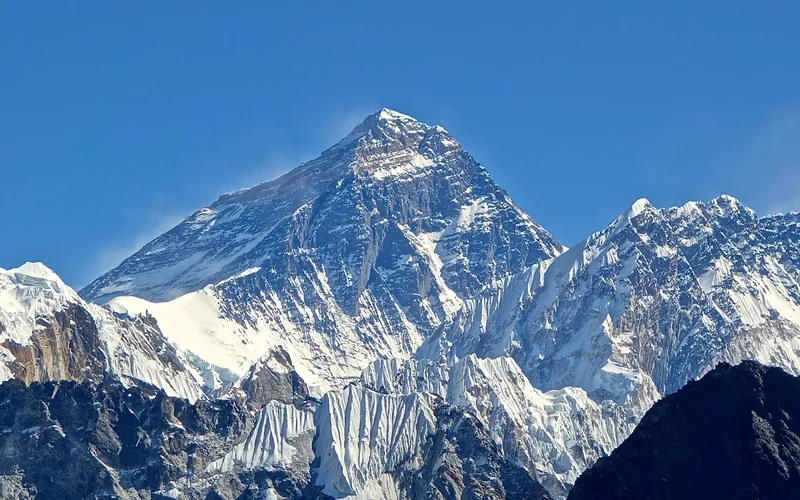
Mount Everest is the highest mountain above sea level on Earth, standing at an official elevation of 8,848.86 meters (29,031.7 ft). Straddling the international frontier between Nepal and China, it is known locally as Sagarmatha in Nepali ('Goddess of the Sky') and Chomolungma in Tibetan ('Mother Goddess of the World'). The peak rises into the extreme upper troposphere, where oxygen levels drop to barely one-third of sea-level pressure. Climbers face hurricane-force jet stream winds, severe frostbite conditions, shifting ice crevasses in the Khumbu Icefall, and the dangerous Death Zone above 8,000 meters.
Documented Sources & Archival Citations
- Everest: The West Ridge Yugoslav Expedition 1979(Tone Škarja / Mladinska Knjiga)
Supporting claim: Official expedition chronicle detailing the West Ridge Direct first ascent
Accessed/Documented: 1981 - Pot (The Path)(Nejc Zaplotnik / Cankarjeva Založba)
Supporting claim: Autobiographical account of Zaplotnik's experiences on the Yellow Band crux and open bivy
Accessed/Documented: 1981