Everest Winter 1980: The Polish Ice Warriors Conquer the Coldest Peak
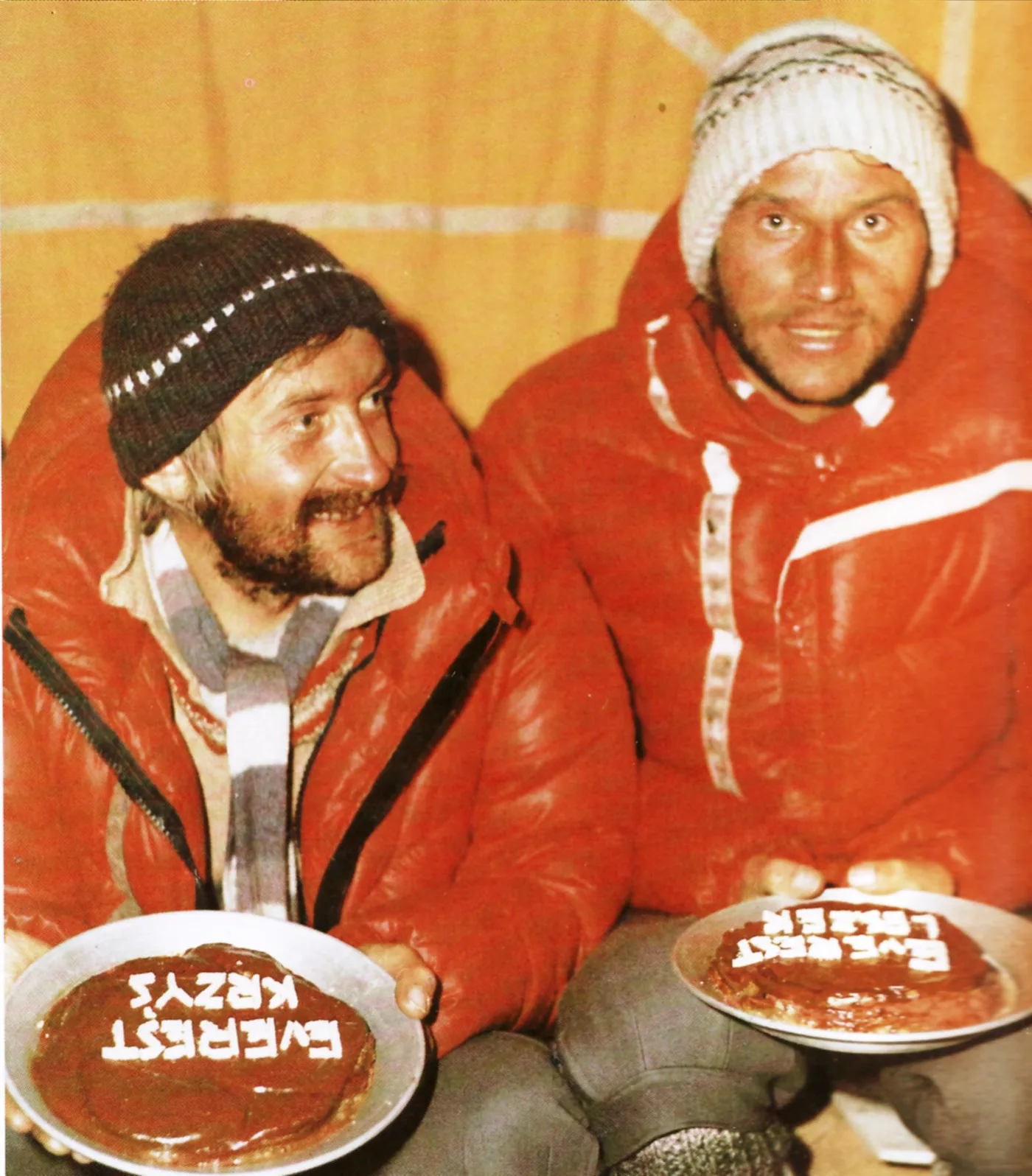
On February 17, 1980, Krzysztof Wielicki and Leszek Cichy made the historic first winter ascent of Mount Everest at -40°C, proving humans could summit an 8,000-meter giant in the dead of winter.
Mountain Safety & Conditions Disclaimer: High-altitude climbing, glacial travel, and technical ascents entail severe objective risks including avalanches, serac collapses, rapid weather collapse, and altitude illness. Historical route descriptions and summit claims on Mountanity reflect documented archival sources and must not be used as live operational safety assessments. Local regulations, permits, and physical glacial topography change continuously.
Peer Review: Senior Editorial Board & Historical Reviewers • Editorial Standards
Until the winter of 1979–1980, international mountaineering dogma maintained that the world’s 8,000-meter peaks were strictly unclimbable during the Himalayan winter. Above 7,000 meters between December and February, atmospheric pressure drops even lower than in summer, ambient temperatures routinely plummet beneath -45°C, and the screaming high-altitude jet stream delivers uninterrupted hurricane-force winds exceeding 100 miles per hour. A human body exposed to such extremes freezes in minutes.
Yet in Poland, a generation of climbers emerging from the bleak economic hardships of the Communist era refused to accept the boundaries of the possible. Led by visionary architect and organizer Andrzej Zawada, they styled themselves the Lodowi Wojownicy—the Ice Warriors. If the Western nations had already claimed the summer first ascents of all fourteen eight-thousanders during the 1950s and 60s, the Poles would claim the cold season as their own domain.
In late 1979, Zawada secured a historic first: a special winter climbing permit granted by the Nepalese Ministry of Tourism for Mount Everest (8,848m), valid through February 15, 1980.
The Battle with the Jet Stream
The Polish expedition established Base Camp on the Khumbu Glacier in early December 1979. What followed was two months of unrelenting physical warfare against the elements. The Khumbu Icefall was an unstable labyrinth of blue glacial ice shattering in sub-zero contractions. Higher up, on the colossal ice mirror of the Lhotse Face, hurricane winds stripped away every scrap of snow, leaving bare, bullet-hard black ice where every crampon point had to be kicked repeatedly with bone-jarring force.
Winds regularly blew down heavy tents, scattering gear across the Western Cwm. Climbers suffered frozen toes, cracked skin, and violent coughing fits brought on by breathing super-cooled dry air. Yet slowly, methodically, the Polish team fixed thousands of meters of rope and hauled heavy oxygen cylinders up to Camp IV on the South Col (7,980m).
By mid-February, the team’s official permit had expired. Zawada made an urgent radio appeal to the Nepalese government in Kathmandu, successfully negotiating a two-day emergency extension to February 17. It was an all-or-nothing ultimatum: if a summit push could not be launched immediately, the expedition would end in failure.
The Final Push: February 17, 1980
The final assault fell upon thirty-year-old Krzysztof Wielicki and twenty-eight-year-old electronics engineer Leszek Cichy. Both men were hardened veterans of winter climbing in the High Tatras, endowed with phenomenal cold tolerance and iron willpower.
On the afternoon of February 16, Wielicki and Cichy fought their way up to the South Col in winds so fierce they barely managed to secure their two-man tent with ice screws. Inside the frozen nylon shelter, the temperature stood at -42°C. Their breath froze into solid sheets of rime on the fabric. They spent the night without sleeping, taking turns melting small pots of snow over a sputtering gas burner while checking each other’s extremities for the waxy whiteness of deep frostbite.
At 6:50 AM on February 17, as the morning sun cast long purple shadows across Tibet, Wielicki and Cichy stepped out into the raging gale. Hauling heavy steel oxygen bottles on their backs, they began climbing the wind-scoured Southeast Ridge. The cold was terrifying: water bottles tucked deep inside their goose-down suits froze solid. The rubber gaskets on their oxygen masks stiffened into brittle plastic, forcing them to repeatedly clear ice plugs formed by their exhaled breath.
Moving with rhythmic, mechanical determination, the pair climbed past the Balcony and arrived at the South Summit (8,750m) at 1:00 PM. Before them stretched the narrow, corniced knife-edge arête leading to the Hillary Step. The rock of the Step was plastered with fragile rime ice, with an 8,000-foot drop into the Kangshung Face on their right and the Southwest Face on their left. Wielicki kicked his front crampon points into the rock cracks, hauled himself over the crux, and waited for Cichy to follow.
The Apex of the World at -40°C
At 2:25 PM on Sunday, February 17, 1980, Krzysztof Wielicki and Leszek Cichy stepped onto the summit of Mount Everest. They were the first human beings ever to stand upon the apex of the Earth in winter—and the first to summit any 8,000-meter mountain during the coldest season.
The temperature on the summit was estimated at -40°C, with winds howling at over 50 miles per hour. They could only remain on top for forty minutes. Cichy removed his heavy mittens to anchor a maximum-minimum thermometer to the snow stake, left a wooden rosary sent by Pope John Paul II, and retrieved a piece of paper left in an aluminum canister the previous spring by American climber Ray Genet (who had died on the descent).
Clutching his freezing radio transceiver, Cichy spoke to Andrzej Zawada waiting in tears at Base Camp: “Halo Andrzej! Zgadnij, gdzie jesteśmy?” (“Hello Andrzej! Guess where we are?”) Zawada wept into his microphone as Cichy added the immortal words: “Gdyby to nie był Everest, tobyśmy nie weszli”—“If this wasn’t Everest, we wouldn’t have gone.”
A Desperate Descent into the Dark
The descent from the summit was a battle for their lives. Exhausted and dehydrated, darkness overtook them before they could regain the South Col. Navigating blind down the rocky gully below the Balcony by the weak beam of a dying headlamp, Wielicki and Cichy staggered into Camp IV late that night, their fingers and toes severely frostbitten but their spirits unbroken.
The 1980 winter conquest of Mount Everest stunned the global mountaineering community. It permanently disproved the medical dogma that high altitude and deep winter were incompatible with human life. The ascent unleashed a golden decade in which Polish climbers conquered seven more eight-thousanders in winter over the following eight years, forever earning their place in history as the undisputed Ice Warriors of the high Himalayas.
Key Statistics & Topographic Figures
- Category
- Winter Himalayan Pioneers
Archival Subject
- Reading Time
- 14 min read
Narrative Length
- Key Mountain
- mount-everest
Objective
- Ascent Route
- south-col-route
Topography
- Verification
- Editorially Verified
Archival Standard
Archival Primary Source Quotations
“In the mountains, truth is etched in ice and granite; every step requires unwavering respect for the heights.”
Defined Alpine Terminology & Concepts
- Summit Push
- The final continuous climbing effort from the highest established camp to the mountain apex and back.
- Death Zone Chronicle
- A verified, research-backed historical narrative documenting the human, technical, and environmental realities of an alpine expedition.
Frequently Asked Questions: Everest Winter 1980: The Polish Ice Warriors Conquer the Coldest Peak
What is the core chronicle and subject of "Everest Winter 1980: The Polish Ice Warriors Conquer the Coldest Peak"?
On February 17, 1980, Krzysztof Wielicki and Leszek Cichy made the historic first winter ascent of Mount Everest at -40°C, proving humans could summit an 8,000-meter giant in the dead of winter.
Which mountain peaks and routes are featured in "Everest Winter 1980: The Polish Ice Warriors Conquer the Coldest Peak"?
This narrative documents climbs on mount-everest along the south-col-route in Nepal.
Which documented expedition is chronicled in this story?
This historical chronicle captures the events of the 1980-polish-everest-winter, verified through contemporary journals and archival records.
Who authored and researched this archival chronicle?
Authored and researched by Mountainity Historical Research Desk, drawing on primary eyewitness testimonies, alpine club registries, and verified summit logs.
What makes this high-altitude chronicle historically significant?
Categorized under "Winter Himalayan Pioneers", this chronicle preserves critical lessons in alpine leadership, survival, tactical speed, and human endurance in the death zone.
Related Mountains


Mount Everest
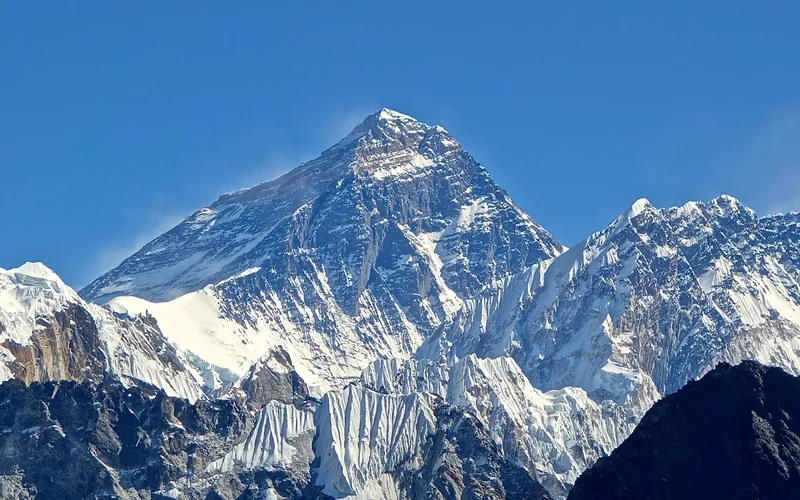
Mount Everest is the highest mountain above sea level on Earth, standing at an official elevation of 8,848.86 meters (29,031.7 ft). Straddling the international frontier between Nepal and China, it is known locally as Sagarmatha in Nepali ('Goddess of the Sky') and Chomolungma in Tibetan ('Mother Goddess of the World'). The peak rises into the extreme upper troposphere, where oxygen levels drop to barely one-third of sea-level pressure. Climbers face hurricane-force jet stream winds, severe frostbite conditions, shifting ice crevasses in the Khumbu Icefall, and the dangerous Death Zone above 8,000 meters.
Documented Sources & Archival Citations
- Winter 8000: Climbing the World's Highest Mountains in the Coldest Season(Bernadette McDonald / Mountaineers Books)
Supporting claim: Comprehensive chronicle of the 1980 winter Everest expedition, team journals, and weather logs
Accessed/Documented: 2020 - The Himalayan Journal: Mount Everest Winter Expedition 1980(The Himalayan Club)
Supporting claim: Official expedition report authored by team leader Andrzej Zawada
Accessed/Documented: 1981