Without Oxygen in the Death Zone: The 1984 Polish Winter Ascent of Manaslu
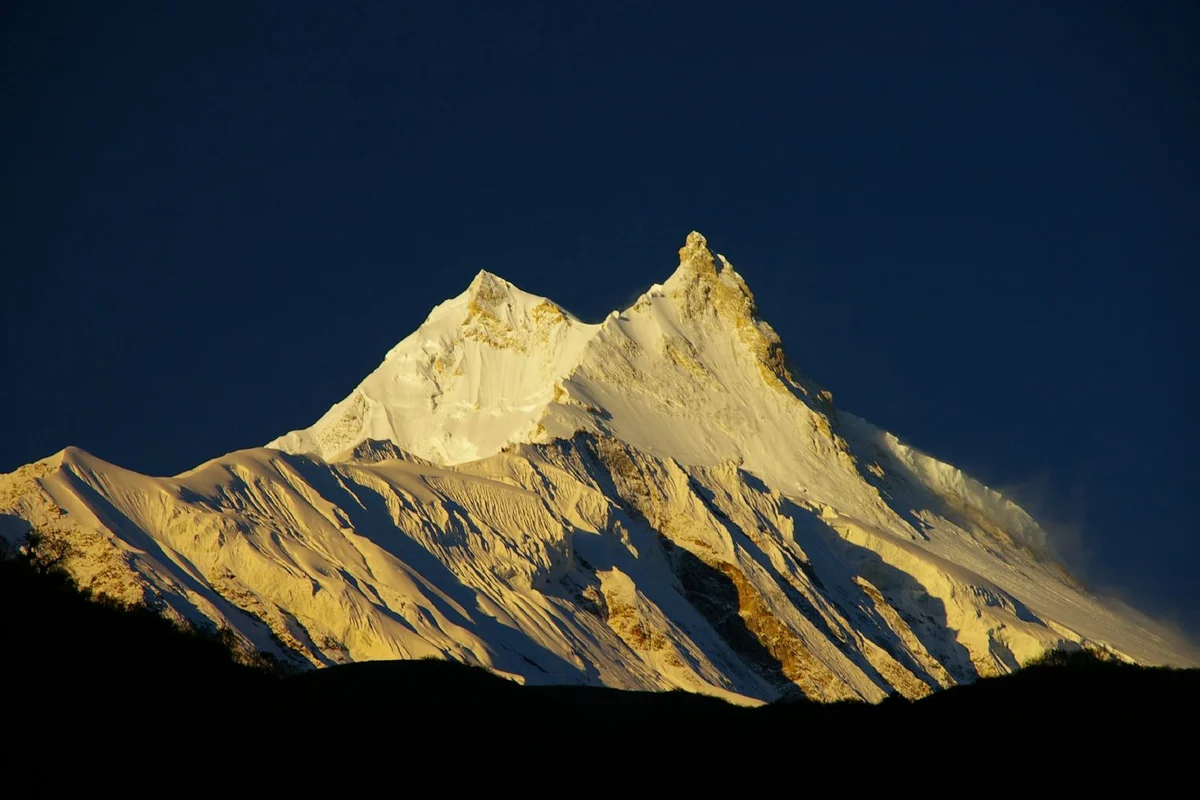
On January 12, 1984, Polish mountaineers Maciej Berbeka and Ryszard Gajewski completed the first winter ascent of Manaslu (8,163m), achieving the world's first winter summit of an 8,000er without bottled oxygen.
Mountain Safety & Conditions Disclaimer: High-altitude climbing, glacial travel, and technical ascents entail severe objective risks including avalanches, serac collapses, rapid weather collapse, and altitude illness. Historical route descriptions and summit claims on Mountanity reflect documented archival sources and must not be used as live operational safety assessments. Local regulations, permits, and physical glacial topography change continuously.
Peer Review: Senior Editorial Board & Historical Reviewers • Editorial Standards
The Audacity of the Zakopane Brotherhood
In the freezing depths of late 1983, a team of seasoned climbers from the Tatra mountain resort of Zakopane, Poland, journeyed toward the Mansiri Himal of central Nepal. Led by Lech Korniszewski, their target was Manaslu (8,163m), the Mountain of the Spirit. Manaslu had previously rebuffed dozens of attempts; in the winter season, its sweeping glaciers and monolithic South Face were notorious for devastating avalanches and ferocious gale-force winds.
The Polish climbers—carrying the spirit of the Ice Warriors forged by Andrzej Zawada—proposed an objective that many international authorities considered physiological suicide: they would climb Manaslu in the dead of winter without a single cylinder of supplemental oxygen.
Leading the climbing vanguard were Maciej Berbeka, an exceptionally gifted 29-year-old Tatra mountain rescuer and artist, and his lifelong partner Ryszard Gajewski. Both had cut their teeth on the frozen limestone precipices and couloirs of the Tatras in winter, enduring bone-chilling cold that hardened them for the Himalayan crucible.
Tragedy on the Ice Slopes
The expedition established Base Camp on the glaciated moraines beneath Manaslu in early December 1983. Working in savage weather where temperatures plunged to -35°C during daylight and past -45°C after sunset, the team slowly fixed ropes across crevassed ice ramps.
On December 11, tragedy struck the expedition with heartbreaking brutality. Stanisław Jaworski, an experienced and beloved teammate, was descending fixed ropes between higher camps when an anchor failure sent him plummeting into an icy abyss. The loss devastated the small, close-knit brotherhood. For days, the climbers sat in Base Camp in solemn grief, contemplating the heavy toll of winter mountaineering. Yet in tribute to Jaworski’s dedication, they resolved that the expedition must continue, determined to place the Polish flag upon the summit.
The Cold Road to the High Camps
Throughout late December and early January, Berbeka, Gajewski, and their comrades Maciej Pawlikowski and Bogusław Probulski pushed the route relentlessly upward. The Messner route on the South Face required negotiating steep couloirs of glassy, unyielding blue ice that blunted crampon picks and ice axes with every swing.
Without supplemental oxygen, every breath was an excruciating battle. At elevations above 7,500 metres in winter, atmospheric pressure drops even lower than in summer due to the colder, denser air column, simulating an effective altitude hundreds of metres higher. The climbers suffered intense dehydration, splitting headaches, and severe frostbite on fingers and toes.
On January 11, 1984, Berbeka and Gajewski established Camp IV at approximately 7,700 metres. Huddled in a tiny two-man assault tent lashed to an icy bench, they spent the night melting snow over a sputtering stove, watching the fabric shake under violent gusts of jet-stream wind.
The Summit Triumph: January 12, 1984
At dawn on January 12, 1984, Berbeka and Gajewski stepped outside into a world of incomprehensible cold. Ambient temperatures hovered near -42°C, with wind chill plunging far below -60°C. Moving without the artificial warmth and mental clarity provided by bottled oxygen, they moved with mechanical rhythm—two breaths per step, pausing every few yards to lean on their ice axes and gasp for oxygen molecules in the thin, razor-sharp air.
Negotiating the final steep snow gullies and exposed rocky ridges, they pressed inexorably toward the sky. At midday, their crampons bit into the summit snows, and at 13:00, Maciej Berbeka and Ryszard Gajewski stood upon the 8,163-metre summit of Manaslu.
The achievement was monumental. Not only was it the first winter ascent of Manaslu, but it stood as the very first time in human history that any eight-thousand-metre peak had been scaled in calendar winter without supplemental oxygen.
Return to Earth and Lasting Legacy
The descent was an agonizing test of survival. With dusk approaching and frostbite setting into their boots and gloves, Berbeka and Gajewski navigated the frozen slopes back to Camp IV, where their teammates awaited them with hot tea and shelter. Both men suffered frostbite injuries, but through discipline and peerless seamanship on the ropes, they reached Base Camp safely.
The 1984 ascent of Manaslu permanently elevated the standards of winter Himalayan exploration. It demonstrated that human endurance, sharpened in the cold crucible of Polish alpinism, could transcend physiological barriers without chemical or mechanical assistance. Maciej Berbeka had written his name indelibly into mountain lore, beginning a winter journey that would define his extraordinary life.
Key Statistics & Topographic Figures
- Category
- Winter Himalayan Pioneers
Archival Subject
- Reading Time
- 13 min read
Narrative Length
- Key Mountain
- manaslu
Objective
- Ascent Route
- the ascent route
Topography
- Verification
- Editorially Verified
Archival Standard
Archival Primary Source Quotations
“In the mountains, truth is etched in ice and granite; every step requires unwavering respect for the heights.”
Defined Alpine Terminology & Concepts
- Summit Push
- The final continuous climbing effort from the highest established camp to the mountain apex and back.
- Death Zone Chronicle
- A verified, research-backed historical narrative documenting the human, technical, and environmental realities of an alpine expedition.
Frequently Asked Questions: Without Oxygen in the Death Zone: The 1984 Polish Winter Ascent of Manaslu
What is the core chronicle and subject of "Without Oxygen in the Death Zone: The 1984 Polish Winter Ascent of Manaslu"?
On January 12, 1984, Polish mountaineers Maciej Berbeka and Ryszard Gajewski completed the first winter ascent of Manaslu (8,163m), achieving the world's first winter summit of an 8,000er without bottled oxygen.
Which mountain peaks and routes are featured in "Without Oxygen in the Death Zone: The 1984 Polish Winter Ascent of Manaslu"?
This narrative documents climbs on manaslu along the the ascent route in Nepal.
Which documented expedition is chronicled in this story?
This historical chronicle captures the events of the 1984-polish-manaslu-winter, verified through contemporary journals and archival records.
Who authored and researched this archival chronicle?
Authored and researched by Mountainity Historical Research Desk, drawing on primary eyewitness testimonies, alpine club registries, and verified summit logs.
What makes this high-altitude chronicle historically significant?
Categorized under "Winter Himalayan Pioneers", this chronicle preserves critical lessons in alpine leadership, survival, tactical speed, and human endurance in the death zone.
Related Mountains

Manaslu
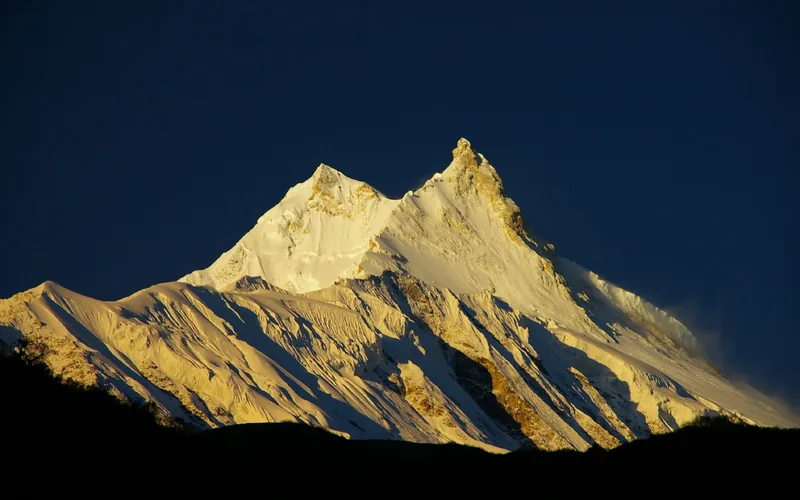
Manaslu, at 8,163 meters (26,781 ft), is the eighth-highest mountain in the world, situated in the Mansiri Himal of west-central Nepal. Known as the 'Mountain of the Spirit', its long ridges and valley glaciers offer dramatic topography culminating in a delicate, exposed knife-edge summit crest.
Documented Sources & Archival Citations
- American Alpine Journal: Manaslu First Winter Ascent (1985)(American Alpine Club)
Supporting claim: Official expedition chronicle of the January 12, 1984 winter summit without oxygen
Accessed/Documented: 2026 - Taternik: Manaslu Zimą 1984(Polski Związek Alpinizmu)
Supporting claim: Technical logs and accounts from the Zakopane winter expedition
Accessed/Documented: 2026