The Snow Leopard's Coldest Hour: Ang Rita Sherpa's Historic 1987 Winter Ascent of Everest Without Oxygen
On December 22, 1987, legendary Nepali mountaineer Ang Rita Sherpa completed the only winter ascent of Mount Everest without supplemental oxygen in human history, facing temperatures below -45°C.
Mountain Safety & Conditions Disclaimer: High-altitude climbing, glacial travel, and technical ascents entail severe objective risks including avalanches, serac collapses, rapid weather collapse, and altitude illness. Historical route descriptions and summit claims on Mountanity reflect documented archival sources and must not be used as live operational safety assessments. Local regulations, permits, and physical glacial topography change continuously.
Peer Review: Senior Editorial Board & Historical Reviewers • Editorial Standards
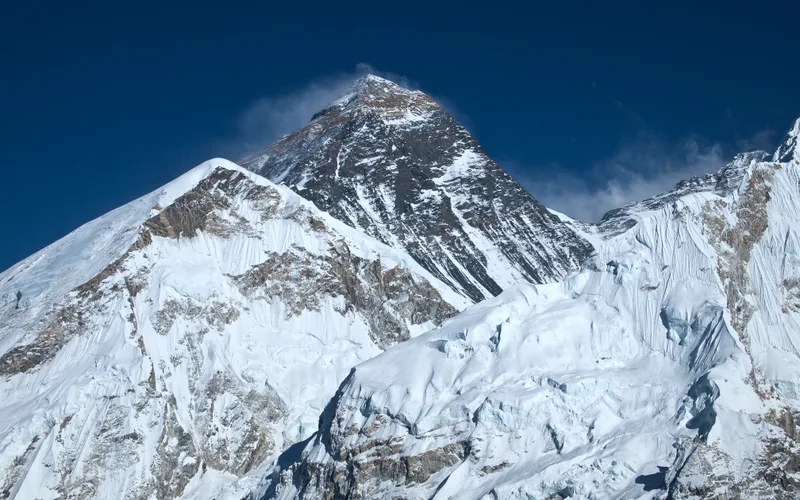
In the dead of winter, the Death Zone of Mount Everest (8,848m) is arguably the most inhospitable environment on the surface of the Earth. Between December and February, ambient temperatures at 8,000 meters routinely drop beneath minus 45 degrees Celsius. The stratospheric jet stream descends directly onto the summit ridge, generating hurricane-force gales exceeding 100 miles per hour that strip the snow down to polished black ice. At this altitude, air pressure is one-third of sea level, and without compressed oxygen, human blood oxygen saturation drops to levels that induce fatal cerebral or pulmonary edema within hours.
Medical consensus in the 1980s asserted that climbing Mount Everest in astronomical winter without supplemental bottled oxygen was physiologically impossible.
On December 22, 1987, a 39-year-old Sherpa from the village of Yillajung in Solukhumbu proved the medical dogma wrong. His name was Ang Rita Sherpa—known across the high valleys as Himchituwa, The Snow Leopard.
The Anatomy of a Legend
Born in 1948, Ang Rita never attended school. As a child, he spent long winters herding yaks in the biting winds of the high pastures beneath Ama Dablam and Kangtega. This upbringing forged a superhuman cold tolerance and an extraordinary cardiovascular engine. Where foreign climbers required weeks of acclimatization and struggled for every breath above Camp II, Ang Rita moved through the thin air with effortless, rhythmic composure.
Between 1983 and 1985, Ang Rita had already climbed Everest three times without supplemental bottled oxygen. His sheer stamina, total absence of altitude sickness, and preternatural ability to navigate shattered glacial terrain earned him the Snow Leopard moniker.
In November 1987, a South Korean expedition led by Lee Sang-bae hired Ang Rita as Sirdar and lead climbing climber for a winter attempt via the South Col route. Ang Rita made a personal vow that astonished his companions: he would attempt the winter summit without breathing bottled oxygen.
The Jet Stream Tempest
The winter expedition was an unrelenting trial of psychological endurance. The Khumbu Icefall was in continuous violent contraction, shattering ladders and opening yawning crevasses in sub-zero contractions. Higher up, on the colossal wall of the Lhotse Face, hurricane winds tore away tents and gear.
Climbers endured agonizing coughing fits from breathing super-cooled dry air, and taking off a single glove for even sixty seconds resulted in instantaneous frostbite. Yet day after day, Ang Rita led the route, hammering ice screws into bullet-hard blue ice and hauling supplies to Camp IV on the South Col (7,920m).
By December 20, the team was in position at the South Col. The meteorological winter had officially commenced. Outside their frozen nylon shelter, the wind roared like an approaching freight train, with temperatures inside the tent registering -38°C.
The Historic Push: December 22, 1987
At 3:30 AM on December 22, 1987, Ang Rita Sherpa and Korean climber Heo Young-ho stepped into the raging gale. Heo wore a full oxygen mask connected to heavy steel cylinders. Beside him, Ang Rita wore only a woolen face mask and goose-down hood, breathing the raw, freezing Himalayan atmosphere directly into his lungs.
The physical challenge was monumental. With every breath, the freezing air seared his trachea and lungs. To maintain core body temperature against a windchill factor exceeding -65°C, Ang Rita had to keep moving continuously without rest. Step by agonizing step, he kicked his crampons into the wind-crusted snow, climbing past the Balcony and traversing the corniced Southeast Ridge.
At the Hillary Step, where brittle rime ice covered the rock, Ang Rita hauled himself up the vertical cracks with bare-handed precision before putting his mittens back on.
At 2:20 PM on December 22, 1987, Ang Rita Sherpa and Heo Young-ho stood on the 8,848-meter summit of Mount Everest. Ang Rita had achieved what no human being had ever done before—and what no one has ever repeated since: he had stood on top of the world in the dead of winter entirely without supplemental oxygen.
The Immortal Record
Ang Rita’s 1987 winter conquest was officially ratified by Guinness World Records as the only winter summit of Mount Everest without bottled oxygen in human history.
Over his career, the Snow Leopard summited Mount Everest ten times—every single climb accomplished without supplemental oxygen—alongside four oxygenless ascents of Cho Oyu and Dhaulagiri. Decorated with Nepal’s highest civil honors, Ang Rita passed away in 2020 at age 72.
He remains the ultimate symbol of Sherpa endurance, physical mastery, and high-altitude courage—a true titan who reigned supreme in the coldest realm on Earth.
Key Statistics & Topographic Figures
- Category
- Winter Himalayan Pioneers
Archival Subject
- Reading Time
- 12 min read
Narrative Length
- Key Mountain
- mount-everest
Objective
- Ascent Route
- south-col-route
Topography
- Verification
- Editorially Verified
Archival Standard
Archival Primary Source Quotations
“In the mountains, truth is etched in ice and granite; every step requires unwavering respect for the heights.”
Defined Alpine Terminology & Concepts
- Summit Push
- The final continuous climbing effort from the highest established camp to the mountain apex and back.
- Death Zone Chronicle
- A verified, research-backed historical narrative documenting the human, technical, and environmental realities of an alpine expedition.
Frequently Asked Questions: The Snow Leopard's Coldest Hour: Ang Rita Sherpa's Historic 1987 Winter Ascent of Everest Without Oxygen
What is the core chronicle and subject of "The Snow Leopard's Coldest Hour: Ang Rita Sherpa's Historic 1987 Winter Ascent of Everest Without Oxygen"?
On December 22, 1987, legendary Nepali mountaineer Ang Rita Sherpa completed the only winter ascent of Mount Everest without supplemental oxygen in human history, facing temperatures below -45°C.
Which mountain peaks and routes are featured in "The Snow Leopard's Coldest Hour: Ang Rita Sherpa's Historic 1987 Winter Ascent of Everest Without Oxygen"?
This narrative documents climbs on mount-everest along the south-col-route in Nepal.
Which documented expedition is chronicled in this story?
This historical chronicle captures the events of the 1987-ang-rita-everest-winter-no-oxygen, verified through contemporary journals and archival records.
Who authored and researched this archival chronicle?
Authored and researched by Mountainity Historical Research Desk, drawing on primary eyewitness testimonies, alpine club registries, and verified summit logs.
What makes this high-altitude chronicle historically significant?
Categorized under "Winter Himalayan Pioneers", this chronicle preserves critical lessons in alpine leadership, survival, tactical speed, and human endurance in the death zone.
Related Mountains
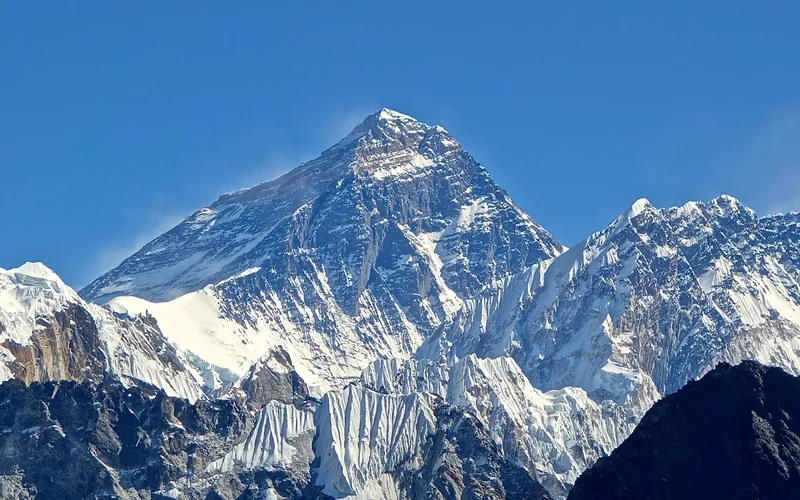


Mount Everest
Mount Everest is the highest mountain above sea level on Earth, standing at an official elevation of 8,848.86 meters (29,031.7 ft). Straddling the international frontier between Nepal and China, it is known locally as Sagarmatha in Nepali ('Goddess of the Sky') and Chomolungma in Tibetan ('Mother Goddess of the World'). The peak rises into the extreme upper troposphere, where oxygen levels drop to barely one-third of sea-level pressure. Climbers face hurricane-force jet stream winds, severe frostbite conditions, shifting ice crevasses in the Khumbu Icefall, and the dangerous Death Zone above 8,000 meters.
Documented Sources & Archival Citations
- The Himalayan Database: Winter 1987 Everest Ascents(Elizabeth Hawley / The Himalayan Database)
Supporting claim: Official certification of the December 22, 1987 summit without oxygen by Ang Rita
Accessed/Documented: 1988 - Guinness World Records: First Winter Everest Ascent Without Oxygen(Guinness World Records)
Supporting claim: World record verification for Ang Rita Sherpa's winter oxygenless climb
Accessed/Documented: 2021