The Nordic Breakthrough: Veikka Gustafsson Conquers Mount Everest
On May 10, 1993, 25-year-old Veikka Gustafsson became the first person from Finland to stand atop Mount Everest, launching an legendary career across all 14 eight-thousanders.
Mountain Safety & Conditions Disclaimer: High-altitude climbing, glacial travel, and technical ascents entail severe objective risks including avalanches, serac collapses, rapid weather collapse, and altitude illness. Historical route descriptions and summit claims on Mountanity reflect documented archival sources and must not be used as live operational safety assessments. Local regulations, permits, and physical glacial topography change continuously.
Peer Review: Senior Editorial Board & Historical Reviewers • Editorial Standards
In the spring of 1993, Finland had never placed a climber on the summit of Mount Everest. While mountaineers from Britain, Switzerland, Poland, and the United States had long forged legendary reputations in the Himalaya, Nordic climbing had remained rooted in Scandinavian ice walls and the granite spires of the Arctic. That changed forever when a twenty-five-year-old university student from Espoo, Eero Veikka Juhani Gustafsson, arrived at Everest Base Camp below the Khumbu Glacier.
Gustafsson possessed a rare physiological engine. Honed by years of brutal cross-country ski endurance training and wilderness expeditions through freezing sub-Arctic winters, his body exhibited phenomenal cold tolerance and exceptional aerobic recovery. Teaming up with an international expedition, Gustafsson approached the highest mountain on Earth with quiet focus and methodical discipline.
Navigating the Khumbu Chaos
The gateway to the South Col route was the terrifying Khumbu Icefall—a chaotic river of shattered glacier ice that moved several feet each day. Towering seracs the size of apartment buildings balanced precariously over yawning crevasses crossed by flimsy aluminum ladders. Moving in the freezing dark of 3:00 AM to cross before the morning sun loosened the ice, Gustafsson navigated the labyrinth with remarkable agility.
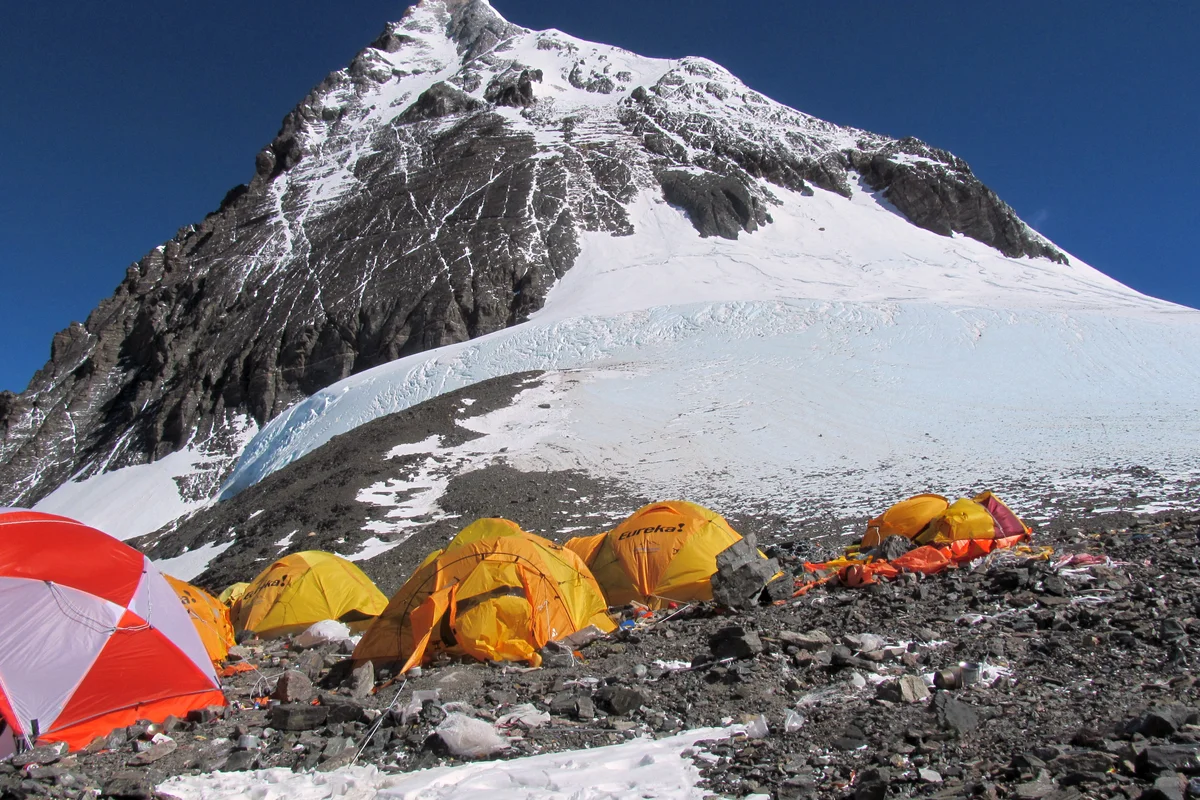
Above the Icefall, Gustafsson climbed into the Western Cwm—a blinding, sun-scorched glacial amphitheater—before ascending the sheer, bullet-hard blue ice of the Lhotse Face. Carrying heavy packs up fixed ropes, Gustafsson established high camps up to Camp IV on the windswept South Col at 7,920 meters. Perched on this lunar plateau between Everest and Lhotse, the climbers were buffeted by hurricane-force jet stream winds that tested the limits of their high-altitude tents.
Midnight on the South Col
On the evening of May 9, 1993, the wind suddenly subsided, opening a brief window of opportunity. At 11:00 PM, Gustafsson suited up in his heavy down assault suit and stepped out into the freezing Himalayan night. Climbing steadily up the Triangular Face under a canopy of brilliant mountain stars, he entered the death zone.
By dawn on May 10, Gustafsson reached the Balcony at 8,400 meters as the morning sun cast the gigantic triangular shadow of Everest across the clouds over Nepal. Pushing upward along the knife-edge Southeast Ridge, he navigated the precarious snow cornices of the South Summit. Ahead lay the crux of the climb: the famous Hillary Step—a forty-foot vertical wall of rock and ice at 8,760 meters.
The Historic Summit and Finnish Alpine Legacy
Climbing smoothly over the rock step and balancing along the final summit ridge, Gustafsson took his final gasping strides. At 8:30 AM on May 10, 1993, Veikka Gustafsson stepped onto the 8,848-meter summit of Mount Everest. He had become the first citizen of Finland in human history to stand atop the highest point on Earth.
From the summit, the young Finn gazed out over the endless curve of the planet, mesmerized by the vast Himalayan horizon. The climb did not merely make him a national hero in Finland; it marked the beginning of one of the most prolific high-altitude careers in alpine history. Over the subsequent sixteen years, Gustafsson would return to summit Everest without supplemental oxygen in 1997, partner with Ed Viesturs across six eight-thousanders, and ultimately become the seventeenth person in history to climb all fourteen 8,000-meter peaks without supplemental bottled oxygen.
Key Statistics & Topographic Figures
- Category
- High-Altitude Breakthroughs
Archival Subject
- Reading Time
- 13 min read
Narrative Length
- Key Mountain
- mount-everest
Objective
- Ascent Route
- south-col-route
Topography
- Verification
- Editorially Verified
Archival Standard
Archival Primary Source Quotations
“In the mountains, truth is etched in ice and granite; every step requires unwavering respect for the heights.”
Defined Alpine Terminology & Concepts
- Summit Push
- The final continuous climbing effort from the highest established camp to the mountain apex and back.
- Death Zone Chronicle
- A verified, research-backed historical narrative documenting the human, technical, and environmental realities of an alpine expedition.
Frequently Asked Questions: The Nordic Breakthrough: Veikka Gustafsson Conquers Mount Everest
What is the core chronicle and subject of "The Nordic Breakthrough: Veikka Gustafsson Conquers Mount Everest"?
On May 10, 1993, 25-year-old Veikka Gustafsson became the first person from Finland to stand atop Mount Everest, launching an legendary career across all 14 eight-thousanders.
Which mountain peaks and routes are featured in "The Nordic Breakthrough: Veikka Gustafsson Conquers Mount Everest"?
This narrative documents climbs on mount-everest along the south-col-route in Nepal.
Which documented expedition is chronicled in this story?
This historical chronicle captures the events of the 1993-veikka-gustafsson-everest-no-oxygen, verified through contemporary journals and archival records.
Who authored and researched this archival chronicle?
Authored and researched by Mountainity Historical Research Desk, drawing on primary eyewitness testimonies, alpine club registries, and verified summit logs.
What makes this high-altitude chronicle historically significant?
Categorized under "High-Altitude Breakthroughs", this chronicle preserves critical lessons in alpine leadership, survival, tactical speed, and human endurance in the death zone.
Related Mountains


Mount Everest
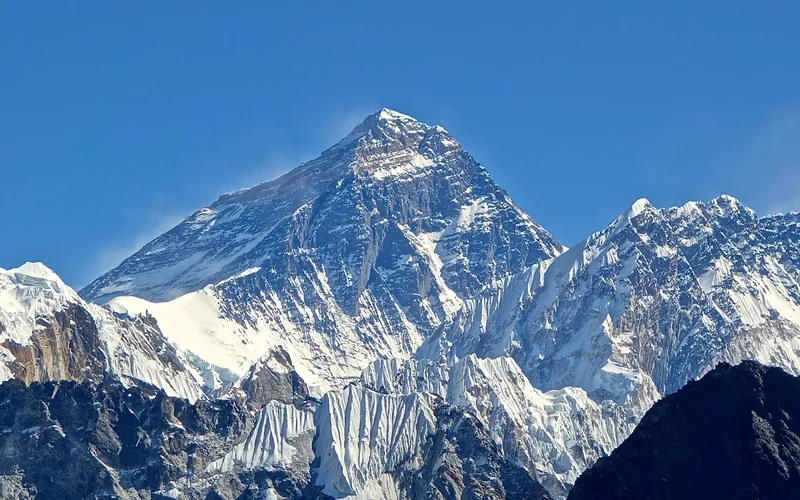
Mount Everest is the highest mountain above sea level on Earth, standing at an official elevation of 8,848.86 meters (29,031.7 ft). Straddling the international frontier between Nepal and China, it is known locally as Sagarmatha in Nepali ('Goddess of the Sky') and Chomolungma in Tibetan ('Mother Goddess of the World'). The peak rises into the extreme upper troposphere, where oxygen levels drop to barely one-third of sea-level pressure. Climbers face hurricane-force jet stream winds, severe frostbite conditions, shifting ice crevasses in the Khumbu Icefall, and the dangerous Death Zone above 8,000 meters.
Documented Sources & Archival Citations
- American Alpine Journal: Mount Everest, First Finnish Ascent by Veikka Gustafsson(American Alpine Club)
Supporting claim: Official expedition report verifying the May 10, 1993 Everest summit
Accessed/Documented: 1994 - The Himalayan Database: Spring 1993 Everest Expeditions(Elizabeth Hawley / Himalayan Database)
Supporting claim: Ascent record and timing of Finland's first successful Everest ascent
Accessed/Documented: 2000