Everest 1995: Alison Hargreaves' Pure Solo Ascent Without Oxygen
On May 13, 1995, British mountaineer Alison Hargreaves made history as the first woman to summit Mount Everest solo, unsupported, and without supplemental oxygen via the North Ridge.
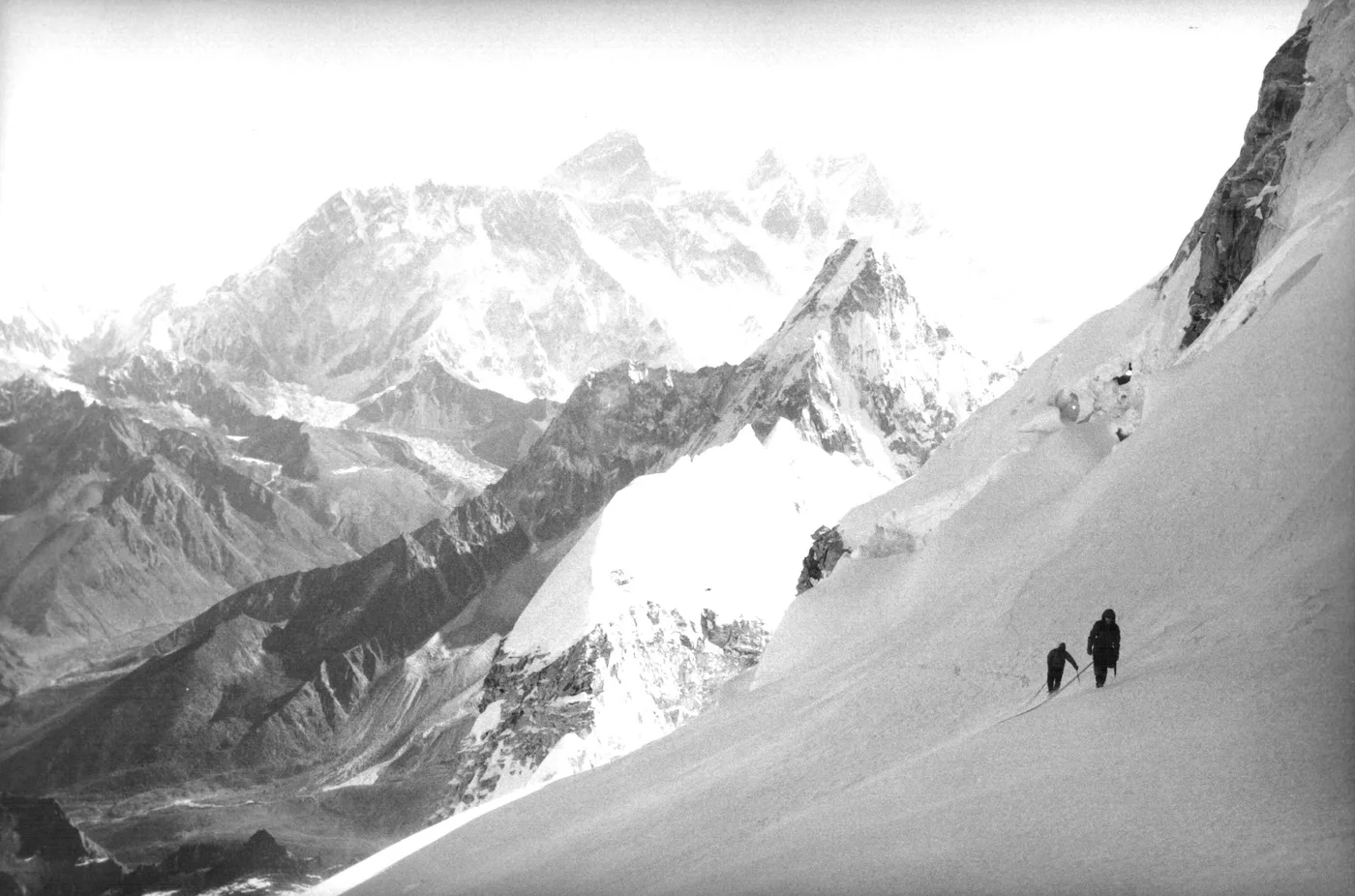
Mountain Safety & Conditions Disclaimer: High-altitude climbing, glacial travel, and technical ascents entail severe objective risks including avalanches, serac collapses, rapid weather collapse, and altitude illness. Historical route descriptions and summit claims on Mountanity reflect documented archival sources and must not be used as live operational safety assessments. Local regulations, permits, and physical glacial topography change continuously.
Peer Review: Senior Editorial Board & Historical Reviewers • Editorial Standards
In the spring of 1995, 33-year-old British climber Alison Hargreaves arrived on the windswept Rongbuk Glacier in Tibet. In an era when Mount Everest was rapidly becoming commercialized—crowded with guided trekking groups, hired Sherpa teams fixing miles of safety ropes, and hundreds of bottled oxygen canisters—Hargreaves carried an uncompromising, purist vision.
She had set out to climb Mount Everest (8,848m) completely alone, completely unsupported, and entirely without supplemental oxygen.
No woman had ever achieved such a feat. Only one person in all of human history—Reinhold Messner during his legendary 1980 monsoon climb—had ever stood atop Everest in pure, unsupported solo style without bottled oxygen. Hargreaves was determined to prove that a woman could match that benchmark on equal, self-reliant terms.
The Ethic of Absolute Self-Reliance
To claim a truly unsupported solo ascent in mountaineering requires adhering to the strictest ethical standards:
- No supplemental oxygen at any point on the mountain.
- No high-altitude Sherpas or porters to carry equipment, establish tents, or prepare meals above Base Camp.
- No sharing of high-altitude gear or food with other expeditions.
- No reliance on fixed ropes prepared by commercial guiding agencies.
Hargreaves adhered to this code with monastic discipline. Operating from the Central Rongbuk Glacier, she carried every ounce of her own equipment, food, fuel, and tents up the grueling screes to Advanced Base Camp (6,400m). From there, she made multiple solo carries up the frozen headwall to the North Col (7,020m), hauling heavy packs through howling winds.
She maintained complete psychological composure in total solitude. While other climbers congregated in warm dining tents, Hargreaves melted snow alone in her tiny two-man shelter, keeping a private audio diary for her two young children, six-year-old Tom and four-year-old Kate, back home in Spean Bridge in the Scottish Highlands.
The Solitary Summit Bid
On May 10, 1995, observing a stabilization in the jet stream over Tibet, Hargreaves packed her solitary assault kit and moved up the North Ridge. She established Camp II on a narrow rock ledge at 7,700 meters, followed on May 12 by a lonely bivouac at Camp III (8,300m) perched precariously on the windswept Yellow Band.
The night was bitterly cold, with temperatures dipping below -30°C. Hargreaves slept little, shivering in her down suit as gale-force gusts rattled the nylon fabric of her tent. She forced down a mug of lukewarm hot chocolate and a packet of dry muesli.
At 3:00 AM on May 13, 1995, Hargreaves zipped open her tent and stepped into the pitch blackness of the Death Zone. Navigating by the narrow beam of her headlamp, she began her solitary ascent of the Northeast Ridge.
Climbing without supplemental oxygen above 8,300 meters is an agonizing battle against suffocation. Every step required four to six deep, chest-heaving hyperventilations. The air contained barely one-third the oxygen of sea level. Yet Hargreaves moved with steady, mechanical rhythm, carefully front-pointing along the icy limestone ledges.
At 8,600 meters, she confronted the crux of the North Ridge: the formidable Second Step, a vertical thirty-foot wall of rock. Scaling the aluminum ladder lashed to the rock with frozen fingers, she bridged over the terrifying 10,000-foot void dropping into the Kangshung Face. Reaching the Third Step, she scrambled over the final rock towers and emerged onto the upper snow slopes of the summit pyramid.
“I am on Top of Everest”
At 12:08 PM on Saturday, May 13, 1995, Alison Hargreaves stepped onto the summit of Mount Everest.
There was no one else on the peak. She stood alone upon the highest point on Earth, the vast white sea of Himalayan giants stretching out beneath her under a piercing blue sky. She had become the first woman in history to climb Mount Everest solo, unsupported, and without supplemental oxygen.
Taking a small hand-held VHF radio from her pocket, Hargreaves clicked the transmitter to Base Camp. In a clear, emotionally charged voice, she delivered her immortal message: “To Tom and Kate, my children, I am on the biggest mountain in the world, and I love you very much.”
She stayed on top for only twenty minutes, capturing photographs of the Tibetan plateau and planting a silk flower from her children in the summit snow.
Safe Descent and Enduring Legacy
Her descent was executed with flawless alpine discipline. Resisting the overwhelming fatigue brought on by hypoxia, Hargreaves carefully reversed the Second Step and down-climbed the knife-edge ridge, arriving safely back at Camp III by late afternoon. The following day, May 14, she descended all the way to Advanced Base Camp, where climbers from around the world greeted her with emotional ovations.
While tragedy would claim her life three months later on K2 during a freak hurricane, her May 1995 solo ascent of Mount Everest remains one of the crowning triumphs of female athletic endurance. Alison Hargreaves permanently shattered the glass ceiling of high-altitude mountaineering, proving that the highest pinnacles of the Earth could be conquered through pure, quiet, unyielding self-reliance.
Key Statistics & Topographic Figures
- Category
- Solo Alpinism
Archival Subject
- Reading Time
- 15 min read
Narrative Length
- Key Mountain
- mount-everest
Objective
- Ascent Route
- everest-northeast-ridge
Topography
- Verification
- Editorially Verified
Archival Standard
Archival Primary Source Quotations
“In the mountains, truth is etched in ice and granite; every step requires unwavering respect for the heights.”
Defined Alpine Terminology & Concepts
- Summit Push
- The final continuous climbing effort from the highest established camp to the mountain apex and back.
- Death Zone Chronicle
- A verified, research-backed historical narrative documenting the human, technical, and environmental realities of an alpine expedition.
Frequently Asked Questions: Everest 1995: Alison Hargreaves' Pure Solo Ascent Without Oxygen
What is the core chronicle and subject of "Everest 1995: Alison Hargreaves' Pure Solo Ascent Without Oxygen"?
On May 13, 1995, British mountaineer Alison Hargreaves made history as the first woman to summit Mount Everest solo, unsupported, and without supplemental oxygen via the North Ridge.
Which mountain peaks and routes are featured in "Everest 1995: Alison Hargreaves' Pure Solo Ascent Without Oxygen"?
This narrative documents climbs on mount-everest along the everest-northeast-ridge in China.
Which documented expedition is chronicled in this story?
This historical chronicle captures the events of the 1995-hargreaves-everest-solo, verified through contemporary journals and archival records.
Who authored and researched this archival chronicle?
Authored and researched by Mountainity Historical Research Desk, drawing on primary eyewitness testimonies, alpine club registries, and verified summit logs.
What makes this high-altitude chronicle historically significant?
Categorized under "Solo Alpinism", this chronicle preserves critical lessons in alpine leadership, survival, tactical speed, and human endurance in the death zone.
Related Mountains
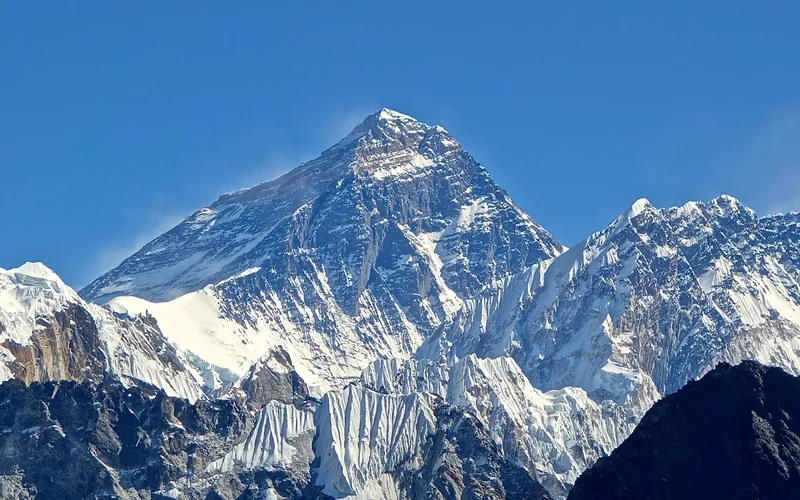


Mount Everest
Mount Everest is the highest mountain above sea level on Earth, standing at an official elevation of 8,848.86 meters (29,031.7 ft). Straddling the international frontier between Nepal and China, it is known locally as Sagarmatha in Nepali ('Goddess of the Sky') and Chomolungma in Tibetan ('Mother Goddess of the World'). The peak rises into the extreme upper troposphere, where oxygen levels drop to barely one-third of sea-level pressure. Climbers face hurricane-force jet stream winds, severe frostbite conditions, shifting ice crevasses in the Khumbu Icefall, and the dangerous Death Zone above 8,000 meters.
Documented Sources & Archival Citations
- Regions of the Heart: The Triumph and Tragedy of Alison Hargreaves(David Rose & Ed Douglas / Penguin Books)
Supporting claim: Definitive historical biography detailing the 1995 solo Everest expedition and radio tapes
Accessed/Documented: 1999 - American Alpine Journal: Everest Solo Without Oxygen(American Alpine Club)
Supporting claim: Official expedition chronicle and verification of the solo unsupported ascent
Accessed/Documented: 1996