Alone in the Tempest: Anatoli Boukreev and the 1996 Mount Everest Rescue
During the catastrophic May 1996 blizzard on Mount Everest, Kazakh mountaineer Anatoli Boukreev ventured solo into the storm at 8,000m on the South Col, saving three human lives.
Mountain Safety & Conditions Disclaimer: High-altitude climbing, glacial travel, and technical ascents entail severe objective risks including avalanches, serac collapses, rapid weather collapse, and altitude illness. Historical route descriptions and summit claims on Mountanity reflect documented archival sources and must not be used as live operational safety assessments. Local regulations, permits, and physical glacial topography change continuously.
Peer Review: Senior Editorial Board & Historical Reviewers • Editorial Standards
On May 10, 1996, the upper slopes of Mount Everest witnessed what would become the most intensely analyzed tragedy in modern mountaineering history. As dozens of commercial clients and guides queued along the narrow knife-edge of the Hillary Step, a freak meteorological cyclone roared up from the plains of Bengal, transforming the high ridge of Everest into an apocalyptic frozen hell.
Amidst the swirling storm of confusion, grief, and literary controversy, one man’s physical bravery and selfless valor stood out like a beacon of human nobility: the Kazakh mountaineer Anatoli Boukreev.
Employed as the lead climbing guide for Scott Fischer’s Mountain Madness expedition, the thirty-eight-year-old Boukreev was a force of nature. Renowned across Central Asia for his superhuman physiological capacity, Boukreev refused to climb with bottled oxygen, believing that an elite guide who is completely acclimatized without artificial aids is immune to the fatal risk of catastrophic oxygen bottle failure at extreme altitude.
The Oxygenless Summit and Descent to Camp IV
On the morning of May 10, Boukreev climbed methodically up the Southeast Ridge, arriving on the 8,848-metre summit at 1:07 PM without supplemental oxygen. Knowing that his clients—guided by Fischer and Neal Beidleman—were moving at a dangerously slow pace behind him, Boukreev waited on the frozen summit for nearly an hour and a half, assisting climbers and monitoring their condition.
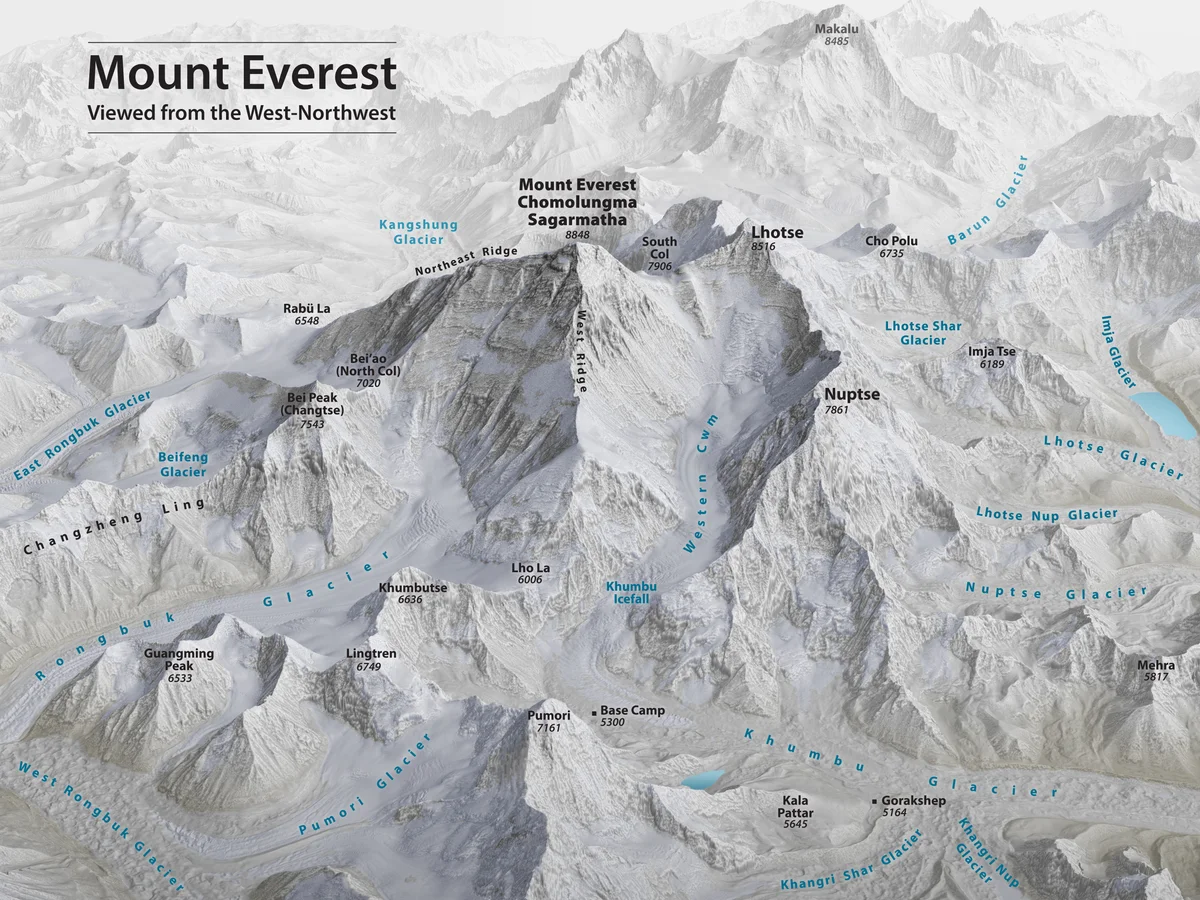
At 2:30 PM, after discussions with team leader Scott Fischer, Boukreev began descending toward Camp IV on the South Col (7,900m). His objective was strategic: to reach the high camp ahead of the team, rest briefly, melt vital fluids, gather supplemental oxygen bottles, and prepare to climb back up the ridge to assist any clients struggling in the twilight.
By late afternoon, the catastrophe unfolded. A blinding blizzard with winds exceeding one hundred kilometers per hour slammed into the mountain. Temperatures plummeted to minus fifty degrees Celsius. On the descent between the Balcony and the South Col, a large party of climbers from both Mountain Madness and Rob Hall’s Adventure Consultants lost the route entirely in the howling whiteout, collapsing from hypothermia on the featureless, boulder-strewn expanse of the South Col plateau just hundreds of meters from safety.
Stepping Solo into the Frozen Void
At Camp IV, word reached Boukreev that climbers were lost and dying in the storm. Inside the tents, guides and sherpas from multiple teams were shattered, incapacitated by acute frostbite, hypoxia, and complete physical collapse. Boukreev alone possessed the physiological stamina to act.
Strapping a headlamp onto his hood and grabbing thermoses of hot tea, Boukreev stepped out of the tent into the pitch-black hurricane. The wind was so deafening that shouting was useless. Navigating by instinct across the icy scree of the South Col, he was repeatedly knocked off his feet by violent wind gusts.
On his first exploratory sortie, he searched the frozen wastes for nearly an hour before the blinding snow forced him back to camp to verify directions. Refusing to rest, Boukreev rallied his strength and plunged back out into the blizzard.
At around midnight, his headlamp beam caught a glint of reflective fabric: a huddled heap of five climbers lying helpless in the snow, freezing to death. Among them were Charlotte Fox, Sandy Hill Pittman, and Tim Madsen. Beck Weathers and Yasuko Namba appeared comatose and were believed to have already perished.
The Miracle of Three Saved Lives
Boukreev acted with superhuman efficiency. Kneeling beside Charlotte Fox, who was unable to stand, he hauled her to her feet and half-carried, half-dragged her through the blinding whiteout back to Camp IV, depositing her inside a warm sleeping bag.
Without pausing to catch his breath, Boukreev immediately turned around and walked back out into the teeth of the blizzard. Finding Sandy Hill Pittman, who was completely collapsed and incoherent, he carried her through the gale back to the sanctuary of the tents. Finally, on a third solitary trip into the raging tempest, he guided and supported Tim Madsen back to safety.
Single-handedly, Anatoli Boukreev had saved three human lives that night. No other human being on Mount Everest that fateful night had the physical endurance or the sheer moral fortitude to venture repeatedly into the Death Zone’s raging blizzard alone.
In 1997, the American Alpine Club awarded Anatoli Boukreev the David A. Sowles Memorial Award—the highest honor for mountaineering heroism—commending his supreme dedication to human life. Though he tragically died months later in an avalanche on Annapurna, Boukreev’s solitary rescue on the South Col of Mount Everest remains an immortal testament to the heights of human courage.
Key Statistics & Topographic Figures
- Category
- High-Altitude Survival & Heroism
Archival Subject
- Reading Time
- 15 min read
Narrative Length
- Key Mountain
- mount-everest
Objective
- Ascent Route
- south-col-route
Topography
- Verification
- Editorially Verified
Archival Standard
Archival Primary Source Quotations
“In the mountains, truth is etched in ice and granite; every step requires unwavering respect for the heights.”
Defined Alpine Terminology & Concepts
- Summit Push
- The final continuous climbing effort from the highest established camp to the mountain apex and back.
- Death Zone Chronicle
- A verified, research-backed historical narrative documenting the human, technical, and environmental realities of an alpine expedition.
Frequently Asked Questions: Alone in the Tempest: Anatoli Boukreev and the 1996 Mount Everest Rescue
What is the core chronicle and subject of "Alone in the Tempest: Anatoli Boukreev and the 1996 Mount Everest Rescue"?
During the catastrophic May 1996 blizzard on Mount Everest, Kazakh mountaineer Anatoli Boukreev ventured solo into the storm at 8,000m on the South Col, saving three human lives.
Which mountain peaks and routes are featured in "Alone in the Tempest: Anatoli Boukreev and the 1996 Mount Everest Rescue"?
This narrative documents climbs on mount-everest along the south-col-route in Nepal.
Which documented expedition is chronicled in this story?
This historical chronicle captures the events of the 1996-boukreev-everest-rescue, verified through contemporary journals and archival records.
Who authored and researched this archival chronicle?
Authored and researched by Mountainity Historical Research Desk, drawing on primary eyewitness testimonies, alpine club registries, and verified summit logs.
What makes this high-altitude chronicle historically significant?
Categorized under "High-Altitude Survival & Heroism", this chronicle preserves critical lessons in alpine leadership, survival, tactical speed, and human endurance in the death zone.
Related Mountains


Mount Everest
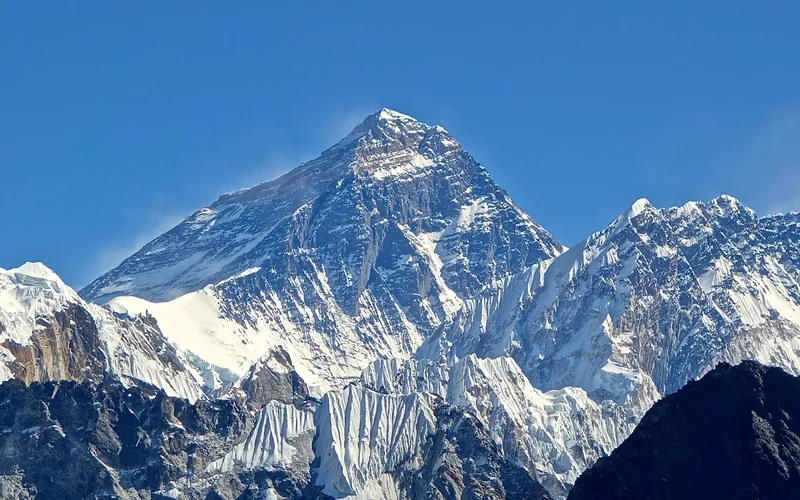
Mount Everest is the highest mountain above sea level on Earth, standing at an official elevation of 8,848.86 meters (29,031.7 ft). Straddling the international frontier between Nepal and China, it is known locally as Sagarmatha in Nepali ('Goddess of the Sky') and Chomolungma in Tibetan ('Mother Goddess of the World'). The peak rises into the extreme upper troposphere, where oxygen levels drop to barely one-third of sea-level pressure. Climbers face hurricane-force jet stream winds, severe frostbite conditions, shifting ice crevasses in the Khumbu Icefall, and the dangerous Death Zone above 8,000 meters.
Documented Sources & Archival Citations
- The Climb: Tragic Ambitions on Everest(Anatoli Boukreev and G. Weston DeWalt / St. Martin's Press)
Supporting claim: Detailed firsthand account of Boukreev's decisions, oxygenless summit, and solo rescue sortie
Accessed/Documented: 1997 - David A. Sowles Memorial Award Citation(American Alpine Club)
Supporting claim: Official citation honoring Boukreev for exceptional heroism saving human life at 8,000m
Accessed/Documented: 1997