The Ultimate Odyssey: Göran Kropp's 13,000-Kilometre Bicycle Trek and Solo Everest Ascent
In 1996, Swedish adventurer Göran Kropp bicycled 13,000 kilometres from Sweden to Mount Everest, summitted solo without supplemental oxygen or Sherpa support, and rode back home.
Mountain Safety & Conditions Disclaimer: High-altitude climbing, glacial travel, and technical ascents entail severe objective risks including avalanches, serac collapses, rapid weather collapse, and altitude illness. Historical route descriptions and summit claims on Mountanity reflect documented archival sources and must not be used as live operational safety assessments. Local regulations, permits, and physical glacial topography change continuously.
Peer Review: Senior Editorial Board & Historical Reviewers • Editorial Standards
In the spring of 1996, Mount Everest was experiencing the dawn of modern commercial guiding. Large guided outfits arrived with tons of gear transported by cargo airplanes, military helicopters, and strings of yaks. Hundreds of bottled oxygen cylinders, generators, and comfortable dining tents were established on the Khumbu moraine.
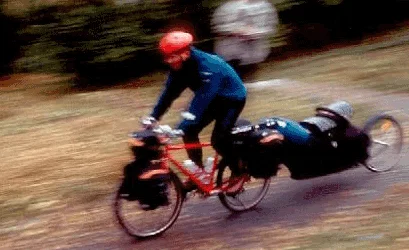
Into this bustling high-altitude city rode a towering, barrel-chested Swedish adventurer astride a custom bicycle, pulling a two-wheeled trailer. His name was Göran Kropp, and he had come to demonstrate what pure, unadulterated human self-reliance looked like.
Kropp had departed his apartment in Stockholm on October 16, 1995. He took no airplanes, no trains, and accepted no motor vehicle assistance. Towed behind his bicycle was 108 kilograms of tents, climbing gear, spare parts, and food. Over the next five months, Kropp pedaled thirteen thousand kilometers across Sweden, Denmark, Germany, Poland, the Czech Republic, Slovakia, Hungary, Romania, Turkey, Iran, Pakistan, and India. He repaired over one hundred flat tires, fought off thieves, endured blizzards in the mountains of Eastern Europe, and sweltered through desert heatwaves in the Middle East. In April 1996, legs hardened into steel cables, he rolled into Everest Base Camp.
The Purest Ethic on the Mountain
Kropp’s ethical commitment did not stop at the foot of the mountain. He refused to hire high-altitude Sherpa porters to carry his gear, refused to plug into commercial team mess tents, and refused to use supplemental bottled oxygen.
Operating entirely alone, Kropp loaded sixty-five-pound packs on his back and made multiple grueling carries through the deadly crevasses of the Khumbu Icefall, establishing his own solitary camps at Camp II in the Western Cwm, Camp III on the Lhotse Face, and Camp IV on the South Col.
The Courage to Turn Back at 8,750m
On May 3, 1996, Kropp launched his first solo summit assault. Breaking trail alone through chest-deep powder snow on the upper Southeast Ridge, he climbed into the Death Zone. By early afternoon, he reached 8,750 metres—just one hundred vertical metres below the South Summit.
Looking up at the final crest, Kropp calculated the hours. He had established a strict, non-negotiable turnaround deadline of 2:00 PM to ensure he could descend safely before darkness. Realizing that pushing to the summit would trap him high on the mountain in the freezing night, Kropp made what mountain historians consider one of the supreme demonstrations of high-altitude discipline: he stopped, turned around, and descended safely to Base Camp.
A week later, commercial teams ignored that very same turnaround principle, resulting in the infamous May 10–11 tragedy that claimed eight lives. Resting at Base Camp, Kropp assisted with communication and rescue coordination for the survivors.
The Triumphant Summit and the Ride Home
Far from defeated, Kropp waited for his strength to return. On May 19, he packed his solitary tent and climbed back up the mountain. On the freezing morning of May 23, 1996, climbing with methodical, solitary power, Göran Kropp crested the Hillary Step and stood atop the 8,848-metre summit of Mount Everest without bottled oxygen. He looked down upon the curvature of the Earth, having traveled every inch of the journey from sea level in Stockholm under the power of his own legs and lungs.
After descending to Base Camp, Kropp rested for a few weeks, packed his mountaineering equipment back into his bicycle trailer, climbed into the saddle, and pedaled thirteen thousand kilometers all the way back to Sweden.
Göran Kropp’s 1996 expedition stands as an untouchable monument in the annals of exploration—a shining example of ecological purity, physical magnificence, and solitary human willpower.
Key Statistics & Topographic Figures
- Category
- Solitary & Human-Powered Epics
Archival Subject
- Reading Time
- 14 min read
Narrative Length
- Key Mountain
- mount-everest
Objective
- Ascent Route
- south-col-route
Topography
- Verification
- Editorially Verified
Archival Standard
Archival Primary Source Quotations
“In the mountains, truth is etched in ice and granite; every step requires unwavering respect for the heights.”
Defined Alpine Terminology & Concepts
- Summit Push
- The final continuous climbing effort from the highest established camp to the mountain apex and back.
- Death Zone Chronicle
- A verified, research-backed historical narrative documenting the human, technical, and environmental realities of an alpine expedition.
Frequently Asked Questions: The Ultimate Odyssey: Göran Kropp's 13,000-Kilometre Bicycle Trek and Solo Everest Ascent
What is the core chronicle and subject of "The Ultimate Odyssey: Göran Kropp's 13,000-Kilometre Bicycle Trek and Solo Everest Ascent"?
In 1996, Swedish adventurer Göran Kropp bicycled 13,000 kilometres from Sweden to Mount Everest, summitted solo without supplemental oxygen or Sherpa support, and rode back home.
Which mountain peaks and routes are featured in "The Ultimate Odyssey: Göran Kropp's 13,000-Kilometre Bicycle Trek and Solo Everest Ascent"?
This narrative documents climbs on mount-everest along the south-col-route in Nepal / Sweden.
Which documented expedition is chronicled in this story?
This historical chronicle captures the events of the 1996-goran-kropp-everest-bicycle-solo, verified through contemporary journals and archival records.
Who authored and researched this archival chronicle?
Authored and researched by Mountainity Historical Research Desk, drawing on primary eyewitness testimonies, alpine club registries, and verified summit logs.
What makes this high-altitude chronicle historically significant?
Categorized under "Solitary & Human-Powered Epics", this chronicle preserves critical lessons in alpine leadership, survival, tactical speed, and human endurance in the death zone.
Related Mountains


Mount Everest
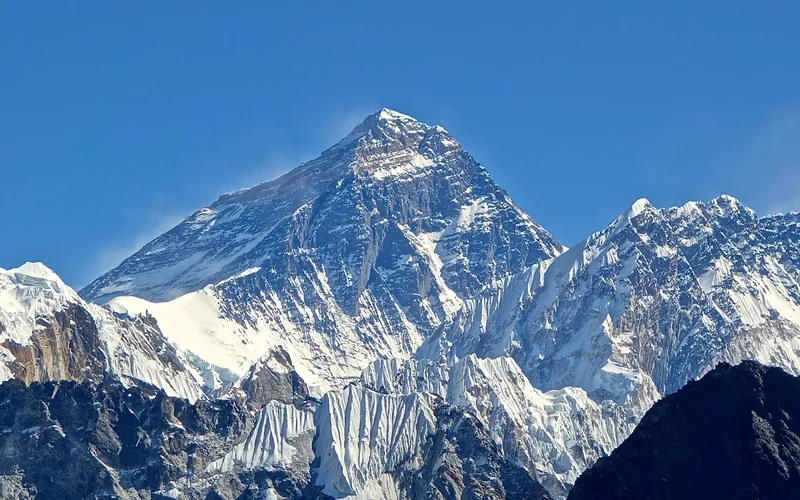
Mount Everest is the highest mountain above sea level on Earth, standing at an official elevation of 8,848.86 meters (29,031.7 ft). Straddling the international frontier between Nepal and China, it is known locally as Sagarmatha in Nepali ('Goddess of the Sky') and Chomolungma in Tibetan ('Mother Goddess of the World'). The peak rises into the extreme upper troposphere, where oxygen levels drop to barely one-third of sea-level pressure. Climbers face hurricane-force jet stream winds, severe frostbite conditions, shifting ice crevasses in the Khumbu Icefall, and the dangerous Death Zone above 8,000 meters.
Documented Sources & Archival Citations
- Ultimate High: My Everest Odyssey(Göran Kropp and David Lagercrantz / TV Books)
Supporting claim: Comprehensive autobiographical narrative of the Sweden-to-Everest bicycle journey and solo climb
Accessed/Documented: 1997 - The Himalayan Database: Spring 1996 Records(Elizabeth Hawley / Himalayan Database)
Supporting claim: Official confirmation of Göran Kropp's solo oxygenless Everest summit on May 23, 1996
Accessed/Documented: 1996