Above the Troposphere: Babu Chiri Sherpa's 21 Hours on the Summit of Everest
On May 6, 1999, Babu Chiri Sherpa accomplished one of the greatest physiological feats in history, spending twenty-one continuous hours on Everest's summit without supplemental oxygen.
Mountain Safety & Conditions Disclaimer: High-altitude climbing, glacial travel, and technical ascents entail severe objective risks including avalanches, serac collapses, rapid weather collapse, and altitude illness. Historical route descriptions and summit claims on Mountanity reflect documented archival sources and must not be used as live operational safety assessments. Local regulations, permits, and physical glacial topography change continuously.
Peer Review: Senior Editorial Board & Historical Reviewers • Editorial Standards
In the lore of high-altitude mountaineering, the Death Zone—the region above 8,000 meters where the human body can no longer acclimatize and slowly suffocates—is treated as a place of hasty passage. Even elite alpinists using pressurized bottled oxygen rarely remain on the summit of Mount Everest for more than twenty to thirty minutes before turning back to escape lethal frostbite and pulmonary edema.
On May 6, 1999, a 33-year-old Sherpa from the village of Taksindu named Babu Chiri defied medical science and physiological reality. Carrying a lightweight two-man tent, a thermal pad, and a single thermos of warm tea, Babu climbed from the South Col to the 8,848-meter summit without bottled oxygen—and stayed there for twenty-one continuous hours.
The Genetic Miracle of the Sherpa
Babu Chiri was not an ordinary climber. Endowed with supernatural natural aerobic capacity and genetic microvascular adaptations passed down through centuries of Sherpa ancestors living above 4,000 meters, Babu’s blood possessed an unmatched ability to deliver oxygen to muscle tissue under fractional atmospheric pressures. Uneducated in Western academies, he was an instinctual genius of high-altitude survival.
Having already climbed Everest six times, Babu conceived the summit sleepover not as a reckless stunt, but as an ultimate tribute to his beloved homeland of Nepal and a demonstration of Sherpa physiological resilience.
Pitching a Tent on the Roof of the World
Leaving Camp IV at the South Col early on the morning of May 6, Babu moved with steady, unhurried cadence up the Southeast Ridge. Passing the Hillary Step, he stepped onto the snowy crest of the summit at approximately 10:00 AM.
While other climbers descending past him looked on with disbelief, Babu anchored snow pickets into the frozen cornice, unrolled his tent, and crawled inside. Outside, the wind screamed across the summit pyramid at subzero temperatures, while the atmospheric pressure hovered at barely 330 millibars—one-third of sea-level value. Inside his tiny nylon shelter, Babu sat upright, performing deep breathing exercises, hydrating with lukewarm tea, and singing the Nepalese national anthem into a voice recorder.
Twenty-One Hours in the Stratosphere
As the afternoon waned, Babu watched the shadow of Mount Everest lengthen across the brown plateau of Tibet, forming a giant blue pyramid stretching a hundred miles eastward into China. As twilight descended, the temperature plummeted toward minus thirty degrees Celsius. Sitting in the dark on the roof of the world, surrounded by stars that shone with unearthly brilliance in the thin upper troposphere, Babu endured through the night without sleep, maintaining mental clarity through spiritual meditation.
At dawn on May 7, he witnessed a spectacle seen by no human before him: a complete sunrise from the highest point on Earth, watching the golden light break across the curve of the planet, igniting the summits of Kanchenjunga, Makalu, and Lhotse in radiant fire.
At 7:00 AM, having spent twenty-one continuous hours on the summit without supplemental oxygen, Babu packed up his tent, securely packed his waste, and walked down the mountain. By evening, he was resting comfortably at Camp II, suffering neither frostbite, snow blindness, nor cognitive impairment.
A Legacy Cut Short
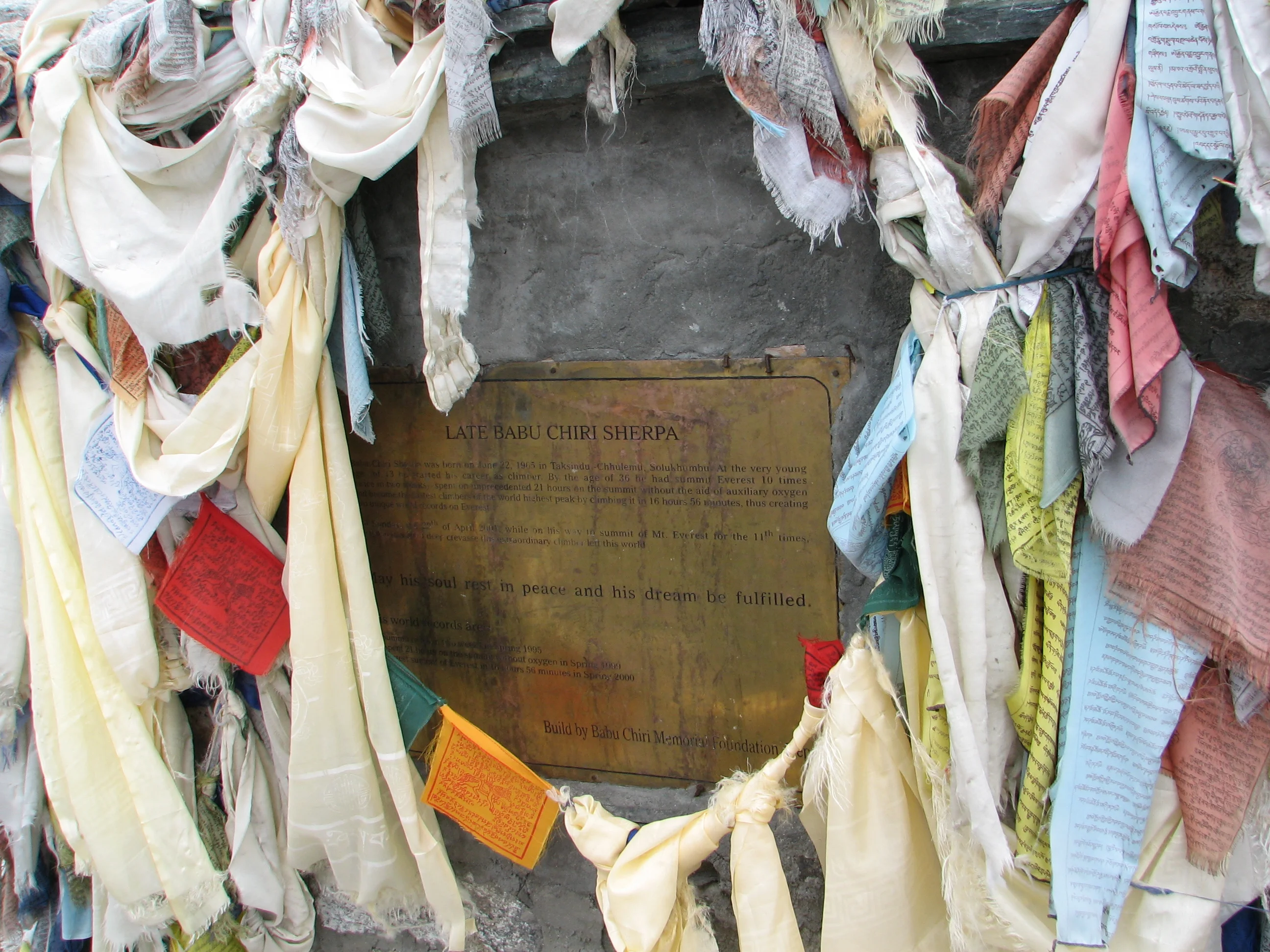
Babu Chiri was hailed worldwide as ‘The Iron Sherpa’. Just one year later, in May 2000, he set another world record by running from Everest Base Camp to the summit in sixteen hours and fifty-six minutes.
Yet the mountain that gave Babu his fame ultimately claimed him. On April 29, 2001, while photographing seracs near Camp II in the Western Cwm, Babu fell into a concealed crevasse and perished at age thirty-five. In his native village of Taksindu, the school he founded with his climbing earnings continues to educate hundreds of local children, a permanent monument to a man who touched the heavens and returned to uplift his people.
Key Statistics & Topographic Figures
- Category
- High-Altitude Endurance & Physiological Feats
Archival Subject
- Reading Time
- 14 min read
Narrative Length
- Key Mountain
- mount-everest
Objective
- Ascent Route
- south-col-route
Topography
- Verification
- Editorially Verified
Archival Standard
Archival Primary Source Quotations
“In the mountains, truth is etched in ice and granite; every step requires unwavering respect for the heights.”
Defined Alpine Terminology & Concepts
- Summit Push
- The final continuous climbing effort from the highest established camp to the mountain apex and back.
- Death Zone Chronicle
- A verified, research-backed historical narrative documenting the human, technical, and environmental realities of an alpine expedition.
Frequently Asked Questions: Above the Troposphere: Babu Chiri Sherpa's 21 Hours on the Summit of Everest
What is the core chronicle and subject of "Above the Troposphere: Babu Chiri Sherpa's 21 Hours on the Summit of Everest"?
On May 6, 1999, Babu Chiri Sherpa accomplished one of the greatest physiological feats in history, spending twenty-one continuous hours on Everest's summit without supplemental oxygen.
Which mountain peaks and routes are featured in "Above the Troposphere: Babu Chiri Sherpa's 21 Hours on the Summit of Everest"?
This narrative documents climbs on mount-everest along the south-col-route in Nepal.
Which documented expedition is chronicled in this story?
This historical chronicle captures the events of the 1999-babu-chiri-everest-bivouac, verified through contemporary journals and archival records.
Who authored and researched this archival chronicle?
Authored and researched by Mountainity Historical Research Desk, drawing on primary eyewitness testimonies, alpine club registries, and verified summit logs.
What makes this high-altitude chronicle historically significant?
Categorized under "High-Altitude Endurance & Physiological Feats", this chronicle preserves critical lessons in alpine leadership, survival, tactical speed, and human endurance in the death zone.
Related Mountains


Mount Everest
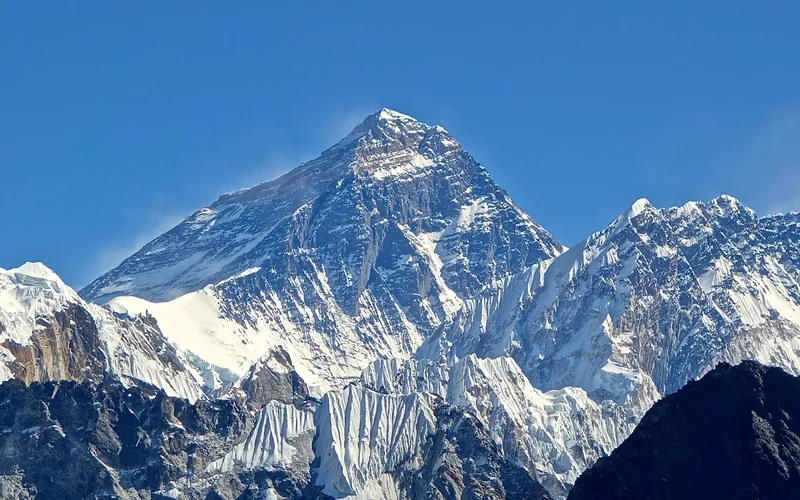
Mount Everest is the highest mountain above sea level on Earth, standing at an official elevation of 8,848.86 meters (29,031.7 ft). Straddling the international frontier between Nepal and China, it is known locally as Sagarmatha in Nepali ('Goddess of the Sky') and Chomolungma in Tibetan ('Mother Goddess of the World'). The peak rises into the extreme upper troposphere, where oxygen levels drop to barely one-third of sea-level pressure. Climbers face hurricane-force jet stream winds, severe frostbite conditions, shifting ice crevasses in the Khumbu Icefall, and the dangerous Death Zone above 8,000 meters.
Documented Sources & Archival Citations
- Himalayan Database: Babu Chiri Sherpa Everest Log(Elizabeth Hawley / Himalayan Database)
Supporting claim: Official verification of the 21-hour oxygenless summit stay on Mount Everest in May 1999
Accessed/Documented: 2024 - The Life and Legacy of Babu Chiri Sherpa(American Alpine Journal)
Supporting claim: Physiological and historical analysis of Babu Chiri's 21-hour summit bivouac
Accessed/Documented: 2002