The Fourteenth Star: Juanito Oiarzabal Conquers Annapurna Without Oxygen
On April 29, 1999, Basque powerhouse Juanito Oiarzabal conquered Annapurna I without bottled oxygen, becoming the third person in history to complete all fourteen 8,000-meter peaks without artificial gas.
Mountain Safety & Conditions Disclaimer: High-altitude climbing, glacial travel, and technical ascents entail severe objective risks including avalanches, serac collapses, rapid weather collapse, and altitude illness. Historical route descriptions and summit claims on Mountanity reflect documented archival sources and must not be used as live operational safety assessments. Local regulations, permits, and physical glacial topography change continuously.
Peer Review: Senior Editorial Board & Historical Reviewers • Editorial Standards
In the spring of 1999, Basque alpinist Juanito Oiarzabal arrived in Nepal facing the defining test of his mountaineering life. Over the preceding fourteen years, since his first Himalayan summit on Cho Oyu in 1985, the fiery native of Vitoria-Gasteiz had climbed thirteen eight-thousanders. He had climbed them all without the aid of supplemental bottled oxygen, including Everest, K2, and Kangchenjunga. Only one mountain remained unclimbed on his scorecard: Annapurna I (8,091m).
Annapurna was legendary for its hostility to climbers. While Everest attracted commercial armies, Annapurna remained a terrifying arena of unstable seracs and sudden avalanches. Only two human beings in history—Reinhold Messner of Italy and Erhard Loretan of Switzerland—had ever climbed all fourteen 8,000-meter peaks without bottled oxygen. Oiarzabal was poised to become the third, and the first climber from the Iberian Peninsula to complete the Himalayan crown.
Into the Avalanche Labyrinth
Oiarzabal set up Base Camp on the northern approach of Annapurna alongside fellow Basque climbers Ferran Latorre and Juan Vallejo. The classic French route on the North Face wound directly beneath the threatening ice precipices known as the Sickle. Every day at Base Camp, the climbers listened to the terrifying roar of ice blocks collapsing and shattering across the glacier.
Refusing to compromise his ethical principles, Oiarzabal climbed without Sherpa support or oxygen tanks. In a race against falling ice, he and his team worked through the night, dodging crevasse mazes to establish Camp II at 5,900 meters and Camp III at 6,600 meters. The strain on Oiarzabal’s body was immense; his resting heart rate spiked, and temperatures routinely hovered near -30°C. Yet his sheer psychological willpower and physical stamina pushed him upward through the ice couloirs.
The Midnight Push on the North Face
On April 28, 1999, high-pressure winds momentarily slackened. Sensing his chance, Oiarzabal established a precarious Camp IV above 7,200 meters. The air was thin enough to induce hallucinations, but Oiarzabal’s focus was razor-sharp. Just after midnight on April 29, he strapped on his crampons and set out alone into the freezing blackness.
Climbing through forty-five-degree slopes of hard-packed firn, Oiarzabal fought through blinding spindrift that threatened to freeze his eyelashes shut. Every five paces required pausing, leaning forward over his ice axe, and drawing rapid gasping breaths of thin air. Above 7,800 meters, he negotiated a tricky limestone cliff band before finally gaining the long, sweeping snow crest that led to the summit.
The Summit and the World Record Journey
At 1:30 PM on April 29, 1999, Juanito Oiarzabal stood alone upon the 8,091-meter summit of Annapurna I. Looking out across the snow-capped giants of the Himalaya, the emotional weight of fifteen years of relentless striving overwhelmed him. He had completed all fourteen 8,000-meter peaks without supplemental oxygen, securing his name in the pantheon of alpine legends alongside Messner and Loretan.
Rather than retiring from high-altitude climbing after this historic achievement, Oiarzabal would go on to launch his legendary ‘2x14’ campaign—climbing the fourteen peaks a second time. Over the next decade, despite suffering severe frostbite on K2 in 2004 that resulted in the amputation of all ten toes, Oiarzabal would amass an astounding twenty-six summits of 8,000-meter peaks, establishing an all-time world record that remains a towering monument in mountaineering history.
Key Statistics & Topographic Figures
- Category
- Oxygenless Pioneers
Archival Subject
- Reading Time
- 13 min read
Narrative Length
- Key Mountain
- annapurna-1
Objective
- Ascent Route
- annapurna-north-face
Topography
- Verification
- Editorially Verified
Archival Standard
Archival Primary Source Quotations
“In the mountains, truth is etched in ice and granite; every step requires unwavering respect for the heights.”
Defined Alpine Terminology & Concepts
- Summit Push
- The final continuous climbing effort from the highest established camp to the mountain apex and back.
- Death Zone Chronicle
- A verified, research-backed historical narrative documenting the human, technical, and environmental realities of an alpine expedition.
Frequently Asked Questions: The Fourteenth Star: Juanito Oiarzabal Conquers Annapurna Without Oxygen
What is the core chronicle and subject of "The Fourteenth Star: Juanito Oiarzabal Conquers Annapurna Without Oxygen"?
On April 29, 1999, Basque powerhouse Juanito Oiarzabal conquered Annapurna I without bottled oxygen, becoming the third person in history to complete all fourteen 8,000-meter peaks without artificial gas.
Which mountain peaks and routes are featured in "The Fourteenth Star: Juanito Oiarzabal Conquers Annapurna Without Oxygen"?
This narrative documents climbs on annapurna-1 along the annapurna-north-face in Nepal.
Which documented expedition is chronicled in this story?
This historical chronicle captures the events of the 1999-juanito-oiarzabal-annapurna-14th-summit, verified through contemporary journals and archival records.
Who authored and researched this archival chronicle?
Authored and researched by Mountainity Historical Research Desk, drawing on primary eyewitness testimonies, alpine club registries, and verified summit logs.
What makes this high-altitude chronicle historically significant?
Categorized under "Oxygenless Pioneers", this chronicle preserves critical lessons in alpine leadership, survival, tactical speed, and human endurance in the death zone.
Related Mountains
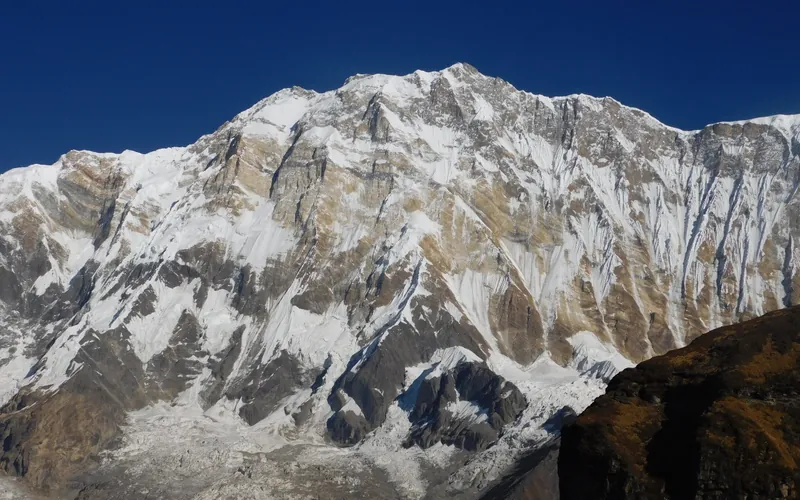

Annapurna I
Annapurna I, at 8,091 meters (26,545 ft), is the tenth-highest mountain in the world and historically the first 8,000-meter peak ever summited (June 3, 1950 by Maurice Herzog and Louis Lachenal). Rising above the Annapurna Sanctuary, its north and south walls present extreme avalanche and serac fall hazards.
Documented Sources & Archival Citations
- American Alpine Journal: Annapurna and the 14 Eight-Thousanders by Juanito Oiarzabal(American Alpine Club)
Supporting claim: Official expedition report verifying the April 29, 1999 Annapurna summit
Accessed/Documented: 2000 - Buscando las Catorce Estrellas (Seeking the Fourteen Stars)(Juanito Oiarzabal / Editorial Desnivel)
Supporting claim: First-person chronicle of the fifteen-year campaign across all fourteen 8,000-meter peaks
Accessed/Documented: 2001