2000 Mount Everest: Nazir Sabir's Historic Summit Climb
The historic chronicle of Nazir Sabir becoming the first Pakistani mountaineer to summit Mount Everest on May 17, 2000.
Mountain Safety & Conditions Disclaimer: High-altitude climbing, glacial travel, and technical ascents entail severe objective risks including avalanches, serac collapses, rapid weather collapse, and altitude illness. Historical route descriptions and summit claims on Mountanity reflect documented archival sources and must not be used as live operational safety assessments. Local regulations, permits, and physical glacial topography change continuously.
Peer Review: Senior Editorial Board & Historical Reviewers • Editorial Standards
A Lifelong Himalayan Dream
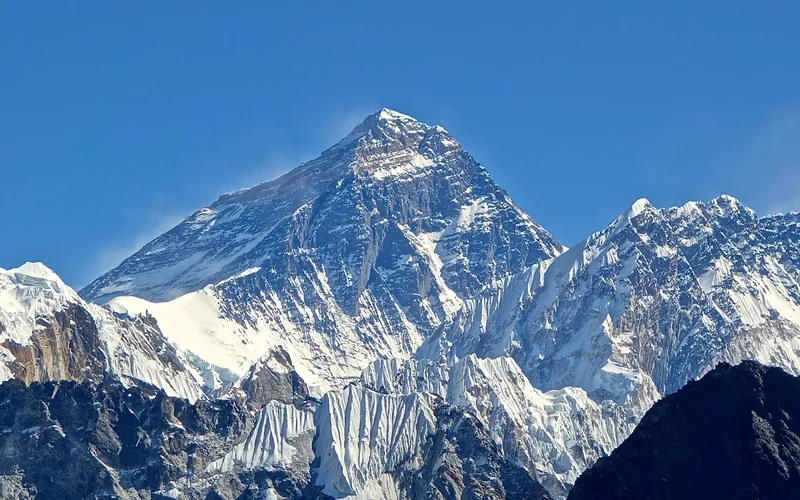
For nearly three decades, Nazir Sabir had reigned as the undisputed master of the Karakoram, with landmark summits on K2, Gasherbrum I, Gasherbrum II, and Broad Peak. Yet, one crowning summit eluded him: Mount Everest (8,849m), the roof of the world. No Pakistani climber had ever stood on the summit of Everest.
In the spring of 2000, veteran American mountaineer Christine Boskoff invited Sabir to join the Mountain Madness Everest Expedition.
Through the Khumbu Icefall
Operating from the Nepal side, Sabir brought decades of Karakoram route-finding mastery to the crowded slopes of Everest. Moving steadily through the Khumbu Icefall and across the Lhotse Face, Sabir and his teammates established Camp 4 on the South Col in mid-May.
On the evening of May 16, under clear, star-studded skies, Sabir set out on his summit push. Climbing through the night past the Balcony and the South Summit, he surmounted the vertical rock chimney of the Hillary Step with steady, measured veteran cadence.
Pakistan’s Flag on the Apex of Earth
At 07:30 AM on May 17, 2000, Nazir Sabir stepped onto the summit of Mount Everest. Unfurling the flag of Pakistan on the highest point on Earth, he accomplished a national milestone that had eluded his country for half a century. The achievement sparked nationwide celebrations and earned Sabir Pakistan’s highest civilian awards.
Key Statistics & Topographic Figures
- Category
- National Milestones
Archival Subject
- Reading Time
- 8 min read
Narrative Length
- Key Mountain
- mount-everest
Objective
- Ascent Route
- south-col-route
Topography
- Verification
- Editorially Verified
Archival Standard
Archival Primary Source Quotations
“In the mountains, truth is etched in ice and granite; every step requires unwavering respect for the heights.”
Defined Alpine Terminology & Concepts
- Summit Push
- The final continuous climbing effort from the highest established camp to the mountain apex and back.
- Death Zone Chronicle
- A verified, research-backed historical narrative documenting the human, technical, and environmental realities of an alpine expedition.
Frequently Asked Questions: 2000 Mount Everest: Nazir Sabir's Historic Summit Climb
What is the core chronicle and subject of "2000 Mount Everest: Nazir Sabir's Historic Summit Climb"?
The historic chronicle of Nazir Sabir becoming the first Pakistani mountaineer to summit Mount Everest on May 17, 2000.
Which mountain peaks and routes are featured in "2000 Mount Everest: Nazir Sabir's Historic Summit Climb"?
This narrative documents climbs on mount-everest along the south-col-route in Nepal.
Which documented expedition is chronicled in this story?
This historical chronicle captures the events of the 2000-everest-first-pakistani, verified through contemporary journals and archival records.
Who authored and researched this archival chronicle?
Authored and researched by Mountanity Research Desk, drawing on primary eyewitness testimonies, alpine club registries, and verified summit logs.
What makes this high-altitude chronicle historically significant?
Categorized under "National Milestones", this chronicle preserves critical lessons in alpine leadership, survival, tactical speed, and human endurance in the death zone.
Related Mountains


Mount Everest
Mount Everest is the highest mountain above sea level on Earth, standing at an official elevation of 8,848.86 meters (29,031.7 ft). Straddling the international frontier between Nepal and China, it is known locally as Sagarmatha in Nepali ('Goddess of the Sky') and Chomolungma in Tibetan ('Mother Goddess of the World'). The peak rises into the extreme upper troposphere, where oxygen levels drop to barely one-third of sea-level pressure. Climbers face hurricane-force jet stream winds, severe frostbite conditions, shifting ice crevasses in the Khumbu Icefall, and the dangerous Death Zone above 8,000 meters.