The Brother's Ridge: Alberto Iñurrategi Conquers Annapurna for Félix
On May 16, 2002, Basque purist Alberto Iñurrategi and Jean-Christophe Lafaille traversed Annapurna's lethal East Ridge without oxygen, completing all 14 peaks in memory of Alberto's late brother Félix.
Mountain Safety & Conditions Disclaimer: High-altitude climbing, glacial travel, and technical ascents entail severe objective risks including avalanches, serac collapses, rapid weather collapse, and altitude illness. Historical route descriptions and summit claims on Mountanity reflect documented archival sources and must not be used as live operational safety assessments. Local regulations, permits, and physical glacial topography change continuously.
Peer Review: Senior Editorial Board & Historical Reviewers • Editorial Standards
On July 28, 2000, high on the flanks of Gasherbrum II in Pakistan, Alberto Iñurrategi’s world fractured into pieces. Moments after standing together on the summit of their twelfth eight-thousander, Alberto watched in horror as a rappel anchor failed, sending his older brother and lifelong climbing partner Félix plunging down the vertical face to his death. The brothers had shared a single rope, a single tent, and an unbroken dream of climbing all fourteen eight-thousanders in clean, lightweight style without supplemental bottled oxygen. In an instant, the brotherhood that had redefined Basque mountaineering was severed.
For months, Alberto could not look at a mountain. The tragedy stripped him of his desire to climb. Yet in his grief, he realized that walking away would leave their shared life’s journey unfinished. He resolved to climb the final two peaks—not for fame or records, but as a sacred pilgrimage in honor of Félix. In 2001, he summited Manaslu in pure alpine style. In the spring of 2002, he turned toward the ultimate test: Annapurna I (8,091m).
The Audacity of the East Ridge
Annapurna’s standard route on the North Face was notorious for spontaneous serac avalanches that swept across the glacier. Rather than rolling the dice beneath the hanging ice of the Sickle, Alberto teamed up with the extraordinary French solo alpinist Jean-Christophe Lafaille to attempt the mountain via the formidable East Ridge.
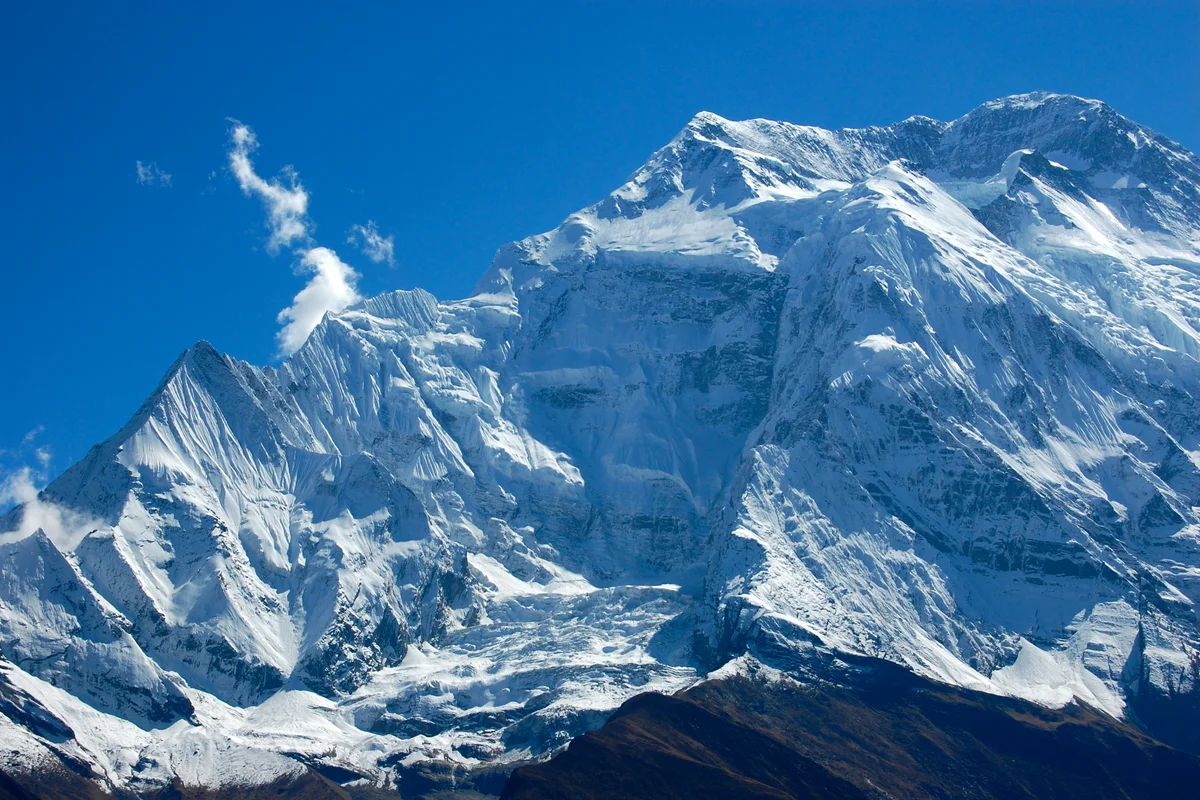
The East Ridge was an immense undertaking: an extraordinarily long, knife-edged arête of corniced snow and shattered rock, exposed to ferocious high-altitude winds. It offered safety from falling ice, but demanded extraordinary physical stamina. A storm high on the ridge would cut off any hope of rapid retreat. Carrying only tiny bivouac tents, dehydrated rations, and stove fuel, Alberto and Lafaille climbed without fixed ropes or supplemental bottled oxygen, relying entirely on their speed and cardiovascular conditioning.
Moving Across the Razor Edge
Climbing in early May 2002, the two men established a lightweight camp on the eastern shoulder above 7,000 meters. The wind along the crest was deafening, howling across the ridge with gale-force intensity. Every step required delicate footwork along overhanging snow mushrooms that dropped into thousands of meters of vertical abyss on either side.
On May 15, they pushed their assault bivouac up to nearly 7,600 meters. With temperatures dropping to -30°C, Alberto lay awake through the night, holding Félix’s memory close to his heart. In the thin, suffocating air of the death zone, he knew that the final push would require every ounce of reserve he possessed.
Summit and Remembrance
Before dawn on May 16, 2002, Alberto and Lafaille stepped onto the final knife-edge crest. The ridge seemed to stretch into infinity, rising over multiple subsidiary summits before culminating in the main peak. Pushing through deep, wind-packed snow without artificial oxygen, the two men alternated the crushing labor of breaking trail.
At 10:00 AM on May 16, Alberto Iñurrategi stepped onto the highest point of Annapurna I (8,091m). There, on the windswept summit beneath a deep cobalt sky, Alberto bowed his head in profound remembrance of his fallen brother. At thirty-three years of age, he became the tenth person in human history, and only the second Spaniard, to climb all fourteen 8,000-meter peaks without supplemental bottled oxygen. He had fulfilled his promise to Félix—not through conquest, but through love and sheer devotion to the purest ideals of the mountains.
Key Statistics & Topographic Figures
- Category
- Oxygenless Pioneers
Archival Subject
- Reading Time
- 14 min read
Narrative Length
- Key Mountain
- annapurna-1
Objective
- Ascent Route
- annapurna-north-face
Topography
- Verification
- Editorially Verified
Archival Standard
Archival Primary Source Quotations
“In the mountains, truth is etched in ice and granite; every step requires unwavering respect for the heights.”
Defined Alpine Terminology & Concepts
- Summit Push
- The final continuous climbing effort from the highest established camp to the mountain apex and back.
- Death Zone Chronicle
- A verified, research-backed historical narrative documenting the human, technical, and environmental realities of an alpine expedition.
Frequently Asked Questions: The Brother's Ridge: Alberto Iñurrategi Conquers Annapurna for Félix
What is the core chronicle and subject of "The Brother's Ridge: Alberto Iñurrategi Conquers Annapurna for Félix"?
On May 16, 2002, Basque purist Alberto Iñurrategi and Jean-Christophe Lafaille traversed Annapurna's lethal East Ridge without oxygen, completing all 14 peaks in memory of Alberto's late brother Félix.
Which mountain peaks and routes are featured in "The Brother's Ridge: Alberto Iñurrategi Conquers Annapurna for Félix"?
This narrative documents climbs on annapurna-1 along the annapurna-north-face in Nepal.
Which documented expedition is chronicled in this story?
This historical chronicle captures the events of the 2002-alberto-inurrategi-annapurna-east-ridge, verified through contemporary journals and archival records.
Who authored and researched this archival chronicle?
Authored and researched by Mountainity Historical Research Desk, drawing on primary eyewitness testimonies, alpine club registries, and verified summit logs.
What makes this high-altitude chronicle historically significant?
Categorized under "Oxygenless Pioneers", this chronicle preserves critical lessons in alpine leadership, survival, tactical speed, and human endurance in the death zone.
Related Mountains
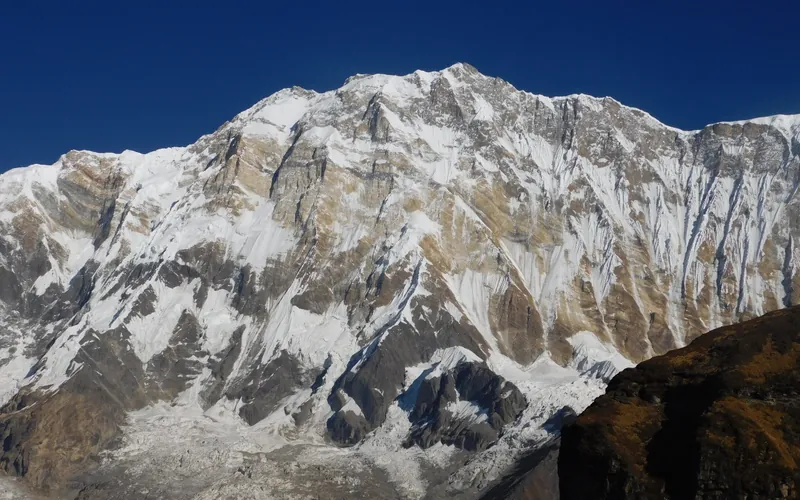

Annapurna I
Annapurna I, at 8,091 meters (26,545 ft), is the tenth-highest mountain in the world and historically the first 8,000-meter peak ever summited (June 3, 1950 by Maurice Herzog and Louis Lachenal). Rising above the Annapurna Sanctuary, its north and south walls present extreme avalanche and serac fall hazards.
Documented Sources & Archival Citations
- American Alpine Journal: Annapurna East Ridge and the 14 Summits by Alberto Iñurrategi(American Alpine Club)
Supporting claim: Official expedition report verifying the May 16, 2002 Annapurna East Ridge summit
Accessed/Documented: 2003 - Hire Himalaya (Your Himalaya): The Final Ridge for Félix(Alberto Iñurrategi / Editorial Desnivel)
Supporting claim: Personal memoirs detailing the alpine-style push on Annapurna and the emotional tribute to his brother
Accessed/Documented: 2002