Mandatory Return: Ed Viesturs Completes Endeavour 8000 on Annapurna
On May 12, 2005, Ed Viesturs and Veikka Gustafsson conquered the lethal North Face of Annapurna I without bottled oxygen, fulfilling Viesturs's 16-year quest to climb all 14 eight-thousanders.
Mountain Safety & Conditions Disclaimer: High-altitude climbing, glacial travel, and technical ascents entail severe objective risks including avalanches, serac collapses, rapid weather collapse, and altitude illness. Historical route descriptions and summit claims on Mountanity reflect documented archival sources and must not be used as live operational safety assessments. Local regulations, permits, and physical glacial topography change continuously.
Peer Review: Senior Editorial Board & Historical Reviewers • Editorial Standards
For sixteen years, American mountaineer Ed Viesturs lived by a singular, unyielding personal philosophy: “Getting to the top is optional. Getting down is mandatory.” In a realm where summit fever regularly clouded judgment and claimed lives, Viesturs established an immaculate reputation for walking away from peaks when the margins of safety evaporated. Yet by spring 2005, only one mountain stood between him and history: Annapurna I (8,091m), the deadliest and most unpredictable eight-thousander on Earth.
Viesturs had already climbed thirteen of the world’s fourteen 8,000-meter peaks without supplemental bottled oxygen. He had stood atop K2, survived the tragic 1996 Everest blizzard while leading an IMAX filming team, and summitted Everest seven times without artificial gas. But Annapurna remained his nemesis. He had attempted it twice before—in 2000 and 2002—turning back both times when hanging seracs and avalanches threatened his team. Entering the spring of 2005, Viesturs was forty-five years old, acutely aware that Annapurna would test his discipline to its ultimate limit.
The Brotherhood of the North Face
Arriving at Annapurna Base Camp in April 2005, Viesturs was accompanied by his longtime Finnish partner Veikka Gustafsson. The two men were kindred spirits: both possessed extraordinary cardiovascular endurance, both refused supplemental oxygen on ethical grounds, and both shared an instinctive, unspoken trust built over shared summits on Dhaulagiri, Cho Oyu, Shishapangma, and Manaslu.
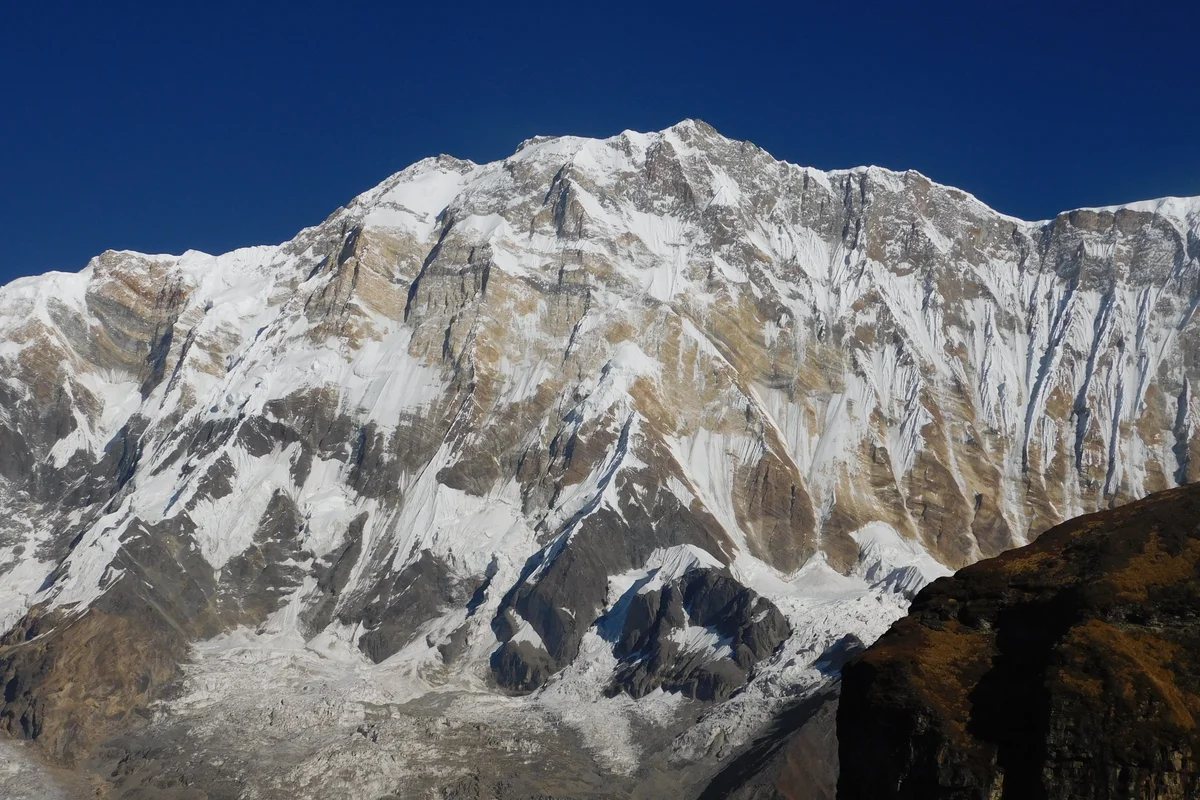
The route they chose was the historic 1950 French line up the North Face. It was an intimidating corridor. Directly above the lower glacier hung the Sickle—a gigantic, fractured ice cliff that periodically shed house-sized blocks of ice across the ascent slopes. Rather than establishing heavy siege infrastructure, Viesturs and Gustafsson opted for a rapid, lightweight strategy. They minimized their time in the avalanche run-out zones, moving like ghosts between camps in the freezing pre-dawn hours.
Waiting Out the Avalanche Trap
In late April, torrential snowstorms hammered the Annapurna sanctuary. Lesser expeditions might have grown impatient, but Viesturs remembered his rule. For nearly two weeks, the team remained pinned at Base Camp, watching enormous powder avalanches thunder down the face, scouring the slopes clean. Viesturs refused to budge until the new snow had consolidated.
On May 10, high-altitude barometers stabilized, signaling a rare window of calm. Viesturs, Gustafsson, and Italian climber Silvio Mondinelli pushed directly to Camp II at 5,600 meters, then bypassed Camp III to establish a tiny assault bivouac at 7,400 meters on the upper slopes. Inside their cramped tent, the temperature dropped below -25°C. In the thin air of the death zone, sleeping was impossible; they spent the night melting snow on a single gas stove and listening to the rhythmic whistling of the wind against the nylon fabric.
The Final Push to the Summit
At 3:00 AM on May 12, 2005, Viesturs and Gustafsson stepped into the freezing darkness. The air was bitterly cold, and every step required three deep, gasping breaths. Gustafsson and Viesturs took turns breaking trail through wind-crusted snow, climbing a steep technical couloir that breached the final rock band.
By midday, they reached the crest of the summit ridge. To their north stretched the endless brown expanses of the Tibetan plateau; to the south, the green valleys of Nepal dropped away into hazy clouds. At 2:00 PM local time, Ed Viesturs and Veikka Gustafsson took their final steps onto the 8,091-meter summit of Annapurna I.
There were no wild celebrations. Viesturs dropped to his knees, tapped the summit snow with his ice axe, and embraced Gustafsson. At that moment, Viesturs became the first American citizen and only the twelfth person in history to climb all fourteen 8,000-meter peaks without supplemental bottled oxygen. His sixteen-year Project Endeavour 8000 was complete—achieved without a single frostbitten toe, without shortcuts, and with his promise of returning alive faithfully kept.
Key Statistics & Topographic Figures
- Category
- Oxygenless Pioneers
Archival Subject
- Reading Time
- 14 min read
Narrative Length
- Key Mountain
- annapurna-1
Objective
- Ascent Route
- annapurna-north-face
Topography
- Verification
- Editorially Verified
Archival Standard
Archival Primary Source Quotations
“In the mountains, truth is etched in ice and granite; every step requires unwavering respect for the heights.”
Defined Alpine Terminology & Concepts
- Summit Push
- The final continuous climbing effort from the highest established camp to the mountain apex and back.
- Death Zone Chronicle
- A verified, research-backed historical narrative documenting the human, technical, and environmental realities of an alpine expedition.
Frequently Asked Questions: Mandatory Return: Ed Viesturs Completes Endeavour 8000 on Annapurna
What is the core chronicle and subject of "Mandatory Return: Ed Viesturs Completes Endeavour 8000 on Annapurna"?
On May 12, 2005, Ed Viesturs and Veikka Gustafsson conquered the lethal North Face of Annapurna I without bottled oxygen, fulfilling Viesturs's 16-year quest to climb all 14 eight-thousanders.
Which mountain peaks and routes are featured in "Mandatory Return: Ed Viesturs Completes Endeavour 8000 on Annapurna"?
This narrative documents climbs on annapurna-1 along the annapurna-north-face in Nepal.
Which documented expedition is chronicled in this story?
This historical chronicle captures the events of the 2005-ed-viesturs-annapurna-endeavour, verified through contemporary journals and archival records.
Who authored and researched this archival chronicle?
Authored and researched by Mountainity Historical Research Desk, drawing on primary eyewitness testimonies, alpine club registries, and verified summit logs.
What makes this high-altitude chronicle historically significant?
Categorized under "Oxygenless Pioneers", this chronicle preserves critical lessons in alpine leadership, survival, tactical speed, and human endurance in the death zone.
Related Mountains

Annapurna I
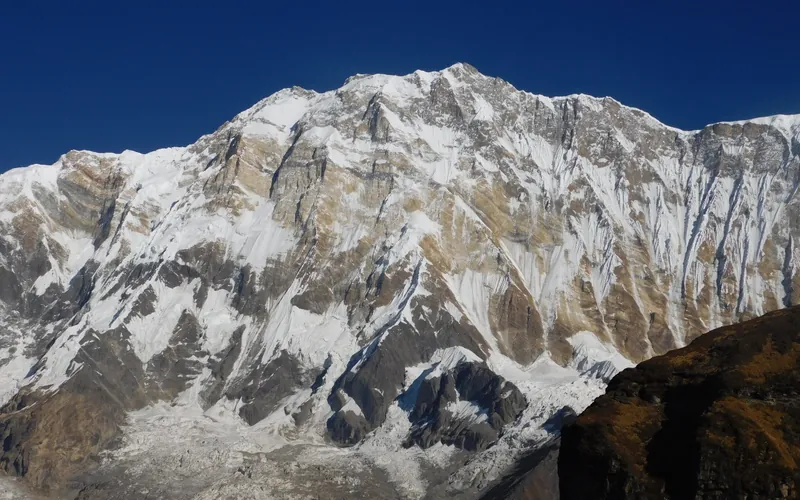
Annapurna I, at 8,091 meters (26,545 ft), is the tenth-highest mountain in the world and historically the first 8,000-meter peak ever summited (June 3, 1950 by Maurice Herzog and Louis Lachenal). Rising above the Annapurna Sanctuary, its north and south walls present extreme avalanche and serac fall hazards.
Documented Sources & Archival Citations
- American Alpine Journal: Annapurna and Endeavour 8000 by Ed Viesturs(American Alpine Club)
Supporting claim: Official expedition report verifying the May 12, 2005 Annapurna summit
Accessed/Documented: 2006 - No Shortcuts to the Top: Climbing the World's 14 Highest Peaks(Ed Viesturs and David Roberts / Broadway Books)
Supporting claim: Detailed personal account of the sixteen-year campaign across all fourteen eight-thousanders
Accessed/Documented: 2006