From Baltoro to Everest: Hassan Sadpara's Historic Summit of the World's Highest Peak
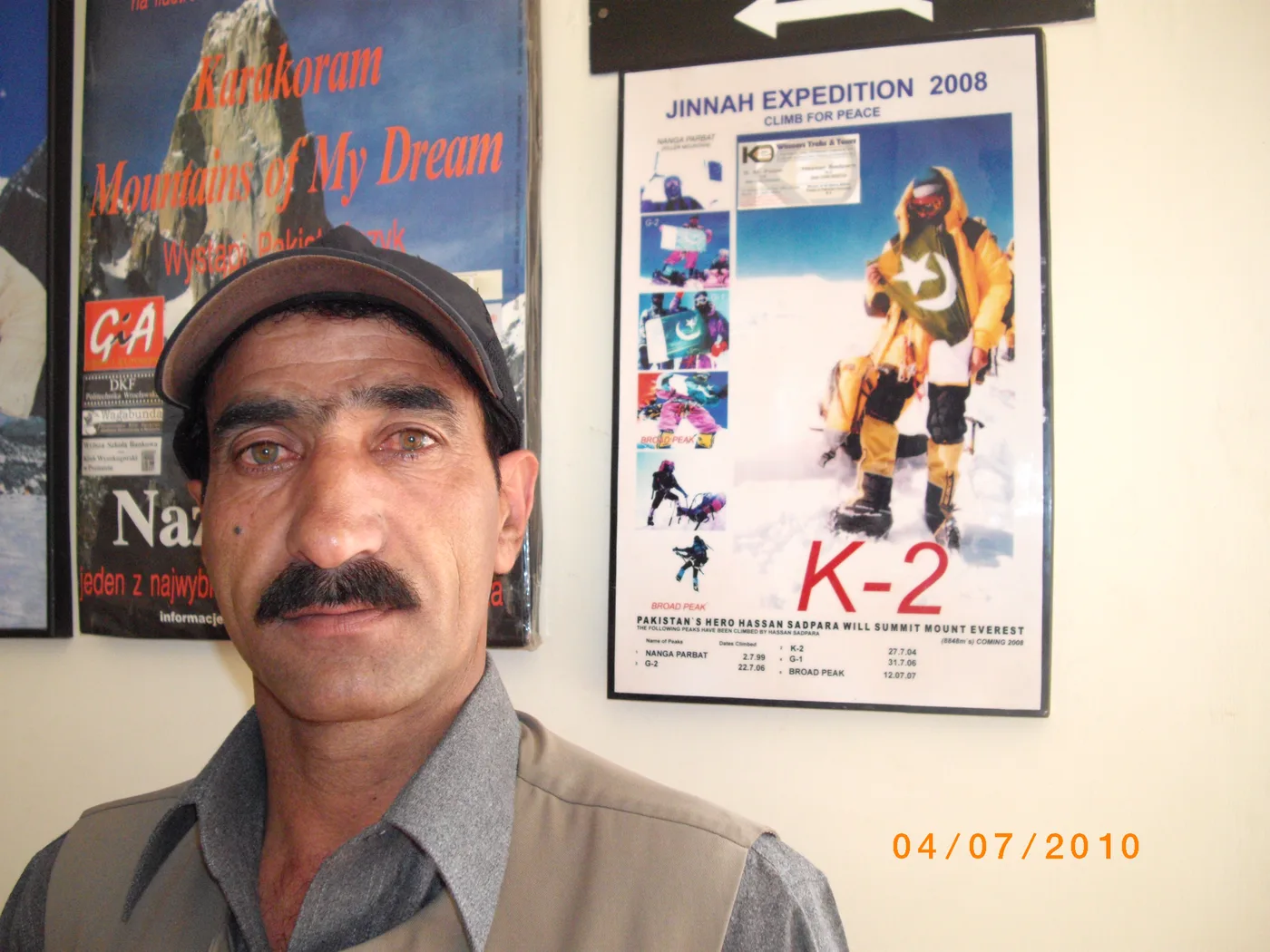
On May 11, 2011, Balti mountaineer Hassan Sadpara reached the top of Mount Everest, becoming only the second Pakistani in history after Nazir Sabir to conquer the 8,848-meter apex of the planet.
Mountain Safety & Conditions Disclaimer: High-altitude climbing, glacial travel, and technical ascents entail severe objective risks including avalanches, serac collapses, rapid weather collapse, and altitude illness. Historical route descriptions and summit claims on Mountanity reflect documented archival sources and must not be used as live operational safety assessments. Local regulations, permits, and physical glacial topography change continuously.
Peer Review: Senior Editorial Board & Historical Reviewers • Editorial Standards
On the morning of May 11, 2011, as the first golden rays of dawn struck the frozen crest of the Mahalangur Himalaya, a solitary figure from Baltistan stood weeping on the highest point on Earth. Hassan Sadpara—a man who had spent his youth carrying heavy kerosene containers and duffel bags as a low-altitude porter across the Karakoram—had just placed the green-and-white flag of Pakistan atop Mount Everest (8,848m).
It had been eleven long years since Nazir Sabir became the first Pakistani to conquer Everest in 2000. For over a decade, Pakistan had waited for another son of its northern peaks to stand on the roof of the world. Hassan Sadpara delivered that dream with characteristic humility and indomitable courage.
The Prodigy of Sadpara Village
Hassan Sadpara was born Hassan Asad in 1963 in Sadpara village, nestled near the edge of the glacial waters of Lake Sadpara just south of Skardu. For generations, the men of Sadpara had worked as the backbone of expeditions venturing into the Karakoram. They were rugged, soft-spoken Baltis who knew how to survive in sub-zero blizzards with only thin wool blankets and plastic boots.
Hassan entered the portering trade out of pure economic necessity, supporting his family on modest wages earned on the arduous trek to K2 Base Camp. But his superhuman endurance and natural resistance to altitude sickness soon caught the attention of visiting foreign expeditions. Unlike most climbers who struggled for breath above 7,000 meters, Hassan seemed to breathe easily in the thinnest air.
Between 1994 and 2007, Hassan compiled an extraordinary climbing resume on Pakistani soil:
- K2 (8,611m): Summited in 1994 via the Abruzzi Spur without bottled oxygen.
- Nanga Parbat (8,126m): Summited in 1999 via the Kinshofer Route without bottled oxygen.
- Gasherbrum II (8,035m): Summited in 2006 without bottled oxygen.
- Gasherbrum I (8,068m): Summited in 2006 without bottled oxygen, achieving a rare double-8,000er season.
- Broad Peak (8,051m): Summited in 2007 without bottled oxygen.
With these five ascents, Hassan became only the second Pakistani in history after Rajab Shah to conquer all five of Pakistan’s 8,000ers—and the very first to accomplish all five entirely without supplemental bottled oxygen.
The Dream of Everest
Despite his monumental Karakoram achievements, Hassan harbored a burning dream: to climb Mount Everest. For years, lack of funding held him back. While international commercial clients paid tens of thousands of dollars to be guided up Everest, Hassan had to scrape together resources simply to feed his household in Skardu.
In late 2010, the Government of Pakistan and the Alpine Club of Pakistan stepped in, granting Hassan national sponsorship under a sports initiative backed by the Prime Minister. In April 2011, Hassan arrived in Kathmandu and made the long trek through the Khumbu Valley to Everest Base Camp.
For Hassan, the Khumbu Icefall—feared by many foreign climbers—was familiar terrain. Having navigated the shattered chaos of the Baltoro and Godwin-Austen glaciers for two decades, he moved through the towering ice seracs with effortless grace.
The Summit Push: May 10–11, 2011
In early May, a high-pressure system calmed the ferocious jet stream battering the upper mountain. Hassan and his Sherpa companions pushed up the Western Cwm, climbed the frozen wall of the Lhotse Face, and reached Camp IV on the wind-lashed South Col (7,920m) on May 10.
At 9:30 PM on May 10, under a canopy of crystal-clear stars, Hassan stepped out into the Death Zone. The temperature was minus 35 degrees Celsius. Moving steadily upward through the loose shale and hard snow of the Triangular Face, Hassan reached the Balcony (8,400m) at midnight.
From the Balcony, the route follows the knife-edge Southeast Ridge, with an abyss of thousands of feet plunging into the Kangshung Face on one side and the Southwest Face on the other. At dawn, Hassan surmounted the rocky bastion of the Hillary Step. At 6:00 AM on May 11, 2011, he took the final strides onto the 8,848-meter summit of Mount Everest.
National Rejoicing and Porter Advocacy
News of Hassan’s summit flashed across Pakistan, triggering spontaneous street celebrations in Skardu and Islamabad. President Asif Ali Zardari and the Prime Minister announced national awards and monetary recognition for the Balti hero. Hassan was conferred the President’s Pride of Performance in 2008 and later the Tamgha-i-Imtiaz.
Yet throughout the adulation, Hassan remained the same modest village man who preferred drinking salted butter tea in Sadpara to rubbing shoulders with dignitaries in capital banquet halls. He dedicated his later years to pleading for institutional reforms for his fellow porters: demanding life insurance, fair wages, safety equipment, and medical care for the men who carried foreign dreams on their shoulders.
When Hassan Sadpara passed away from cancer in 2016 at the age of 53, thousands gathered in Skardu to honor him. He remains an immortal hero of Baltistan and Pakistan—a gentle giant who proved that raw grit and passion can take a village porter to the very pinnacle of the earth.
Key Statistics & Topographic Figures
- Category
- Pakistani Mountaineering Pioneers
Archival Subject
- Reading Time
- 11 min read
Narrative Length
- Key Mountain
- mount-everest
Objective
- Ascent Route
- south-col-route
Topography
- Verification
- Editorially Verified
Archival Standard
Archival Primary Source Quotations
“In the mountains, truth is etched in ice and granite; every step requires unwavering respect for the heights.”
Defined Alpine Terminology & Concepts
- Summit Push
- The final continuous climbing effort from the highest established camp to the mountain apex and back.
- Death Zone Chronicle
- A verified, research-backed historical narrative documenting the human, technical, and environmental realities of an alpine expedition.
Frequently Asked Questions: From Baltoro to Everest: Hassan Sadpara's Historic Summit of the World's Highest Peak
What is the core chronicle and subject of "From Baltoro to Everest: Hassan Sadpara's Historic Summit of the World's Highest Peak"?
On May 11, 2011, Balti mountaineer Hassan Sadpara reached the top of Mount Everest, becoming only the second Pakistani in history after Nazir Sabir to conquer the 8,848-meter apex of the planet.
Which mountain peaks and routes are featured in "From Baltoro to Everest: Hassan Sadpara's Historic Summit of the World's Highest Peak"?
This narrative documents climbs on mount-everest along the south-col-route in Nepal.
Which documented expedition is chronicled in this story?
This historical chronicle captures the events of the 2011-hassan-sadpara-everest, verified through contemporary journals and archival records.
Who authored and researched this archival chronicle?
Authored and researched by Mountainity Historical Research Desk, drawing on primary eyewitness testimonies, alpine club registries, and verified summit logs.
What makes this high-altitude chronicle historically significant?
Categorized under "Pakistani Mountaineering Pioneers", this chronicle preserves critical lessons in alpine leadership, survival, tactical speed, and human endurance in the death zone.
Related Mountains


Mount Everest
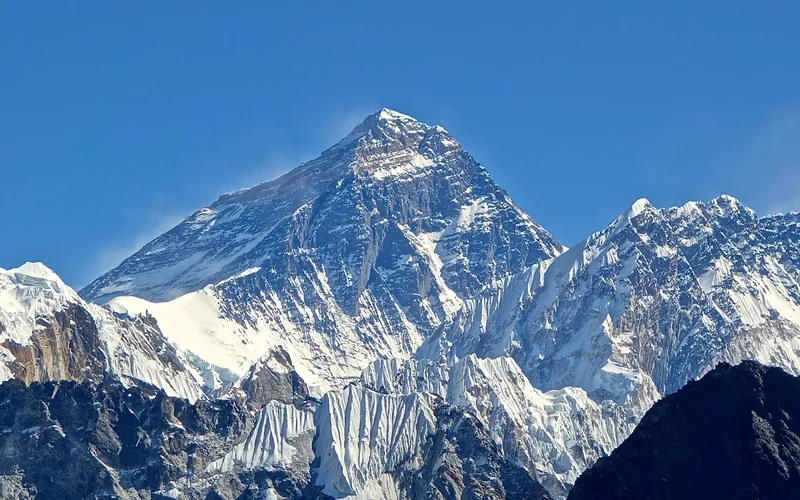
Mount Everest is the highest mountain above sea level on Earth, standing at an official elevation of 8,848.86 meters (29,031.7 ft). Straddling the international frontier between Nepal and China, it is known locally as Sagarmatha in Nepali ('Goddess of the Sky') and Chomolungma in Tibetan ('Mother Goddess of the World'). The peak rises into the extreme upper troposphere, where oxygen levels drop to barely one-third of sea-level pressure. Climbers face hurricane-force jet stream winds, severe frostbite conditions, shifting ice crevasses in the Khumbu Icefall, and the dangerous Death Zone above 8,000 meters.
Documented Sources & Archival Citations
- The Himalayan Database: Spring 2011 Everest Ascents(Elizabeth Hawley / The Himalayan Database)
Supporting claim: Official verification of May 11, 2011 summit by Hassan Sadpara (Hassan Asad)
Accessed/Documented: 2011 - Dawn: Hassan Sadpara Scales Mount Everest(Dawn News)
Supporting claim: National news coverage of the summit and celebration across Pakistan
Accessed/Documented: 2011-05-11 - Alpine Club of Pakistan: Everest Summit Announcement(Alpine Club of Pakistan)
Supporting claim: Official certification of the second Pakistani Everest summit
Accessed/Documented: 2011-05-12