Summit of Solidarity: Samina Baig Makes History on Mount Everest
On May 19, 2013, twenty-two-year-old Samina Baig from Shimshal reached the summit of Mount Everest, becoming the first Pakistani woman to conquer the highest point on Earth.
Mountain Safety & Conditions Disclaimer: High-altitude climbing, glacial travel, and technical ascents entail severe objective risks including avalanches, serac collapses, rapid weather collapse, and altitude illness. Historical route descriptions and summit claims on Mountanity reflect documented archival sources and must not be used as live operational safety assessments. Local regulations, permits, and physical glacial topography change continuously.
Peer Review: Senior Editorial Board & Historical Reviewers • Editorial Standards
High in the Karakoram of northern Pakistan lies the isolated village of Shimshal. For centuries, the people of Shimshal have lived in deep intimacy with high mountain passes, glaciated valleys, and unforgiving winters. While Shimshali men earned legendary reputations as high-altitude porters and climbing guides, traditional cultural norms largely excluded young women from participating in high-altitude mountaineering.
Samina Khayal Baig was determined to change that paradigm. Born in Shimshal in 1990, she grew up watching expeditions march toward the great peaks. Supported and trained by her older brother Mirza Ali, Baig took to the mountains with fierce determination. In 2010, the siblings established the Pakistan Youth Outreach Programme, with an explicit mission to challenge gender inequality through mountaineering. After scoring first ascents on unclimbed 6,000-meter peaks in her homeland, Baig set her sights on the ultimate arena: Mount Everest (8,848m).
The Khumbu Odyssey
In April 2013, twenty-two-year-old Samina arrived at Everest Base Camp in Nepal. The expedition was operating under the banner of the First Pakistan Women Everest Expedition. Funding had been scarce, secured through grassroots support and international well-wishers who believed in Baig’s message of female empowerment.
Ascending the mountain via the classic South Col Route, Baig faced the terrifying labyrinth of the Khumbu Icefall. Moving across aluminum ladders strung over bottomless glacial crevasses and under towering seracs that groaned in the morning sun, she demonstrated cool composure. Over several weeks of rotations to Camp II and Camp III on the icy slopes of the Lhotse Face, Baig proved that her mountain upbringing in Shimshal had gifted her with natural acclimatization and high-altitude fortitude.
A Historic Alliance at 8,000 Meters
Upon reaching the wind-blasted plateau of the South Col at 7,900 meters, Baig and her brother teamed up with twin Indian mountaineering sisters Tashi and Nungshi Malik. In a region often divided by geopolitical tension, the young women chose to unite. They resolved to climb the final summit pyramid side by side, transforming their ascent into a shared statement of peace, regional solidarity, and gender equity across South Asia.
Leaving the South Col at 10:00 PM on May 18, 2013, the climbers stepped into the sub-zero darkness of the Death Zone. Breathing bottled oxygen through their masks, they navigated the steep triangular snow face leading to the Balcony at 8,400 meters. The night was bitterly cold, with biting gusts whipping off the Kangshung Face.
Standing on the Top of the World
As the first crimson rays of sunrise spilled across the curvature of the Earth, illuminating the jagged horizon of Tibet and Nepal, Baig approached the South Summit. Ahead lay the perilous traverse across the razor-sharp snow knife-edge and the technical rock problem of the Hillary Step. Scaling the rock cliff with surefooted confidence, Baig pushed up the final gentle snow slopes.
At 7:40 AM on May 19, 2013, Samina Baig stepped onto the 8,848-meter summit of Mount Everest. She stood at the apex of the planet as the first Pakistani woman and the youngest Muslim woman in human history to conquer Everest. Reaching into her down suit, she unfurled the green-and-white national flag of Pakistan, tears freezing against her cheeks. Alongside the Malik sisters, who hoisted the Indian tricolor, Baig demonstrated that high mountains transcend national borders.
Returning safely down the mountain, Samina Baig became an instant national hero and an international ambassador for women in sports. Her historic climb paved the way for a new generation of Pakistani female athletes and proved that the women of the high valleys belong on the highest stages on Earth.
Key Statistics & Topographic Figures
- Category
- Pioneering Women Alpinists
Archival Subject
- Reading Time
- 13 min read
Narrative Length
- Key Mountain
- mount-everest
Objective
- Ascent Route
- south-col-route
Topography
- Verification
- Editorially Verified
Archival Standard
Archival Primary Source Quotations
“In the mountains, truth is etched in ice and granite; every step requires unwavering respect for the heights.”
Defined Alpine Terminology & Concepts
- Summit Push
- The final continuous climbing effort from the highest established camp to the mountain apex and back.
- Death Zone Chronicle
- A verified, research-backed historical narrative documenting the human, technical, and environmental realities of an alpine expedition.
Frequently Asked Questions: Summit of Solidarity: Samina Baig Makes History on Mount Everest
What is the core chronicle and subject of "Summit of Solidarity: Samina Baig Makes History on Mount Everest"?
On May 19, 2013, twenty-two-year-old Samina Baig from Shimshal reached the summit of Mount Everest, becoming the first Pakistani woman to conquer the highest point on Earth.
Which mountain peaks and routes are featured in "Summit of Solidarity: Samina Baig Makes History on Mount Everest"?
This narrative documents climbs on mount-everest along the south-col-route in Nepal.
Which documented expedition is chronicled in this story?
This historical chronicle captures the events of the 2013-samina-baig-everest, verified through contemporary journals and archival records.
Who authored and researched this archival chronicle?
Authored and researched by Mountainity Historical Research Desk, drawing on primary eyewitness testimonies, alpine club registries, and verified summit logs.
What makes this high-altitude chronicle historically significant?
Categorized under "Pioneering Women Alpinists", this chronicle preserves critical lessons in alpine leadership, survival, tactical speed, and human endurance in the death zone.
Related Mountains
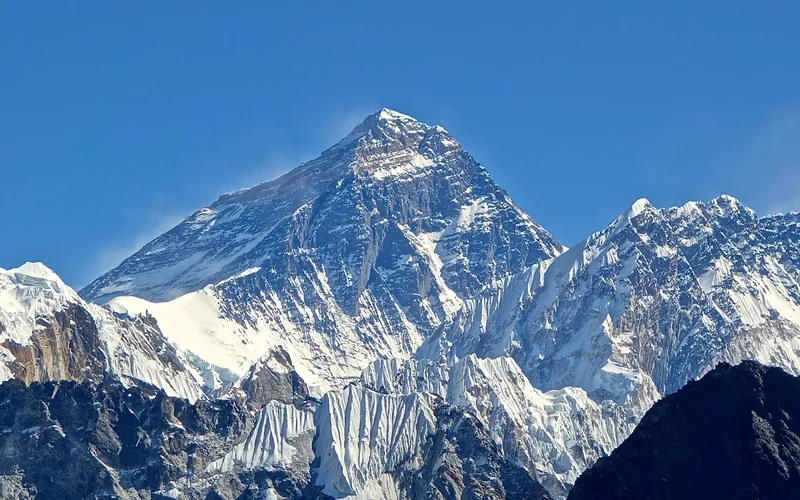


Mount Everest
Mount Everest is the highest mountain above sea level on Earth, standing at an official elevation of 8,848.86 meters (29,031.7 ft). Straddling the international frontier between Nepal and China, it is known locally as Sagarmatha in Nepali ('Goddess of the Sky') and Chomolungma in Tibetan ('Mother Goddess of the World'). The peak rises into the extreme upper troposphere, where oxygen levels drop to barely one-third of sea-level pressure. Climbers face hurricane-force jet stream winds, severe frostbite conditions, shifting ice crevasses in the Khumbu Icefall, and the dangerous Death Zone above 8,000 meters.
Documented Sources & Archival Citations
- American Alpine Journal: Mount Everest, First Pakistani Female Summit(American Alpine Club)
Supporting claim: Official verification of Samina Baig's historic May 19, 2013 summit of Mount Everest
Accessed/Documented: 2014 - Himalayan Database: Spring 2013 Mount Everest Summit Records(Himalayan Database)
Supporting claim: Official logging of Samina Baig's ascent via the South Col Route
Accessed/Documented: 2020