Lhotse: Ten Hours from Everest's Apex to Reiss Couloir
How Nirmal Purja traversed from the peak of Everest to the summit of Lhotse in 10 hours and 15 minutes.
Mountain Safety & Conditions Disclaimer: High-altitude climbing, glacial travel, and technical ascents entail severe objective risks including avalanches, serac collapses, rapid weather collapse, and altitude illness. Historical route descriptions and summit claims on Mountanity reflect documented archival sources and must not be used as live operational safety assessments. Local regulations, permits, and physical glacial topography change continuously.
Peer Review: Senior Editorial Board & Historical Reviewers • Editorial Standards
A 10-Hour High-Altitude Masterclass
Standing atop Mount Everest at 05:30 AM on May 22, 2019, most human beings would think only of hot tea and a sleeping bag. For Nirmal Purja, Everest was merely the morning leg of an unimaginable alpine double-header.
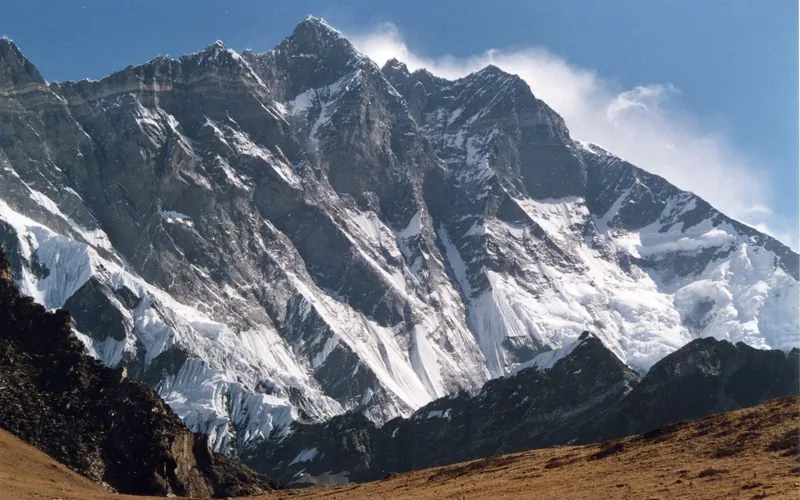
Descending back to Camp 4 on the South Col by late morning, Purja grabbed a fresh oxygen tank, consumed energy gels, and rallied Mingma David Sherpa and Gesman Tamang. At 11:30 AM, while exhausted Everest climbers were collapsing into their sleeping bags, Purja began ascending the West Face of Lhotse (8,516m).
Into the Reiss Couloir
Lhotse’s normal route shares the lower Khumbu face with Everest before breaking left into the steep, narrowing throat of the Reiss Couloir. Surmounting 50-degree hard blue ice under burning midday sun, Purja climbed with relentless military cadence. While gravity and low atmospheric pressure dragged at his limbs, his mental focus remained unbreakable.
At 15:45 PM—exactly 10 hours and 15 minutes after standing atop Everest—Purja topped out on the razor-sharp rock crest of Lhotse. He had achieved the fastest linkup of the world’s first and fourth highest peaks in mountaineering history, establishing a record certified by Guinness World Records.
Sprinting to Base Camp
With two 8,000ers in the bag in a single day, Purja rappelled down the couloir, skipped overnight rests at Camp 4, and descended all the way to Everest Base Camp. Waiting at the helipad was a chartered transport bound for Makalu, the final piece of his 48-hour triple crown.
Key Statistics & Topographic Figures
- Category
- Speed Records
Archival Subject
- Reading Time
- 7 min read
Narrative Length
- Key Mountain
- lhotse
Objective
- Ascent Route
- lhotse-normal-route
Topography
- Verification
- Editorially Verified
Archival Standard
Archival Primary Source Quotations
“In the mountains, truth is etched in ice and granite; every step requires unwavering respect for the heights.”
Defined Alpine Terminology & Concepts
- Summit Push
- The final continuous climbing effort from the highest established camp to the mountain apex and back.
- Death Zone Chronicle
- A verified, research-backed historical narrative documenting the human, technical, and environmental realities of an alpine expedition.
Frequently Asked Questions: Lhotse: Ten Hours from Everest's Apex to Reiss Couloir
What is the core chronicle and subject of "Lhotse: Ten Hours from Everest's Apex to Reiss Couloir"?
How Nirmal Purja traversed from the peak of Everest to the summit of Lhotse in 10 hours and 15 minutes.
Which mountain peaks and routes are featured in "Lhotse: Ten Hours from Everest's Apex to Reiss Couloir"?
This narrative documents climbs on lhotse along the lhotse-normal-route in Nepal.
Which documented expedition is chronicled in this story?
This historical chronicle captures the events of the 2019-purja-lhotse, verified through contemporary journals and archival records.
Who authored and researched this archival chronicle?
Authored and researched by Mountanity Research Desk, drawing on primary eyewitness testimonies, alpine club registries, and verified summit logs.
What makes this high-altitude chronicle historically significant?
Categorized under "Speed Records", this chronicle preserves critical lessons in alpine leadership, survival, tactical speed, and human endurance in the death zone.
Related Mountains


Lhotse
Lhotse, at 8,516 meters (27,940 ft), is the fourth-highest mountain on Earth, connected directly to Mount Everest via the South Col. Renowned for its sheer 3,200-meter South Face, one of the most imposing rock and ice walls in alpinism, the standard route tackles the grueling Lhotse Couloir from the Western Cwm.