The Winter Express: Alex Txikon Conquers Manaslu in 60 Hours
On January 6, 2023, Basque winter specialist Alex Txikon and six Sherpa companions conquered Manaslu in astronomical winter without oxygen, executing a blistering 60-hour sprint.
Mountain Safety & Conditions Disclaimer: High-altitude climbing, glacial travel, and technical ascents entail severe objective risks including avalanches, serac collapses, rapid weather collapse, and altitude illness. Historical route descriptions and summit claims on Mountanity reflect documented archival sources and must not be used as live operational safety assessments. Local regulations, permits, and physical glacial topography change continuously.
Peer Review: Senior Editorial Board & Historical Reviewers • Editorial Standards
Climbing an 8,000-meter giant during the dead of winter is high-altitude mountaineering’s most brutal discipline. When the calendar crosses the winter solstice into January, the jet stream drops squarely over the Himalaya, subjecting the peaks to hurricane-force gales and wind chill temperatures plunging below -45°C. For two consecutive years—in 2021 and 2022—Basque mountaineer Alex Txikon had arrived at the foot of Manaslu (8,163m) in western Nepal, only to be buried by epic snowstorms that dumped ten feet of powder and triggered continuous avalanches.
Txikon, who had already achieved the historic first winter ascent of Nanga Parbat in 2016 alongside Ali Sadpara and Simone Moro, knew that traditional siege tactics were doomed to fail on winter Manaslu. The longer an expedition remained pinned on the mountain, the greater the toll of frostbite and physical exhaustion. Entering the winter of 2022–2023, Txikon conceived an audacious alternative: a lightning alpine sprint, moving from Base Camp to the true summit and back in under three days.
The Strike Window
Arriving at Manaslu Base Camp in late December 2022, Txikon and his team of six elite Sherpa climbers—Tenjen Sherpa, Pasang Nurbu Sherpa, Mingtemba Sherpa, Chhepal Sherpa, Pemba Tasi Sherpa, and Gyalu Sherpa—patiently tracked high-altitude satellite weather models. On January 3, 2023, meteorologists predicted a sudden, sixty-hour lull where winds would temporarily drop below 50 km/h before a monstrous winter cyclone arrived.
On the morning of January 4, the climbers strapped on their crampons and departed Base Camp. Moving with relentless urgency, they climbed directly through the treacherous serac labyrinths of the lower glacier, bypassing Camp I and pushing straight to Camp II at 6,400 meters. The cold was ferocious; water bottles froze solid inside down suits within minutes, and every breath stung like broken glass.
Sprinting Through the Death Zone
On January 5, rather than pausing to establish intermediate camps, Txikon led the charge up the steep blue ice of the Northeast Face. Bypassing Camp III, the team climbed through wind-packed snowdrifts to erect a single assault tent at Camp IV at 7,400 meters. Txikon climbed strictly without supplemental bottled oxygen, relying entirely on his extraordinary cardiovascular conditioning and cold-weather adaptation.
Inside the tent at Camp IV, the thermometer registered -38°C. There was no time for sleep. The climbers spent three hours melting snow on a roaring burner, drinking hot bouillon, and checking each other’s fingers and toes for signs of frostbite. At 4:00 AM on January 6, beneath an ink-black sky studded with razor-sharp stars, Txikon and his companions stepped into the sub-zero gale.
The True Summit of the Mountain of the Spirit
The final climb up Manaslu’s summit plateau was an agonizing struggle against hypoxia and deep wind-slab snow. Breaking trail in rotations, the climbers crested the knife-edge final snow spine leading to the true summit pin. The exposure was staggering: to their left, the sheer vertical plunge into the Larkya glacier; to their right, thousands of meters of abyss into Tibet.
At 9:30 AM on January 6, 2023—exactly sixty hours after leaving Base Camp—Alex Txikon and his Sherpa partners stood together on the 8,163-meter apex of Manaslu. Txikon had completed the first pure astronomical winter ascent of Manaslu without supplemental bottled oxygen in modern climbing history. Proving that speed, tactical intelligence, and deep teamwork could triumph over the harshest season on Earth, Txikon reaffirmed his place among the immortal winter pioneers of the high mountains.
Key Statistics & Topographic Figures
- Category
- Winter Himalayan Pioneers
Archival Subject
- Reading Time
- 14 min read
Narrative Length
- Key Mountain
- manaslu
Objective
- Ascent Route
- manaslu-northeast-face
Topography
- Verification
- Editorially Verified
Archival Standard
Archival Primary Source Quotations
“In the mountains, truth is etched in ice and granite; every step requires unwavering respect for the heights.”
Defined Alpine Terminology & Concepts
- Summit Push
- The final continuous climbing effort from the highest established camp to the mountain apex and back.
- Death Zone Chronicle
- A verified, research-backed historical narrative documenting the human, technical, and environmental realities of an alpine expedition.
Frequently Asked Questions: The Winter Express: Alex Txikon Conquers Manaslu in 60 Hours
What is the core chronicle and subject of "The Winter Express: Alex Txikon Conquers Manaslu in 60 Hours"?
On January 6, 2023, Basque winter specialist Alex Txikon and six Sherpa companions conquered Manaslu in astronomical winter without oxygen, executing a blistering 60-hour sprint.
Which mountain peaks and routes are featured in "The Winter Express: Alex Txikon Conquers Manaslu in 60 Hours"?
This narrative documents climbs on manaslu along the manaslu-northeast-face in Nepal.
Which documented expedition is chronicled in this story?
This historical chronicle captures the events of the 2023-alex-txikon-manaslu-winter, verified through contemporary journals and archival records.
Who authored and researched this archival chronicle?
Authored and researched by Mountainity Historical Research Desk, drawing on primary eyewitness testimonies, alpine club registries, and verified summit logs.
What makes this high-altitude chronicle historically significant?
Categorized under "Winter Himalayan Pioneers", this chronicle preserves critical lessons in alpine leadership, survival, tactical speed, and human endurance in the death zone.
Related Mountains
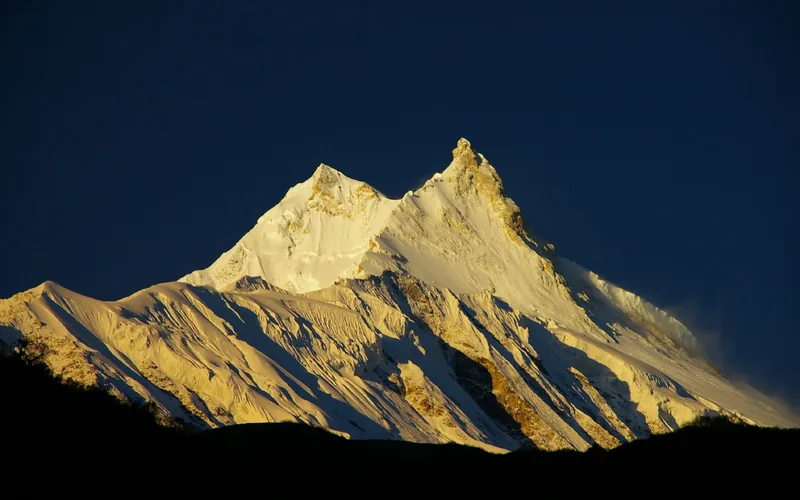

Manaslu
Manaslu, at 8,163 meters (26,781 ft), is the eighth-highest mountain in the world, situated in the Mansiri Himal of west-central Nepal. Known as the 'Mountain of the Spirit', its long ridges and valley glaciers offer dramatic topography culminating in a delicate, exposed knife-edge summit crest.
Documented Sources & Archival Citations
- American Alpine Journal: Manaslu, Astronomical Winter Ascent by Alex Txikon(American Alpine Club)
Supporting claim: Official expedition report verifying the January 6, 2023 winter summit of Manaslu
Accessed/Documented: 2023 - The Himalayan Database: Winter 2022/2023 Manaslu Expeditions(Himalayan Database)
Supporting claim: Verification of astronomical winter timeline, lack of supplemental oxygen, and 60-hour summit push
Accessed/Documented: 2023