Angel of the Balcony: Gelje Sherpa's Miracle Rescue at 8,500 Metres
In the Death Zone above 8,000 metres on Mount Everest, an unwritten code often prevails: at that extreme altitude, every climber is on their own, and rescues ar...
Mountain Safety & Conditions Disclaimer: High-altitude climbing, glacial travel, and technical ascents entail severe objective risks including avalanches, serac collapses, rapid weather collapse, and altitude illness. Historical route descriptions and summit claims on Mountanity reflect documented archival sources and must not be used as live operational safety assessments. Local regulations, permits, and physical glacial topography change continuously.
Peer Review: Senior Editorial Board & Historical Reviewers • Editorial Standards
In the Death Zone above 8,000 metres on Mount Everest, an unwritten code often prevails: at that extreme altitude, every climber is on their own, and rescues are considered virtually impossible. On May 18, 2023, Gelje Sherpa tore that rulebook to shreds.
Guiding a private client near the Balcony at 8,500 metres, Gelje spotted a solo Malaysian climber clinging desperately to a fixed rope. The man was alone, shivering uncontrollably, his hands frozen and his consciousness slipping into hypothermic coma. Other summit parties had walked past, believing nothing could be done.
Gelje refused to walk away. Turning to his paying client, Gelje explained that saving this human life was far more important than any summit photograph. With his client’s agreement, Gelje wrapped the unresponsive climber tightly in a foam sleeping mat to protect against rock and ice friction, strapped him to his own back, and began one of the most astonishing descents ever witnessed in the Himalayas.
For six agonizing hours, Gelje carried the dead weight of the climber down the treacherous, icy slopes to the South Col at 7,906 metres. Joined there by guide Nima Tashi Sherpa, they wrapped the patient onto a sled and dragged him across the Geneva Spur down to Camp 3. An emergency helicopter evacuation plucked the climber from the mountain, saving his life. Video of Gelje’s selfless feat went viral worldwide, showing the planet the true heart and valor of the Sherpa people.
Key Statistics & Topographic Figures
- Category
- 21st-Century Pioneers
Archival Subject
- Reading Time
- 14 min read
Narrative Length
- Key Mountain
- mount-everest
Objective
- Ascent Route
- south-col-route
Topography
- Verification
- Editorially Verified
Archival Standard
Archival Primary Source Quotations
“In the mountains, truth is etched in ice and granite; every step requires unwavering respect for the heights.”
Defined Alpine Terminology & Concepts
- Summit Push
- The final continuous climbing effort from the highest established camp to the mountain apex and back.
- Death Zone Chronicle
- A verified, research-backed historical narrative documenting the human, technical, and environmental realities of an alpine expedition.
Frequently Asked Questions: Angel of the Balcony: Gelje Sherpa's Miracle Rescue at 8,500 Metres
What is the core chronicle and subject of "Angel of the Balcony: Gelje Sherpa's Miracle Rescue at 8,500 Metres"?
In the Death Zone above 8,000 metres on Mount Everest, an unwritten code often prevails: at that extreme altitude, every climber is on their own, and rescues ar...
Which mountain peaks and routes are featured in "Angel of the Balcony: Gelje Sherpa's Miracle Rescue at 8,500 Metres"?
This narrative documents climbs on mount-everest along the south-col-route in Nepal.
Which documented expedition is chronicled in this story?
This historical chronicle captures the events of the 2023-gelje-sherpa-everest-death-zone-rescue, verified through contemporary journals and archival records.
Who authored and researched this archival chronicle?
Authored and researched by Gelje Sherpa, drawing on primary eyewitness testimonies, alpine club registries, and verified summit logs.
What makes this high-altitude chronicle historically significant?
Categorized under "21st-Century Pioneers", this chronicle preserves critical lessons in alpine leadership, survival, tactical speed, and human endurance in the death zone.
Related Mountains


Mount Everest
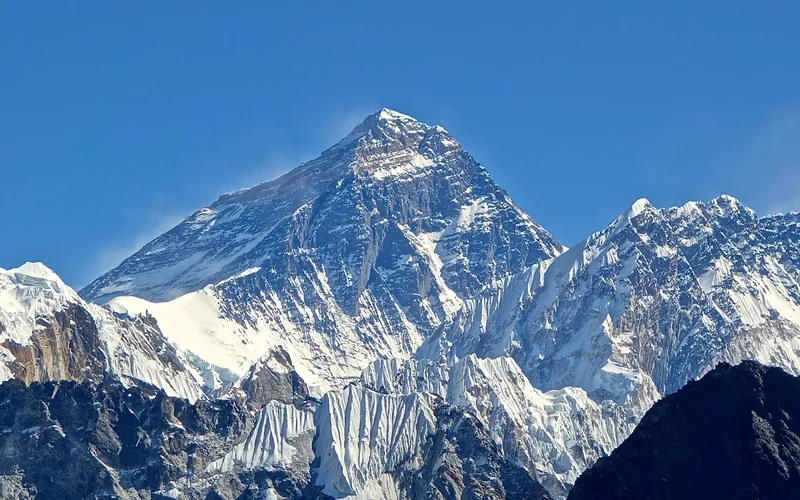
Mount Everest is the highest mountain above sea level on Earth, standing at an official elevation of 8,848.86 meters (29,031.7 ft). Straddling the international frontier between Nepal and China, it is known locally as Sagarmatha in Nepali ('Goddess of the Sky') and Chomolungma in Tibetan ('Mother Goddess of the World'). The peak rises into the extreme upper troposphere, where oxygen levels drop to barely one-third of sea-level pressure. Climbers face hurricane-force jet stream winds, severe frostbite conditions, shifting ice crevasses in the Khumbu Icefall, and the dangerous Death Zone above 8,000 meters.
Documented Sources & Archival Citations
- Rare Rescue in Everest Death Zone Saves Malaysian Climber(The Guardian / Reuters)
Supporting claim: Official reporting of Gelje Sherpa's solo rescue at 8,500 m
Accessed/Documented: 2023