The Master of Everest: Kami Rita Sherpa's Historic 30th Summit
On May 22, 2024, fifty-four-year-old mountain legend Kami Rita Sherpa stood atop Mount Everest for an unprecedented thirtieth time, expanding his all-time world record.
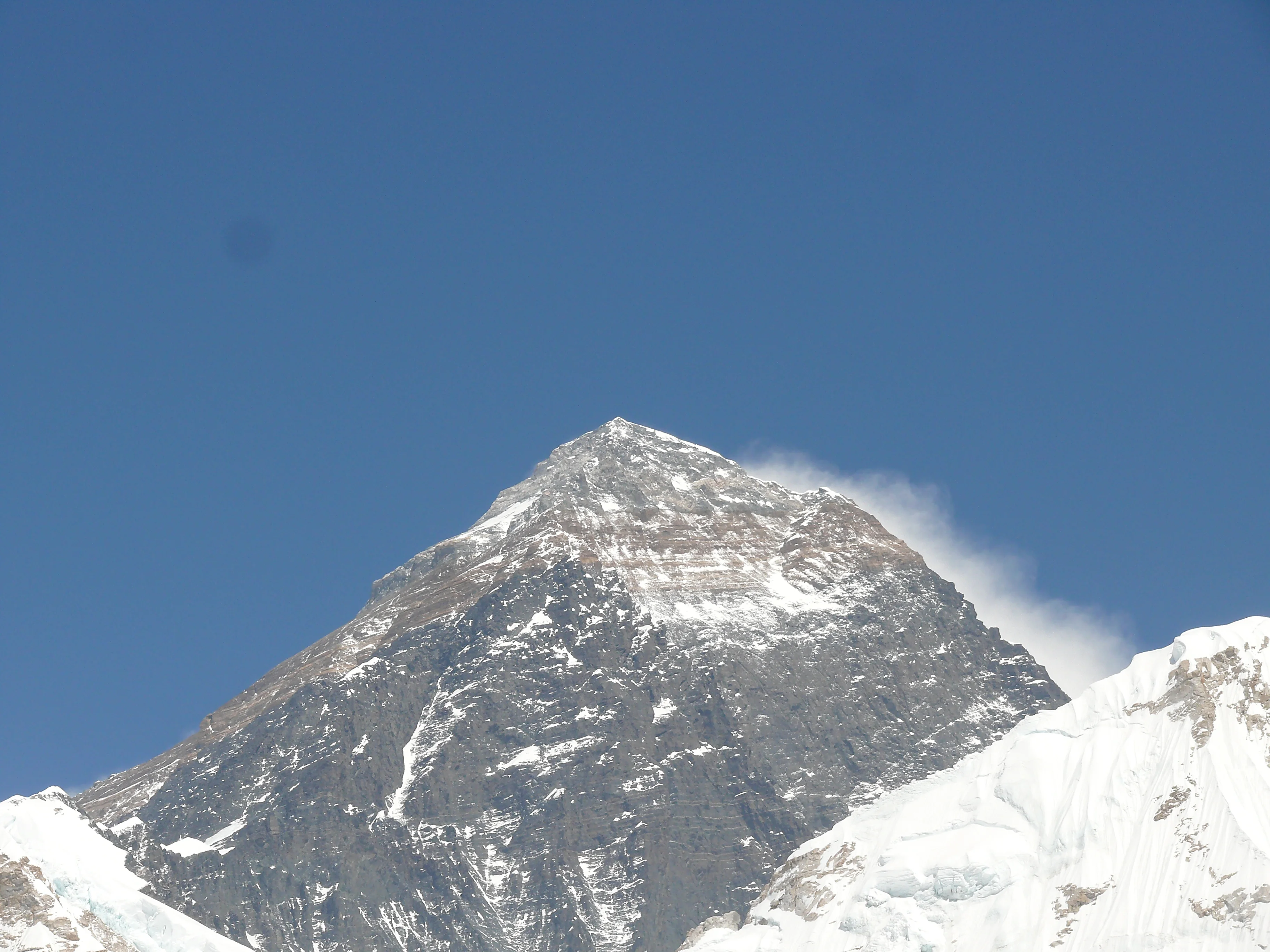
Mountain Safety & Conditions Disclaimer: High-altitude climbing, glacial travel, and technical ascents entail severe objective risks including avalanches, serac collapses, rapid weather collapse, and altitude illness. Historical route descriptions and summit claims on Mountanity reflect documented archival sources and must not be used as live operational safety assessments. Local regulations, permits, and physical glacial topography change continuously.
Peer Review: Senior Editorial Board & Historical Reviewers • Editorial Standards
On May 22, 2024, as the morning sun rose over the jagged snow summits of Nepal and Tibet, a 54-year-old Sherpa stood atop the 8,848-meter apex of Mount Everest. For almost any climber on Earth, reaching that windswept crest once in a lifetime is the ultimate achievement. For Kami Rita Sherpa, it was his thirtieth time.
Known worldwide simply as ‘The Everest Man’, Kami Rita’s extraordinary accomplishment represents three decades of unbroken excellence in the most hostile environment on the planet. His career embodies the tireless, skilled labor of the Sherpa community, who carve the tracks, string the life-saving safety lines, and shoulder the burdens of the global mountaineering industry.
Born into the Trade
Kami Rita was born in 1970 in Thame, the very village that produced legendary pioneers Tenzing Norgay and Apa Sherpa. His father was among the first generation of commercial climbing Sherpas hired after Nepal opened its borders in 1950. As a boy, Kami Rita watched his father pack climbing boots and hemp ropes for expeditions into the Western Cwm. Though he briefly entered a Buddhist monastery to become a monk, the pull of the mountains was irresistible.
Beginning as a teenage porter carrying trekking baggage, Kami Rita learned the art of route-finding through the terrifying labyrinths of the Khumbu Icefall. On May 13, 1994, at age twenty-four, he reached the summit of Mount Everest for the first time, guiding a commercial expedition via the classic South Col route.
Thirty Years on the Edge
Over the ensuing three decades, while global adventurers came and went, Kami Rita returned every spring. His routine was as grueling as it was perilous: while international clients acclimatized in heated dining tents at Base Camp, Kami Rita and his fellow Sherpa rope-fixers climbed into the Death Zone to anchor thousands of meters of nylon static rope, kick steps through avalanche-prone snowfields, and haul heavy oxygen cylinders to Camp IV.
In addition to his Everest mastery, Kami Rita proved his mettle across the Greater Ranges, summitting the lethal pyramid of K2 (8,611m) in Pakistan, Cho Oyu eight times (8,188m), Lhotse (8,516m), and Manaslu (8,163m). In total, he has stood atop eight-thousand-meter peaks an unmatched forty times.
The Historic Double of May 2024
In the spring of 2024, serving as senior guide for Seven Summit Treks, Kami Rita arrived at Base Camp with twenty-eight summits to his name. Despite approaching his mid-fifties, his physical stamina remained unshakeable. On May 12, 2024, he guided an international team to the summit, notching his twenty-ninth ascent amid fierce early-season winds.
Most climbers would have rested for months. Instead, Kami Rita descended to Base Camp, rested for barely five days, and agreed to lead a second commercial client team that had been delayed by weather. Leaving the South Col late on May 21, Kami Rita set a relentless, rhythmic pace through the night. At 7:49 AM on May 22, 2024, Kami Rita Sherpa stepped onto the summit for his thirtieth ascent—completing two summits in just ten days.
The Voice of the Mountain
Despite setting a world record that may stand for generations, Kami Rita remains famously modest. “I climb not for records,” he remarked upon returning to Kathmandu. “I climb because it is my profession, to support my family, and to bring honor to the Sherpa people of Nepal.”
Throughout his career, Kami Rita has used his global platform to demand fairer wages, higher insurance coverage, and official government pensions for Sherpa guides who risk their lives on commercial expeditions. In an era often dominated by commercial spectacle, Kami Rita Sherpa stands as an enduring symbol of authentic Himalayan mastery, dignity, and quiet heroic power.
Key Statistics & Topographic Figures
- Category
- Modern High-Altitude Supremacy & Himalayan Records
Archival Subject
- Reading Time
- 14 min read
Narrative Length
- Key Mountain
- mount-everest
Objective
- Ascent Route
- south-col-route
Topography
- Verification
- Editorially Verified
Archival Standard
Archival Primary Source Quotations
“In the mountains, truth is etched in ice and granite; every step requires unwavering respect for the heights.”
Defined Alpine Terminology & Concepts
- Summit Push
- The final continuous climbing effort from the highest established camp to the mountain apex and back.
- Death Zone Chronicle
- A verified, research-backed historical narrative documenting the human, technical, and environmental realities of an alpine expedition.
Frequently Asked Questions: The Master of Everest: Kami Rita Sherpa's Historic 30th Summit
What is the core chronicle and subject of "The Master of Everest: Kami Rita Sherpa's Historic 30th Summit"?
On May 22, 2024, fifty-four-year-old mountain legend Kami Rita Sherpa stood atop Mount Everest for an unprecedented thirtieth time, expanding his all-time world record.
Which mountain peaks and routes are featured in "The Master of Everest: Kami Rita Sherpa's Historic 30th Summit"?
This narrative documents climbs on mount-everest along the south-col-route in Nepal.
Which documented expedition is chronicled in this story?
This historical chronicle captures the events of the 2024-kami-rita-30th-everest, verified through contemporary journals and archival records.
Who authored and researched this archival chronicle?
Authored and researched by Mountainity Historical Research Desk, drawing on primary eyewitness testimonies, alpine club registries, and verified summit logs.
What makes this high-altitude chronicle historically significant?
Categorized under "Modern High-Altitude Supremacy & Himalayan Records", this chronicle preserves critical lessons in alpine leadership, survival, tactical speed, and human endurance in the death zone.
Related Mountains
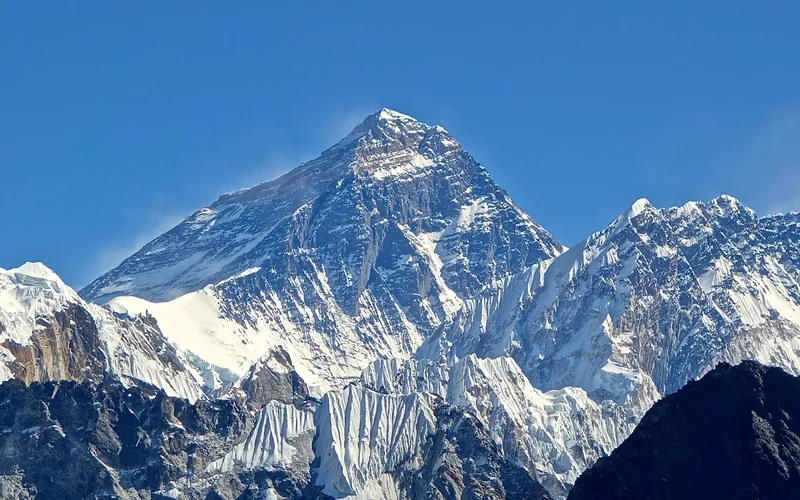


Mount Everest
Mount Everest is the highest mountain above sea level on Earth, standing at an official elevation of 8,848.86 meters (29,031.7 ft). Straddling the international frontier between Nepal and China, it is known locally as Sagarmatha in Nepali ('Goddess of the Sky') and Chomolungma in Tibetan ('Mother Goddess of the World'). The peak rises into the extreme upper troposphere, where oxygen levels drop to barely one-third of sea-level pressure. Climbers face hurricane-force jet stream winds, severe frostbite conditions, shifting ice crevasses in the Khumbu Icefall, and the dangerous Death Zone above 8,000 meters.
Documented Sources & Archival Citations
- Himalayan Database: 2024 Spring Everest Summit Registry(Elizabeth Hawley / Himalayan Database)
Supporting claim: Official verification of Kami Rita Sherpa's 29th and 30th summits of Mount Everest in May 2024
Accessed/Documented: 2024 - Nepal Department of Tourism: Official Everest Summit Certificate(Ministry of Culture, Tourism and Civil Aviation, Nepal)
Supporting claim: Government certification confirming the 30th Mount Everest summit milestone on May 22, 2024
Accessed/Documented: 2024