The 1954 First Ascent of K2: Triumph on the Savage Mountain
Mountain Safety & Conditions Disclaimer: High-altitude climbing, glacial travel, and technical ascents entail severe objective risks including avalanches, serac collapses, rapid weather collapse, and altitude illness. Historical route descriptions and summit claims on Mountanity reflect documented archival sources and must not be used as live operational safety assessments. Local regulations, permits, and physical glacial topography change continuously.
The Magnetism of the Savage Mountain
Rising like an austere, dark pyramid from the ice fields of the Baltoro Muztagh, K2 long commanded awe and resistance in equal measure. Unlike Mount Everest, whose height was celebrated across the globe following the British success in May 1953, K2 offered no easy angles of approach, no sheltering lee from northern storms, and no forgiving slopes.
By 1954, five major attempts on K2—by Martin Conway in 1902, the Duke of the Abruzzi in 1909, and three formidable American expeditions in 1938, 1939, and 1953—had revealed the sheer tenacity required simply to breach the 8,000-meter barrier on the Southeast Ridge.
The Organization of the 1954 Expedition
Under the meticulous leadership of geologist Professor Ardito Desio, the Italian Karakoram Expedition operated with scientific precision. Desio recruited Italy’s finest alpine rock masters and guides, including Lino Lacedelli of Cortina d’Ampezzo, Achille Compagnoni, and the exceptionally talented 24-year-old Walter Bonatti. Crucially, they were paired with skilled high-altitude porters from the Hunza Valley, notably Amir Mahdi.
Through June and July, team members fixed ropes up the sheer chimneys and icy slabs of the ridge, establishing a chain of camps:
- Camp II (6,700 m) beneath the granite towers of the ridge.
- Camp III (7,350 m) clinging to the icy crest.
- Camp VIII and IX pushing onto the windswept Shoulder above 7,900 meters.
The Decisive Open Bivouac at 8,100 Meters
On July 30, Lacedelli and Compagnoni occupied the final high camp, but were critically dependent on extra oxygen sets needed for the final summit pyramid. Walter Bonatti and Hunza climber Amir Mahdi shouldered the immense weight of the oxygen cylinders and climbed up the Shoulder into dusk.
Unable to locate Camp IX in the dark and howling wind, and with the summit pair unable to descend to guide them, Bonatti and Mahdi were forced into an emergency open bivouac on a tiny snow shelf at 8,100 meters, without a tent or sleeping bags, in temperatures below -30°C.
Through sheer willpower, both survived the night. At first dawn, having preserved the life-giving oxygen cylinders on the shelf for Lacedelli and Compagnoni, Mahdi and Bonatti descended. Mahdi suffered severe frostbite, but their survival stands as one of the greatest endurance feats in alpine history.
Standing on the Summit of the World
Using the oxygen brought by Bonatti and Mahdi, Lacedelli and Compagnoni climbed the treacherous Bottleneck couloir beneath a towering, overhanging serac wall. At approximately 6:00 PM on July 31, 1954, they stepped onto the windswept snow dome of K2. For the first time, human eyes gazed out from the summit of the world’s most savage mountain across the Karakoram into China.
Today, K2 remains the supreme test of high-altitude mountaineering—a peak whose ascent demands both uncompromising physical fortitude and deep reverence for objective mountain hazards.
Related Mountains
K2
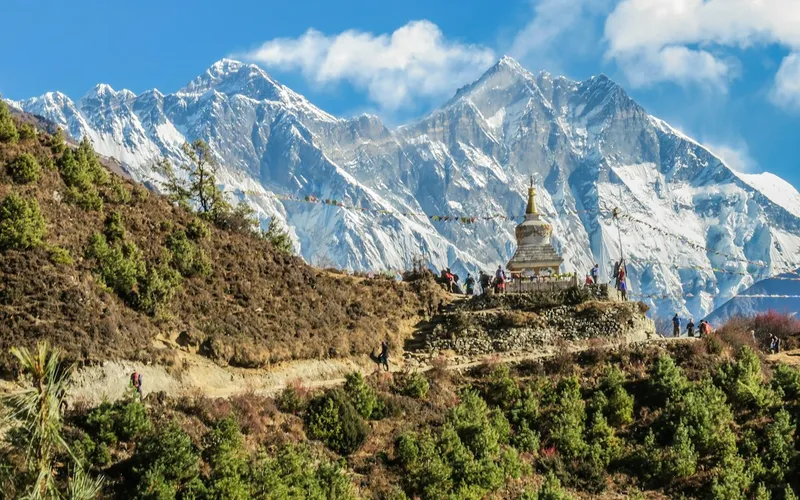
K2, at 8,611 meters (28,251 ft), is the second-highest mountain on Earth and widely regarded as the most technically demanding and lethal 8,000-meter peak. Located in the heart of the Karakoram on the border between Pakistan and China, K2 is characterized by sheer relief, severe weather anomalies, and persistent objective hazards including the notorious Bottleneck couloir.