1924 Golden Age of Swiss Mountain Guiding in the Canadian Rockies by Edward Feuz Jr.
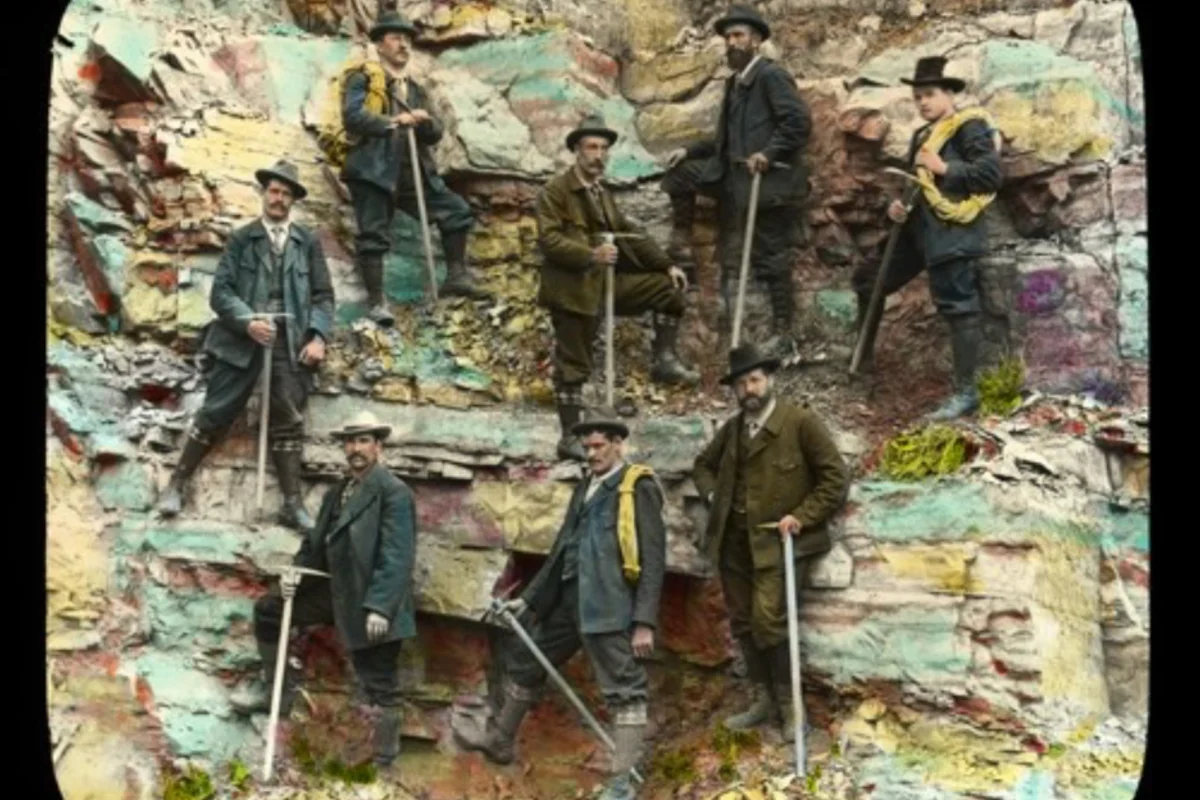
Throughout the 1920s, Edward Feuz Junior led the celebrated Canadian Pacific Railway Swiss guides in establishing over one hundred first ascents across the Rockies and Selkirks with an unprecedented flawless safety record.
Mountain Safety & Conditions Disclaimer: High-altitude climbing, glacial travel, and technical ascents entail severe objective risks including avalanches, serac collapses, rapid weather collapse, and altitude illness. Historical route descriptions and summit claims on Mountanity reflect documented archival sources and must not be used as live operational safety assessments. Local regulations, permits, and physical glacial topography change continuously.
Peer Review: Senior Editorial Board & Historical Reviewers • Editorial Standards
Official Expedition Narrative & Archival Record
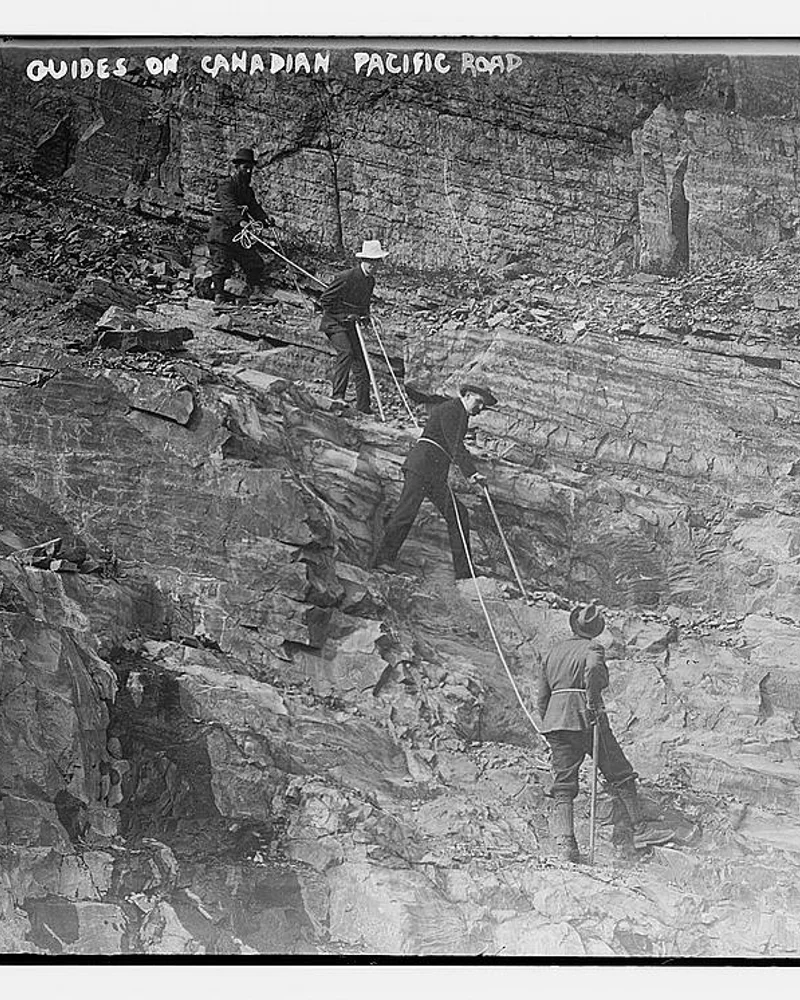
During the 1920s, mountaineering in Western Canada experienced a glorious golden age centered around the grand railway hotels of the Canadian Pacific Railway at Banff Springs, Chateau Lake Louise, and Glacier House. Leading this renaissance was Swiss-born guide Edward Feuz Junior. Based out of the charming Swiss-style village of Edelweiss near Golden, British Columbia, Feuz and fellow Swiss guides such as Rudolph Aemmer, Christian Kaufmann, and Ernest Feuz guided thousands of international visitors, scientists, and mountaineers safely across glaciated passes and knife-edge limestone ridges. In the summer of 1924, marking the twenty-fifth anniversary of CPR Swiss guiding, Feuz led pioneering ascents across the Selkirks, the Bugaboos, and the Bow Range, demonstrating unmatched route-finding intuition, precise step-cutting on hanging glaciers, and immaculate rope safety. Under Feuz's leadership, the Swiss guides introduced European alpine standards to North America, training generations of Canadian mountaineers while upholding a legendary standard of alpine safety: over four decades of technical guiding on unmapped peaks, Feuz never recorded a single fatal accident on his rope, establishing a benchmark of professional mountain leadership that remains revered worldwide.
Documented Team Composition
- Edward Feuz Junior (Lead Guide, Switzerland / Canada)
- Rudolph Aemmer (Swiss Guide, Switzerland / Canada)
- Ernest Feuz (Swiss Guide, Switzerland / Canada)
- Christian Hasler (Swiss Guide, Switzerland / Canada)
Key Statistics & Topographic Figures
- Guiding Era
- 1899 – 1949 (50 years of CPR Swiss guiding)
- Dean of Guides
- Edward Feuz Junior (Switzerland / Canada)
- First Ascents
- Over 100 first ascents by Edward Feuz Jr.
- Client Fatalities
- Zero fatalities across four decades
- Chalet Base
- Edelweiss Village, Golden, British Columbia
Archival Primary Source Quotations
“We brought the traditions of the Alps to Canada, but the mountains here were wilder and grander than anything we left behind.”
Defined Alpine Terminology & Concepts
- Alpine Safety Ethic
- The philosophy of turning around in hazardous conditions to guarantee that every client returns home safely.
- Canadian Pacific Railway (CPR)
- The historic transcontinental railway that opened the Canadian Rockies to international tourism and mountaineering.
Frequently Asked Questions: 1924 Golden Age of Swiss Mountain Guiding in the Canadian Rockies by Edward Feuz Jr.
What was the golden age of Swiss guiding in the Canadian Rockies?
A celebrated era from 1899 to the 1940s when certified Swiss mountain guides were employed by the Canadian Pacific Railway to lead alpine ascents.
Who was the lead guide during the 1924 Swiss guiding golden age?
Edward Feuz Junior, who completed over one hundred pioneer first ascents across the Rockies and Selkirks.
Where did the Swiss guides live in British Columbia?
At Edelweiss Village near Golden, BC, a purpose-built alpine settlement of six traditional Swiss chalets constructed by the CPR in 1911.
What was the safety record of the CPR Swiss guides?
They maintained an unprecedented safety record with zero client fatalities across four decades of technical guiding on unmapped peaks.
What major first ascents did Edward Feuz Junior achieve?
His ascents included Mount Sir Sandford (1912), Mount Goodsir North Tower (1909), and Mount Tupper.
What railway company sponsored the Swiss mountain guides?
The Canadian Pacific Railway (CPR), which operated grand luxury hotels at Banff, Lake Louise, and Field.
What book chronicles Edward Feuz Junior's career?
The Guiding Spirit, authored by Andrew J. Kauffman and William L. Putnam.
What alpine ethics did the Swiss guides introduce to Canada?
Rigorous rope management, weather reading, step-cutting, humility, and prioritizing client safety above summit glory.
Featured Expedition Climber
Edward Feuz
Born on September 29, 1884, in Interlaken, Switzerland, Edward Feuz Junior was the son of Edward Feuz Senior, one of the original Swiss guides brought to Canada in 1899 by the Canadian Pacific Railway to introduce safety and European alpine technique to tourists visiting the luxury hotels at Banff, Lake Louise, and Glacier House. Learning climbing from early youth in the Bernese Oberland, young Feuz arrived in Canada in 1903. Over the next forty-five years, Feuz became the undisputed face of Canadian mountaineering. Based at the famed Swiss village of Edelweiss near Golden, British Columbia, Feuz led over one thousand guided climbs and achieved more than one hundred first ascents across the Canadian Rockies and Columbia Mountains. His landmark first ascents included Mount Sir Sandford (3,519 m), the highest peak in the Selkirk Mountains, conquered in 1912 with Howard Palmer, as well as Mount Tupper, Mount Goodsir North Tower, and Mount Victoria's difficult routes. Known for his supreme calm, impeccable rope management, and sharp weather forecasting, Feuz guided clients through blizzards, rockfall, and crevasse rescue with an unprecedented record: across four decades of technical guiding on unmapped peaks, he never suffered a single fatal accident on his rope. In 1949, Feuz retired, remaining in Golden where he became a living legend. Feuz passed away in 1981 at the age of ninety-six, remembered as the master builder of Canadian alpine guiding traditions.
Associated Historical Chronicles & Stories
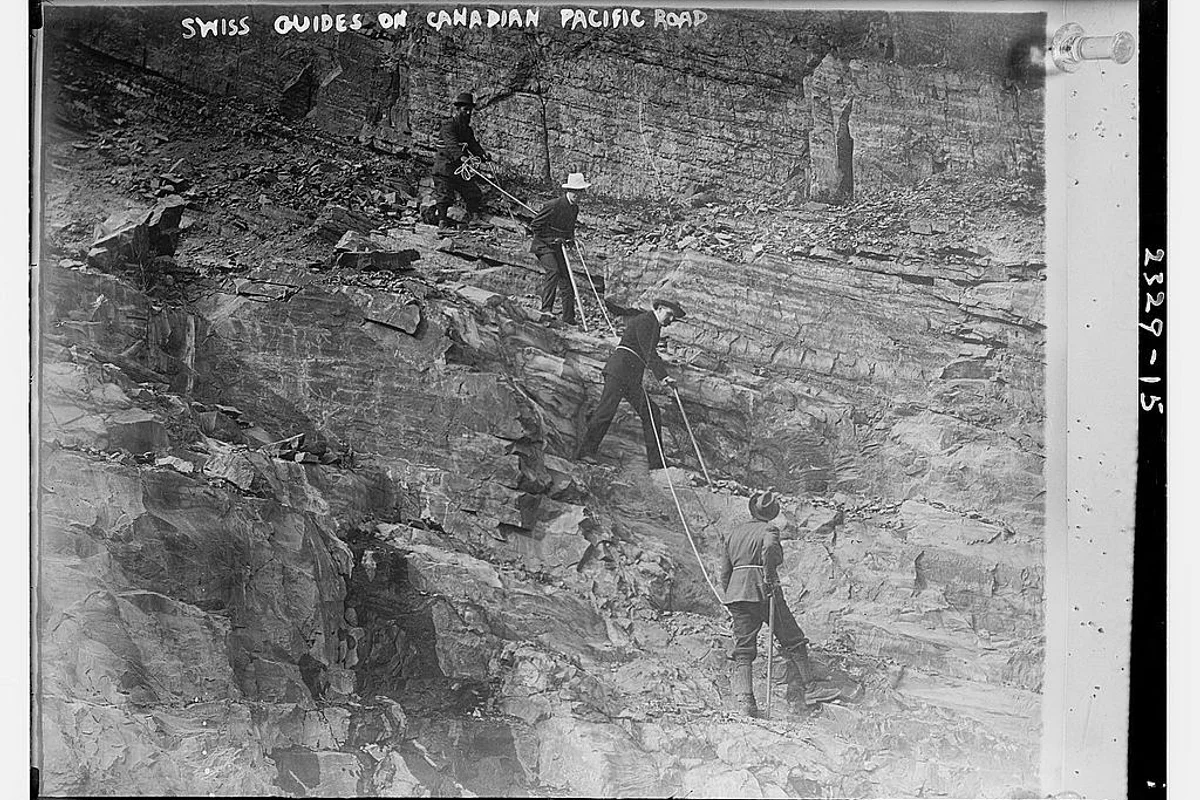
The Swiss Guardians of the Rockies: Edward Feuz Jr. and the CPR Guiding Golden Age
Throughout four decades of early twentieth-century mountaineering, Edward Feuz Junior and the Swiss guides of the Canadian Pacific Railway led over 100 first ascents in the Canadian Rockies with a flawless safety record.
Documented Sources & Archival Citations
- The Guiding Spirit(Andrew J. Kauffman and William L. Putnam / Footprint Publishing)
Supporting claim: Primary biography documenting Edward Feuz Junior and the CPR Swiss guides
Accessed/Documented: 2026 - Swiss Guides in the Canadian Rockies(Parks Canada Historical Series)
Supporting claim: Official heritage report on the Swiss guiding legacy in Banff and Yoho national parks
Accessed/Documented: 2026