1935 British Khartaphu Historic First Ascent Expedition
On July 18, 1935, British mountaineers Eric Shipton and Edwin Kempson achieved the maiden first ascent of Khartaphu (7,213m) in Tibet during the 1935 Everest Reconnaissance.
Mountain Safety & Conditions Disclaimer: High-altitude climbing, glacial travel, and technical ascents entail severe objective risks including avalanches, serac collapses, rapid weather collapse, and altitude illness. Historical route descriptions and summit claims on Mountainity reflect documented archival sources and must not be used as live operational safety assessments. Local regulations, permits, and physical glacial topography change continuously.
Peer Review: Senior Editorial Board & Historical Reviewers • Editorial Standards
Official Expedition Narrative & Archival Record
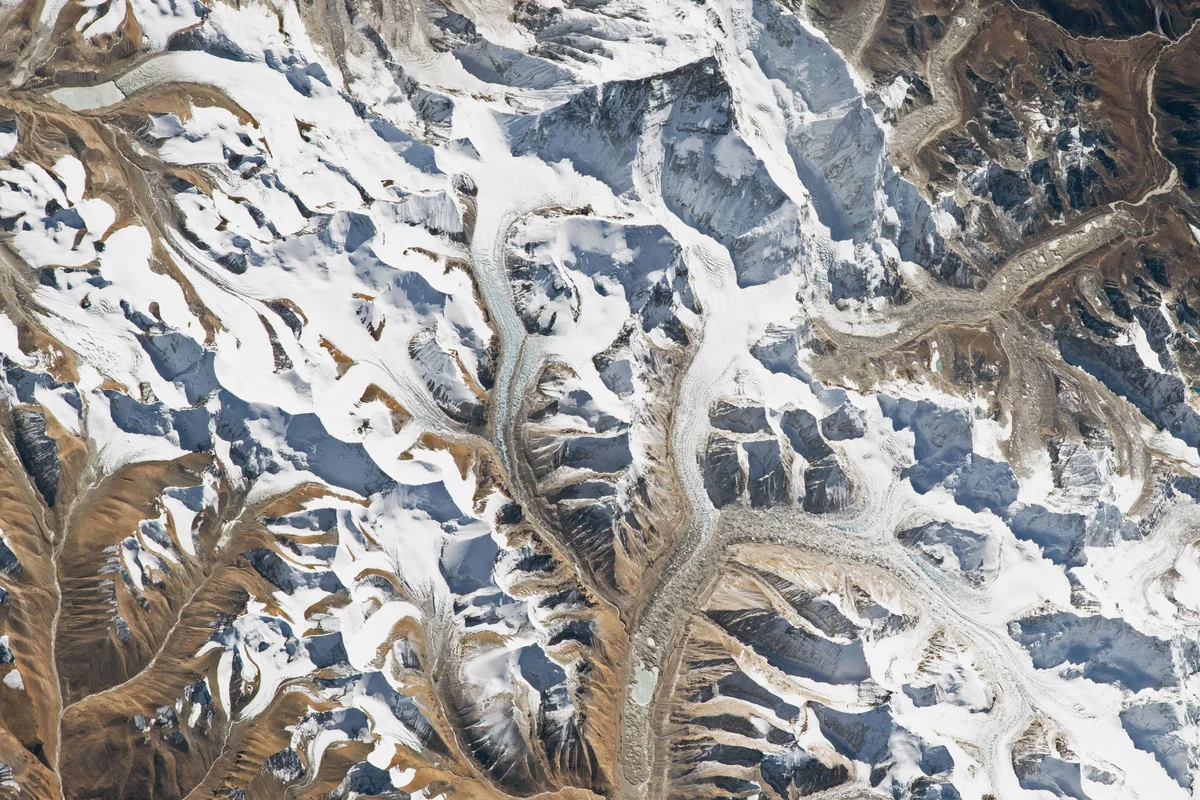
Khartaphu (7,213m / 23,665 ft), positioned in the Tibetan Mahalangur Himal northeast of Mount Everest, rises above the confluence of the East Rongbuk and Kharta Glacier systems. In 1935, the Mount Everest Committee dispatched a lightweight reconnaissance expedition under the leadership of Eric Shipton to explore weather conditions during the monsoon and survey the surrounding peaks and glaciers. Taking advantage of a clear weather window, Shipton and Edwin Kempson ascended from their camp on the East Rongbuk Glacier to the high col connecting to the Kharta Glacier. On July 18, 1935, the two climbers climbed up the mountain's North Ridge across sustained snow and ice slopes to reach the broad summit of Khartaphu. Their swift, unencumbered ascent was part of an extraordinary campaign during which the small British party surveyed extensive Tibetan valleys and climbed twenty-six peaks over 6,000 metres, including three peaks over 7,000 metres.
Documented Team Composition
- Eric Shipton (Expedition Leader & Summiter, United Kingdom)
- Edwin Kempson (Summiter, United Kingdom)
- Charles Warren (Team Member, United Kingdom)
- H. W. Tilman (Team Member, United Kingdom)
- Tenzing Norgay (High Altitude Porter / Sirdar, Nepal / Tibet)
Key Statistics & Topographic Figures
- Official Outcome
- Historic Maiden First Ascent of Khartaphu (7,213m)
Expedition Status
- Summit Date
- 1935-07-18
Ascent Timestamp
- Target Objective
- khartaphu
Mountain Peak
- Ascent Route
- the documented ascent route
Climbing Path
- Team Size
- 5 Climbers
High-Altitude Team
- Region / Country
- China (Mahalangur Himal, Tingri County, Tibet Autonomous Region, China)
Geography
Defined Alpine Terminology & Concepts
- Alpine Expedition
- A planned, self-contained high-altitude mountaineering undertaking operating in remote mountain terrain subject to extreme objective hazards.
- Death Zone
- The high-altitude region above 8,000 meters where atmospheric oxygen pressure is inadequate for sustained human survival.
Frequently Asked Questions: 1935 British Khartaphu Historic First Ascent Expedition
What was the primary outcome and achievement of the 1935 British Khartaphu Historic First Ascent Expedition?
Historic Maiden First Ascent of Khartaphu (7,213m). On July 18, 1935, British mountaineers Eric Shipton and Edwin Kempson achieved the maiden first ascent of Khartaphu (7,213m) in Tibet during the 1935 Everest Reconnaissance.
When did the 1935 British Khartaphu Historic First Ascent Expedition reach the summit?
The expedition officially reached the summit on 1935-07-18, operating between 1935-05-24 and 1935-08-20.
Who were the documented climbing team members on the 1935 British Khartaphu Historic First Ascent Expedition?
The documented climbing roster included: Eric Shipton (Expedition Leader & Summiter, United Kingdom), Edwin Kempson (Summiter, United Kingdom), Charles Warren (Team Member, United Kingdom), H. W. Tilman (Team Member, United Kingdom), Tenzing Norgay (High Altitude Porter / Sirdar, Nepal / Tibet).
What climbing route and mountain objective were tackled during the 1935 British Khartaphu Historic First Ascent Expedition?
The expedition tackled khartaphu via the the documented ascent route in China (Mahalangur Himal, Tingri County, Tibet Autonomous Region, China).
How are the records and summit claims of the 1935 British Khartaphu Historic First Ascent Expedition verified?
Summit claims, route topography, and timeline logs for the 1935 British Khartaphu Historic First Ascent Expedition are cross-referenced with official alpine registries, national mountaineering federations, and primary expedition journals.
Target Objective Peak

Khartaphu
Khartaphu rises to an official surveyed elevation of 7213 meters (23,665 feet) above sea level in the rugged Mahalangur Himalaya. Characterized by steep rock headwalls, complex icefalls, and prominent ridgelines, it is positioned among the dramatic high-altitude peaks of China (Tibet). The mountain's geography features severe glaciated flanks feeding local glacier systems. Climbers approaching Khartaphu typically establish remote base camps across high moraines before tackling mixed snow and rock buttresses. Modern expeditions require complete self-sufficiency, careful acclimatization schedules, and navigation through active serac zones. Khartaphu (also Kardapu) is a mountain in the Himalayas of Asia at the head of the Tibetan Kharta valley. At 7,213 m (23,665 ft) above sea level, it is the 101st highest mountain in the world. The peak is located in Tibet Autonomous Region, China about 7 km (4.3 mi) northeast of Mount Everest. Khartaphu has a moderately significant subpeak, Khartaphu West, also known as Xiangdong, 28°4′N 86°57′E located approximately 2.6 km (1.6 mi) west of Khartaphu (main) with an elevation of 7,018 m (23,025 ft) and a prominence of 158 m (518 ft). Khartaphu was first climbed by Eric Shipton, Edwin Kempson and Charles Warren during the 1935 British Mount Everest reconnaissance expedition. Documented ascents and attempts on Khartaphu highlight the technical difficulty and sustained exposure typical of 7,000-meter peaks in this subrange. Variable weather systems, combined with sudden wind shifts and avalanche hazards, make summit pushes demanding undertakings that require seasoned alpine judgment.
Featured Expedition Climbers
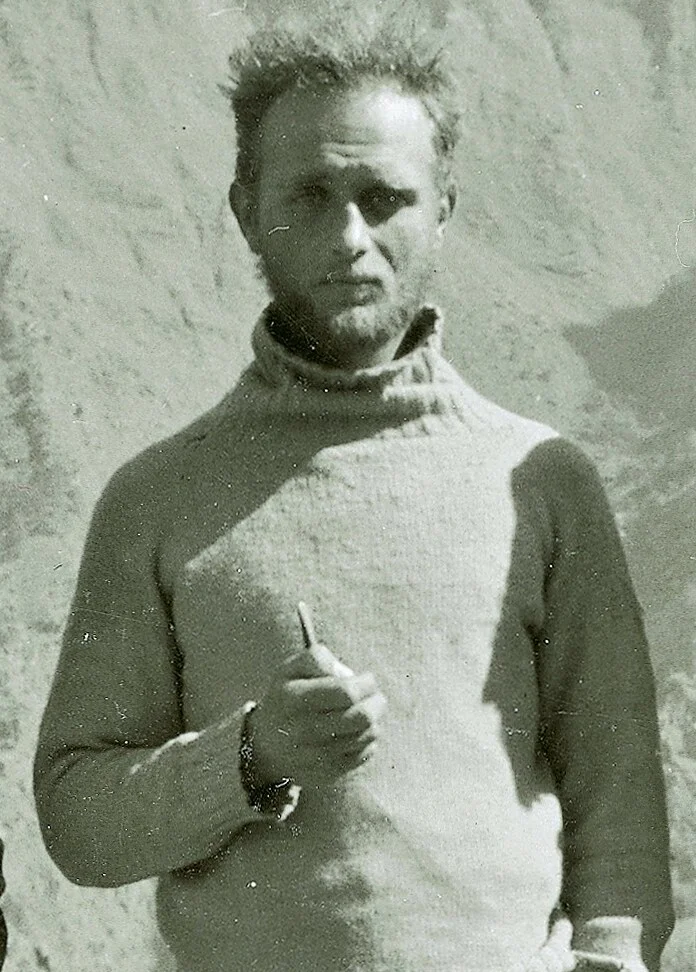
Eric Earle Shipton
Eric Earle Shipton was born on August 1, 1907, in Ceylon (now Sri Lanka). Drawn to wild, untracked frontiers from an early age, Shipton established his reputation in East Africa in 1929 by making the historic first...
Tenzing Norgay
Tenzing Norgay was born in late May 1914 in the Khumbu region of northeastern Nepal into a Tibetan yak-herding family, initially given the name Namgyal Wangdi. Following a childhood illness, his parents consulted the...
Documented Sources & Archival Citations
- Primary Alpine JournalThe Alpine Journal: The Mount Everest Reconnaissance, 1935 ↗— by Eric Shiptonin The Alpine Journal, Vol. 48, pp. 1–14 (1936)(Alpine Club)
Supporting claim: Authoritative primary account by Eric Shipton documenting the 1935 campaign and the July 18 ascent of Khartaphu
- Reference OverviewThe Geographical Journal: The Mount Everest Reconnaissance, 1935 ↗— by E. E. Shiptonin The Geographical Journal, Vol. 88, pp. 289–315 (1936)(Royal Geographical Society)
Supporting claim: Official Royal Geographical Society expedition survey recording the ascent of Khartaphu
Share Exploration
Global Mountain Intelligence
✓ Link copied to clipboard!