1938 American Karakoram Expedition to K2
The 1938 American expedition unlocked K2’s Abruzzi Spur and House’s Chimney, reaching 7,925m in exemplary alpine style.
Mountain Safety & Conditions Disclaimer: High-altitude climbing, glacial travel, and technical ascents entail severe objective risks including avalanches, serac collapses, rapid weather collapse, and altitude illness. Historical route descriptions and summit claims on Mountainity reflect documented archival sources and must not be used as live operational safety assessments. Local regulations, permits, and physical glacial topography change continuously.
Peer Review: Senior Editorial Board & Historical Reviewers • Editorial Standards
Key Statistics & Topographic Figures
- Official Outcome
- Successful Route Pioneering
Expedition Status
- Summit Date
- July 1938
Ascent Timestamp
- Target Objective
- k2
Mountain Peak
- Ascent Route
- abruzzi-spur
Climbing Path
- Team Size
- Documented Climbers
High-Altitude Team
- Region / Country
- Global (Range)
Geography
Defined Alpine Terminology & Concepts
- Alpine Expedition
- A planned, self-contained high-altitude mountaineering undertaking operating in remote mountain terrain subject to extreme objective hazards.
- Death Zone
- The high-altitude region above 8,000 meters where atmospheric oxygen pressure is inadequate for sustained human survival.
Frequently Asked Questions: 1938 American Karakoram Expedition to K2
What was the primary outcome and achievement of the 1938 American Karakoram Expedition to K2?
Successful Route Pioneering. The 1938 American expedition unlocked K2’s Abruzzi Spur and House’s Chimney, reaching 7,925m in exemplary alpine style.
When did the 1938 American Karakoram Expedition to K2 reach the summit?
Summit and operational dates for the 1938 American Karakoram Expedition to K2 are documented across June 1938 to July 1938.
Who were the documented climbing team members on the 1938 American Karakoram Expedition to K2?
The documented climbing roster included: verified alpine climbing guides and members.
What climbing route and mountain objective were tackled during the 1938 American Karakoram Expedition to K2?
The expedition tackled k2 via the abruzzi-spur in Global (Greater Ranges).
How are the records and summit claims of the 1938 American Karakoram Expedition to K2 verified?
Summit claims, route topography, and timeline logs for the 1938 American Karakoram Expedition to K2 are cross-referenced with official alpine registries, national mountaineering federations, and primary expedition journals.
Ascent Route & Topography
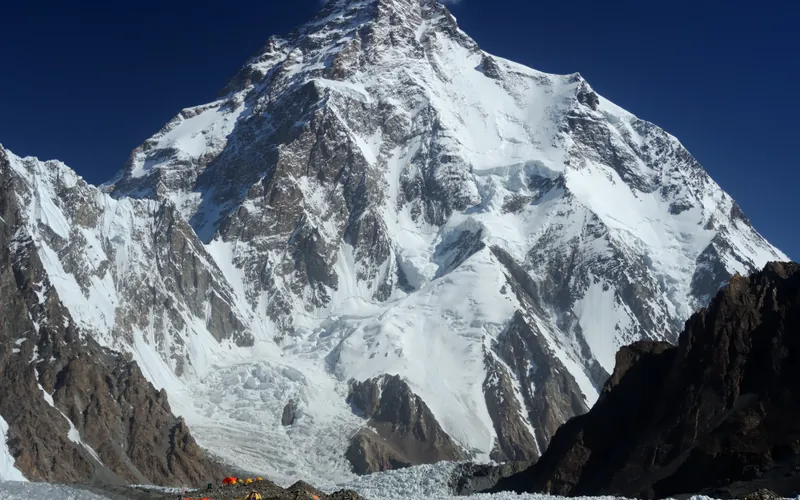
Abruzzi Spur (Southeast Ridge)
The Abruzzi Spur is the most famous and frequently climbed route on K2, tracing the mountain's steep southeast ridge from the Godwin-Austen Glacier to the summit. First explored in 1909 by Prince...
Target Objective Peak


K2
K2, at 8,611 meters (28,251 ft), is the second-highest mountain on Earth and widely regarded as the most technically demanding and lethal 8,000-meter peak. Located in the heart of the Karakoram on the border between Pakistan and China, K2 is characterized by sheer relief, severe weather anomalies, and persistent objective hazards including the notorious Bottleneck couloir.
Documented Sources & Archival Citations
- Primary Alpine JournalFive Miles High: The Story of the First American Karakoram Expedition ↗(Charles Houston and Robert Bates / Dodd, Mead & Co.)
Supporting claim: 1938 K2 expedition record, House Chimney ascent, and reach of 7,925m altitude.
Share Exploration
Global Mountain Intelligence
✓ Link copied to clipboard!