1951 New Zealand Garhwal Expedition
The 1951 New Zealand expedition to the Garhwal Himalaya, organized by the New Zealand Alpine Club and led by Earle Riddiford, which accomplished the maiden first ascent of Mukut Parbat (7,242m).
Mountain Safety & Conditions Disclaimer: High-altitude climbing, glacial travel, and technical ascents entail severe objective risks including avalanches, serac collapses, rapid weather collapse, and altitude illness. Historical route descriptions and summit claims on Mountainity reflect documented archival sources and must not be used as live operational safety assessments. Local regulations, permits, and physical glacial topography change continuously.
Peer Review: Senior Editorial Board & Historical Reviewers • Editorial Standards
Official Expedition Narrative & Archival Record
In May 1951, a four-man team from the New Zealand Alpine Club arrived in the Garhwal Himalaya for a pioneering exploratory expedition. Led by Harold Earle Riddiford, the roster included Edmund Hillary, George Lowe, and Ed Cotter, accompanied by the legendary Sherpa sirdar Pasang Dawa Lama. Based on the Dakhini Chamrao Glacier, the expedition explored several unclimbed peaks before focusing on Mukut Parbat (7,242m / 23,760 ft). Operating on the steep and heavily corniced North-West Ridge, the team negotiated difficult icefalls and fragile rock bands. While Hillary and Lowe turned back below the ridge due to sickness and fatigue, Earle Riddiford, Ed Cotter, and Pasang Dawa Lama pressed upward, reaching the summit at 5:45 PM in clearing skies. Riddiford's primary account in The Himalayan Journal records July 4 as the day of the climb, though surrounding diary dates and secondary chronicles later reconstructed July 11, leaving an acknowledged chronological contradiction. The expedition's remarkable success earned Hillary and Lowe invitations to Eric Shipton's 1951 British Everest Reconnaissance, setting the stage for the 1953 Everest ascent.
Documented Team Composition
- Harold Earle Riddiford (Expedition Leader / Summiter)
- Ed Cotter (Summiter)
- Pasang Dawa Lama (Summiter)
- Edmund Hillary (Member)
- George Lowe (Member)
Key Statistics & Topographic Figures
- Official Outcome
- Historic Maiden First Ascent
Expedition Status
- Summit Date
- 1951-07-04
Ascent Timestamp
- Target Objective
- mukut-parbat
Mountain Peak
- Ascent Route
- the documented ascent route
Climbing Path
- Team Size
- 5 Climbers
High-Altitude Team
- Region / Country
- India / China (Garhwal, Chamoli District (India) & Tibet (China))
Geography
Defined Alpine Terminology & Concepts
- Alpine Expedition
- A planned, self-contained high-altitude mountaineering undertaking operating in remote mountain terrain subject to extreme objective hazards.
- Death Zone
- The high-altitude region above 8,000 meters where atmospheric oxygen pressure is inadequate for sustained human survival.
Frequently Asked Questions: 1951 New Zealand Garhwal Expedition
What was the primary outcome and achievement of the 1951 New Zealand Garhwal Expedition?
Historic Maiden First Ascent. The 1951 New Zealand expedition to the Garhwal Himalaya, organized by the New Zealand Alpine Club and led by Earle Riddiford, which accomplished the maiden first ascent of Mukut Parbat (7,242m).
When did the 1951 New Zealand Garhwal Expedition reach the summit?
The expedition officially reached the summit on 1951-07-04, operating between 1951-06-01 and 1951-07-25.
Who were the documented climbing team members on the 1951 New Zealand Garhwal Expedition?
The documented climbing roster included: Harold Earle Riddiford (Expedition Leader / Summiter), Ed Cotter (Summiter), Pasang Dawa Lama (Summiter), Edmund Hillary (Member), George Lowe (Member).
What climbing route and mountain objective were tackled during the 1951 New Zealand Garhwal Expedition?
The expedition tackled mukut-parbat via the the documented ascent route in India / China (Garhwal, Chamoli District (India) & Tibet (China)).
How are the records and summit claims of the 1951 New Zealand Garhwal Expedition verified?
Summit claims, route topography, and timeline logs for the 1951 New Zealand Garhwal Expedition are cross-referenced with official alpine registries, national mountaineering federations, and primary expedition journals.
Target Objective Peak


Mukut Parbat
Mukut Parbat rises to an official surveyed elevation of 7242 meters (23,760 feet) above sea level in the rugged Garhwal Himalaya. Characterized by steep rock headwalls, complex icefalls, and prominent ridgelines, it is positioned on the border of Uttarakhand, India, and the Tibet Autonomous Region of China. The mountain's geography features severe glaciated flanks feeding local glacier systems. Climbers approaching Mukut Parbat typically establish remote base camps across high moraines before tackling mixed snow and rock buttresses. Modern expeditions require complete self-sufficiency, careful acclimatization schedules, and navigation through active serac zones. Mukut Parbat or Mukut Parvat (Hindi: मुकुट पर्वत) is a mountain in the Chamoli district of Uttarakhand, India, on the border with Tibet. It is the 20th highest peak located in India. Mukut Parbat features two summits: the main summit at 7,242 m (23,760 ft) and Mukut Parbat East (also known as Mukut Parbat II) at 7,130 m (23,392 ft). It stands in the Kamet Zaskar Range northwest of Kamet. The first ascent of Mukut Parbat was achieved in July 1951 by a New Zealand expedition. In the primary expedition report in The Himalayan Journal Vol. 17 (1952), section author Harold Earle Riddiford presents an internal chronological contradiction: the narrative describes reconnaissance on July 4, establishing Camp II on July 6, and negotiating the ice-fall on July 8, yet subsequent text states 'July 4th was the day of the climb... managed to push on slowly up the final snow slope to the summit (23,760 feet) at a quarter to six [5:45 p.m.].' Harold Earle Riddiford, F. M. (Edmund) Cotter, and Pasang Dawa Lama reached the summit via the North-West Ridge, while Edmund Hillary and George Lowe turned back below the final ridge. Contemporary notices in the American Alpine Journal (1952) record 'July 1951' without specifying a day, while subsequent secondary chronicles deduce the date as July 11, 1951. Because original expedition diaries are unavailable to resolve this conflict conclusively, both reported dates and their provenance are preserved as an unresolved historical contradiction. Documented ascents and attempts on Mukut Parbat highlight the technical difficulty and sustained exposure typical of 7,000-meter peaks in this subrange. Variable weather systems, combined with sudden wind shifts and avalanche hazards, make summit pushes demanding undertakings that require seasoned alpine judgment.
Featured Expedition Climbers
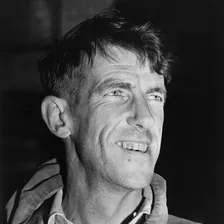
Sir Edmund Hillary
Edmund Percival Hillary was born in Auckland, New Zealand, on July 20, 1919. A school trip to Mount Ruapehu sparked his lifelong passion for alpine climbing. He completed his first major ascent on Mount Ollivier...
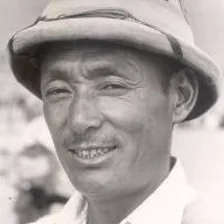
Pasang Dawa Lama
Pasang Dawa Lama was born in 1912 in the high Khumbu region of eastern Nepal. Like many young Sherpas of his generation, he relocated to Darjeeling, India, the historic staging ground for British Himalayan exploration,...
Documented Sources & Archival Citations
- Primary Alpine JournalNew Zealand Expedition to the Garhwal Himalaya, 1951 ↗— by H. E. Riddifordin The Himalayan Journal, Vol. 17, pp. 40–49 (1952)(The Himalayan Club)
Supporting claim: Primary expedition narrative by H. E. Riddiford directly documenting the maiden ascent of Mukut Parbat via the North-West Ridge by Riddiford, Cotter, and Pasang Dawa Lama.
- Primary Alpine JournalAsia, China and India Border, Mukut Parbat ↗— by Anderson Bakewell, S. J.in American Alpine Journal, Vol. 8, pp. 382–383 (1952)(American Alpine Club)
Supporting claim: Contemporary independent expedition notice corroborating the occurrence of the New Zealand party's ascent of Mukut Parbat in July 1951 under H. E. Riddiford.
Share Exploration
Global Mountain Intelligence
✓ Link copied to clipboard!