1952 Chilean Andean Club Llullaillaco Expedition
The 1952 Chilean expedition led by Bión González that achieved the modern first recorded ascent of Llullaillaco (6,739m), uncovering high Inca ruins.
Mountain Safety & Conditions Disclaimer: High-altitude climbing, glacial travel, and technical ascents entail severe objective risks including avalanches, serac collapses, rapid weather collapse, and altitude illness. Historical route descriptions and summit claims on Mountainity reflect documented archival sources and must not be used as live operational safety assessments. Local regulations, permits, and physical glacial topography change continuously.
Peer Review: Senior Editorial Board & Historical Reviewers • Editorial Standards
Official Expedition Narrative & Archival Record
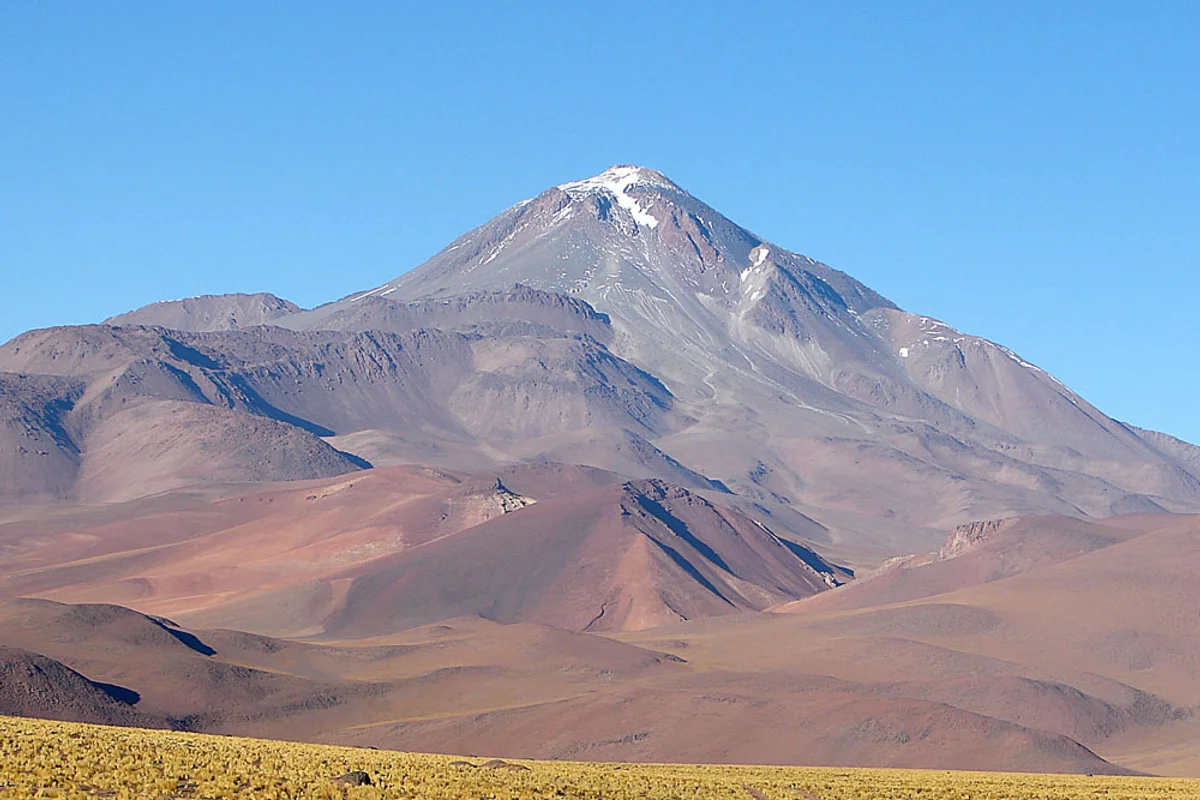
Volcán Llullaillaco (6,739m / 22,110 ft), rising in the hyper-arid volcanic desert of the Puna de Atacama on the Chile-Argentina frontier, is the second highest active volcano on Earth. In the late fifteenth century, Inca priests ascended the colossal peak during ceremonial Capacocha rites, establishing the highest archaeological site in human history near its summit. In modern times, the peak remained unclimbed and virtually unvisited due to its immense isolation in the Atacama Desert. In late November 1952, a pioneering Chilean expedition organized by the Club Andino de Chile set out from the oasis of San Pedro de Atacama under the leadership of Bión González alongside Juan Harseim. Enduring punishing sub-zero gales and profound dehydration across vast penitente snowfields, González and Harseim pushed up the volcano's South Ridge without supplemental oxygen. On December 1, 1952, both climbers reached the 6,739-meter summit, establishing the first recorded modern ascent of the mountain. Near the summit rocks, they made history by discovering ancient dry-stone walls and Inca artifacts, officially opening the modern scientific exploration of high-altitude Andean archaeology.
Documented Team Composition
- Bión González (Expedition Leader, Summiter, Dec 1)
- Juan Harseim (Summiter, Dec 1)
Key Statistics & Topographic Figures
- Official Outcome
- Historic Modern First Recorded Ascent
Expedition Status
- Summit Date
- 1952-12-01
Ascent Timestamp
- Target Objective
- llullaillaco
Mountain Peak
- Ascent Route
- the documented ascent route
Climbing Path
- Team Size
- 2 Climbers
High-Altitude Team
- Region / Country
- Chile / Argentina (Antofagasta Region / Salta Province, Puna de Atacama, Central Andes)
Geography
Defined Alpine Terminology & Concepts
- Alpine Expedition
- A planned, self-contained high-altitude mountaineering undertaking operating in remote mountain terrain subject to extreme objective hazards.
- Death Zone
- The high-altitude region above 8,000 meters where atmospheric oxygen pressure is inadequate for sustained human survival.
Frequently Asked Questions: 1952 Chilean Andean Club Llullaillaco Expedition
What was the primary outcome and achievement of the 1952 Chilean Andean Club Llullaillaco Expedition?
Historic Modern First Recorded Ascent. The 1952 Chilean expedition led by Bión González that achieved the modern first recorded ascent of Llullaillaco (6,739m), uncovering high Inca ruins.
When did the 1952 Chilean Andean Club Llullaillaco Expedition reach the summit?
The expedition officially reached the summit on 1952-12-01, operating between 1952-11-20 and 1952-12-10.
Who were the documented climbing team members on the 1952 Chilean Andean Club Llullaillaco Expedition?
The documented climbing roster included: Bión González (Expedition Leader, Summiter, Dec 1), Juan Harseim (Summiter, Dec 1).
What climbing route and mountain objective were tackled during the 1952 Chilean Andean Club Llullaillaco Expedition?
The expedition tackled llullaillaco via the the documented ascent route in Chile / Argentina (Antofagasta Region / Salta Province, Puna de Atacama, Central Andes).
How are the records and summit claims of the 1952 Chilean Andean Club Llullaillaco Expedition verified?
Summit claims, route topography, and timeline logs for the 1952 Chilean Andean Club Llullaillaco Expedition are cross-referenced with official alpine registries, national mountaineering federations, and primary expedition journals.
Target Objective Peak


Llullaillaco
Volcán Llullaillaco is a monumental 6,739-meter (22,110 ft) stratovolcano on the border between Chile and Argentina. Internationally renowned as the world's highest archaeological site, its summit crater was chosen by the Inca Empire 500 years ago for the sacred Capacocha ritual, where the three famous, impeccably preserved 'Children of Llullaillaco' Inca mummies were discovered in 1999.
Documented Sources & Archival Citations
- Reference OverviewPrimer ascenso deportivo al volcán Llullaillaco ↗— by Bión Gonzálezin Revista Andina, Vol. 79, pp. 18–25 (1953)(Club Andino de Chile)
Supporting claim: Original expedition chronicle by Bión González documenting the December 1, 1952 modern first ascent of Llullaillaco and the discovery of Inca ruins.
- Primary Alpine JournalA Survey of Andean Ascents: 1949–1967 ↗— by Evelio Echevarríain American Alpine Journal, Vol. 16, pp. 415–416 (1968)(American Alpine Club)
Supporting claim: Comprehensive historical survey by Evelio Echevarría confirming the 1952 ascent of Llullaillaco by Bión González and Juan Harseim.
Share Exploration
Global Mountain Intelligence
✓ Link copied to clipboard!