1952 Franco-American Salkantay Expedition
The joint 1952 Franco-American expedition that achieved the maiden first ascent of Salkantay (6,271m), the sacred monarch of the Cordillera Vilcabamba.
Mountain Safety & Conditions Disclaimer: High-altitude climbing, glacial travel, and technical ascents entail severe objective risks including avalanches, serac collapses, rapid weather collapse, and altitude illness. Historical route descriptions and summit claims on Mountainity reflect documented archival sources and must not be used as live operational safety assessments. Local regulations, permits, and physical glacial topography change continuously.
Peer Review: Senior Editorial Board & Historical Reviewers • Editorial Standards
Official Expedition Narrative & Archival Record
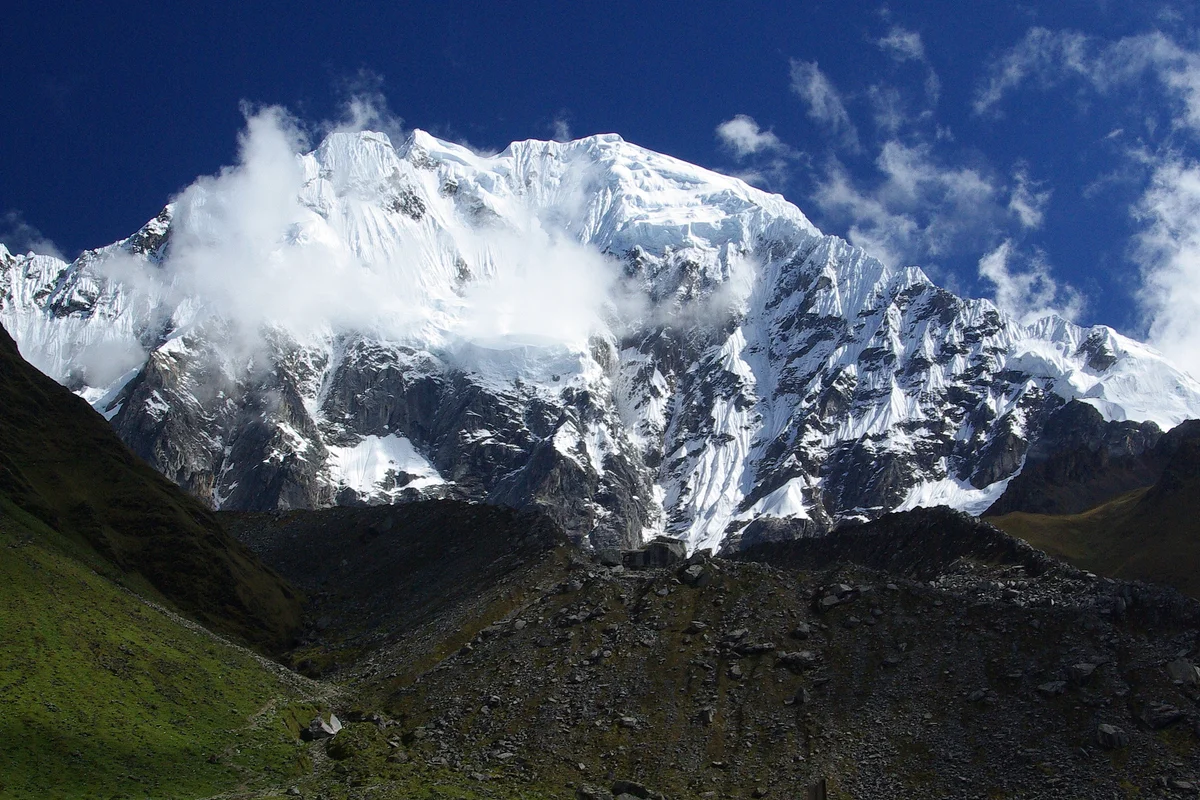
Nevado Salkantay (6,271m / 20,574 ft), revered since Inca antiquity as an almighty Apu deity safeguarding the sacred valleys of Cusco, rises as the crowning giant of the Cordillera Vilcabamba in southern Peru. Girdled by colossal hanging glaciers, severe ice avalanches, and knifelike corniced crests, the mountain had defied early exploratory parties. In June 1952, a collaborative Franco-American expedition joined forces, co-led by American chemist Fred D. Ayres and French alpinist Bernard Pierre. Establishing base camp in the remote Palcay valley, the team pioneered a route through chaotic serac fields toward the high East Ridge col. On June 17, 1952, Fred D. Ayres and American climber David Michael made the historic maiden first ascent of Salkantay's main summit amidst biting winds. Two days later, on June 19, pioneering French female mountaineer Claude Kogan and French leader Bernard Pierre completed the second summit wave, recording one of the earliest high-altitude ascents by a woman on a major Andean giant.
Documented Team Composition
- Fred D. Ayres (American Co-Leader & Summiter, June 17)
- Bernard Pierre (French Co-Leader & Summiter, June 19)
- David Michael (Summiter, June 17)
- Claude Kogan (Summiter, June 19 & Female Pioneer)
- Graham Matthews (Climber)
- Jean Guillemin (Climber & Surveyor)
Key Statistics & Topographic Figures
- Official Outcome
- Historic Maiden First Ascent
Expedition Status
- Summit Date
- 1952-06-17
Ascent Timestamp
- Target Objective
- salkantay
Mountain Peak
- Ascent Route
- the documented ascent route
Climbing Path
- Team Size
- 6 Climbers
High-Altitude Team
- Region / Country
- Peru (Cusco Region, Anta and La Convención Provinces, Cordillera Vilcabamba, Andes)
Geography
Defined Alpine Terminology & Concepts
- Alpine Expedition
- A planned, self-contained high-altitude mountaineering undertaking operating in remote mountain terrain subject to extreme objective hazards.
- Death Zone
- The high-altitude region above 8,000 meters where atmospheric oxygen pressure is inadequate for sustained human survival.
Frequently Asked Questions: 1952 Franco-American Salkantay Expedition
What was the primary outcome and achievement of the 1952 Franco-American Salkantay Expedition?
Historic Maiden First Ascent. The joint 1952 Franco-American expedition that achieved the maiden first ascent of Salkantay (6,271m), the sacred monarch of the Cordillera Vilcabamba.
When did the 1952 Franco-American Salkantay Expedition reach the summit?
The expedition officially reached the summit on 1952-06-17, operating between 1952-05-15 and 1952-07-05.
Who were the documented climbing team members on the 1952 Franco-American Salkantay Expedition?
The documented climbing roster included: Fred D. Ayres (American Co-Leader & Summiter, June 17), Bernard Pierre (French Co-Leader & Summiter, June 19), David Michael (Summiter, June 17), Claude Kogan (Summiter, June 19 & Female Pioneer), Graham Matthews (Climber), Jean Guillemin (Climber & Surveyor).
What climbing route and mountain objective were tackled during the 1952 Franco-American Salkantay Expedition?
The expedition tackled salkantay via the the documented ascent route in Peru (Cusco Region, Anta and La Convención Provinces, Cordillera Vilcabamba, Andes).
How are the records and summit claims of the 1952 Franco-American Salkantay Expedition verified?
Summit claims, route topography, and timeline logs for the 1952 Franco-American Salkantay Expedition are cross-referenced with official alpine registries, national mountaineering federations, and primary expedition journals.
Target Objective Peak

Salkantay
Salkantay is a majestic 6,000-meter peak rising to 6271 meters in the Andes (Cusco, Peru). Documented in international mountaineering archives following its historic first ascent in 1952 by Fred D. Ayres, David Michael (United States / Switzerland), the peak presents technical ridgelines and high-altitude alpine terrain.
Documented Sources & Archival Citations
- Primary Alpine JournalThe Ascent of Salcantay ↗— by Fred D. Ayresin American Alpine Journal, Vol. 8, pp. 387–407 (1953)(American Alpine Club)
Supporting claim: Official expedition leadership chronicle by Fred D. Ayres detailing route discovery and the June 17, 1952 first ascent of Salkantay.
- Reference OverviewSalcantay: Une expédition franco-américaine ↗— by Bernard Pierrein La Montagne et Alpinisme, Vol. 78, pp. 21–32 (1953)(Club Alpin Français)
Supporting claim: French expedition account by Bernard Pierre documenting the high assault bivouacs and June 19 second summit wave with Claude Kogan.
Share Exploration
Global Mountain Intelligence
✓ Link copied to clipboard!