1953 British Himalayan Mera Peak Expedition
The 1953 British reconnaissance expedition led by Col. J.O.M. Roberts that achieved the maiden first ascent of Mera Peak (6,476m) in the Khumbu region.
Mountain Safety & Conditions Disclaimer: High-altitude climbing, glacial travel, and technical ascents entail severe objective risks including avalanches, serac collapses, rapid weather collapse, and altitude illness. Historical route descriptions and summit claims on Mountainity reflect documented archival sources and must not be used as live operational safety assessments. Local regulations, permits, and physical glacial topography change continuously.
Peer Review: Senior Editorial Board & Historical Reviewers • Editorial Standards
Official Expedition Narrative & Archival Record
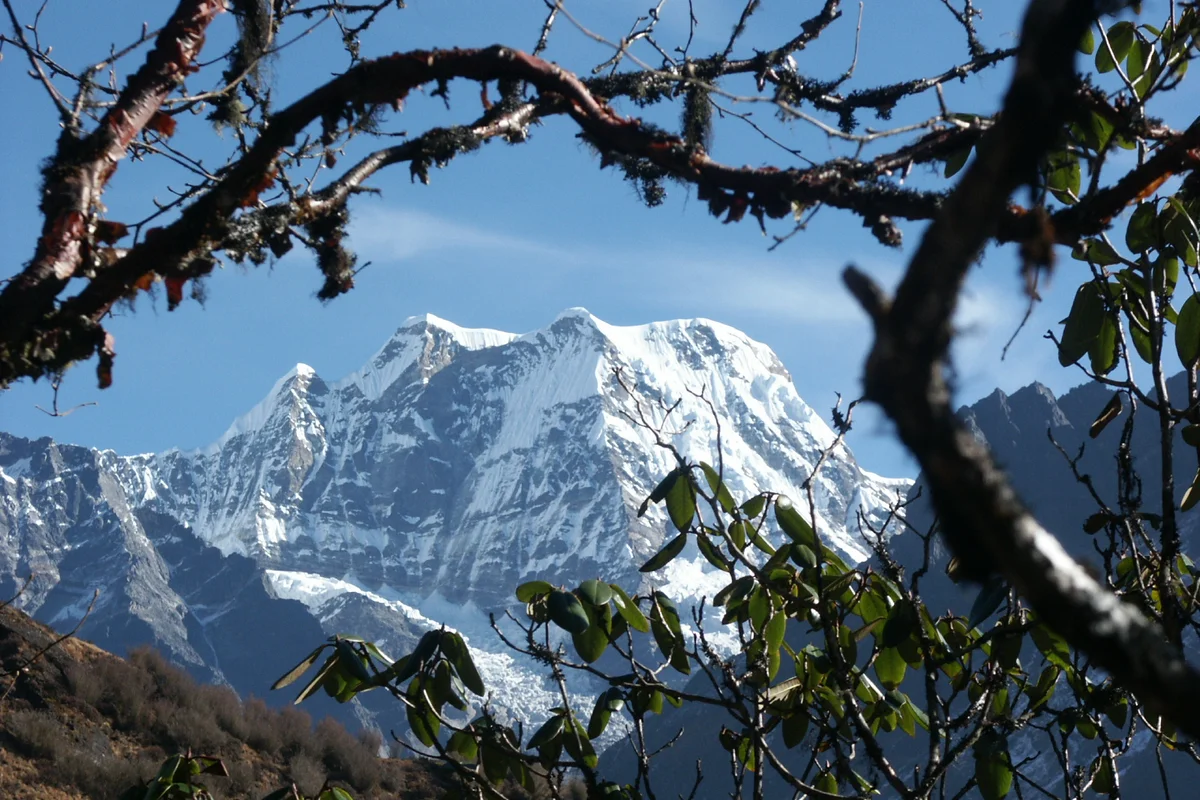
Mera Peak (6,476m / 21,247 ft), standing prominently between the wild Hinku and Hongu valleys south of Mount Everest, offers one of the grandest panoramas in the Himalayas, encompassing five of the world's six highest peaks. In spring 1953, while John Hunt's British Everest Expedition was establishing its assault camps on the South Col of Everest, British army officer and renowned explorer Colonel J.O.M. 'Jimmy' Roberts conducted an independent exploratory reconnaissance of the uncharted valleys south of the Khumbu. Operating with veteran Sherpa climber Sen Tenzing (famously nicknamed 'The Foreign Sportsman'), Roberts mapped a route up from the Hinku Glacier and negotiated the crevasse systems to reach the 5,415-meter pass of the Mera La. Climbing alpine-style across the northern snowfields without supplemental oxygen, Roberts and Sen Tenzing reached the summit of Mera Peak on May 20, 1953—just nine days before Hillary and Norgay conquered Everest. Roberts would later become celebrated as the founding father of trekking in Nepal, with Mera Peak enduring as one of the Himalaya's premier panoramic summits.
Documented Team Composition
- Col. J.O.M. 'Jimmy' Roberts (Expedition Leader, Summiter, May 20)
- Sen Tenzing Sherpa (Summiter, May 20)
Key Statistics & Topographic Figures
- Official Outcome
- Historic Maiden First Ascent
Expedition Status
- Summit Date
- 1953-05-20
Ascent Timestamp
- Target Objective
- mera-peak
Mountain Peak
- Ascent Route
- the documented ascent route
Climbing Path
- Team Size
- 2 Climbers
High-Altitude Team
- Region / Country
- Nepal (Koshi Province, Solukhumbu District, Mahalangur Himal, Hinku Valley)
Geography
Defined Alpine Terminology & Concepts
- Alpine Expedition
- A planned, self-contained high-altitude mountaineering undertaking operating in remote mountain terrain subject to extreme objective hazards.
- Death Zone
- The high-altitude region above 8,000 meters where atmospheric oxygen pressure is inadequate for sustained human survival.
Frequently Asked Questions: 1953 British Himalayan Mera Peak Expedition
What was the primary outcome and achievement of the 1953 British Himalayan Mera Peak Expedition?
Historic Maiden First Ascent. The 1953 British reconnaissance expedition led by Col. J.O.M. Roberts that achieved the maiden first ascent of Mera Peak (6,476m) in the Khumbu region.
When did the 1953 British Himalayan Mera Peak Expedition reach the summit?
The expedition officially reached the summit on 1953-05-20, operating between 1953-05-01 and 1953-06-05.
Who were the documented climbing team members on the 1953 British Himalayan Mera Peak Expedition?
The documented climbing roster included: Col. J.O.M. 'Jimmy' Roberts (Expedition Leader, Summiter, May 20), Sen Tenzing Sherpa (Summiter, May 20).
What climbing route and mountain objective were tackled during the 1953 British Himalayan Mera Peak Expedition?
The expedition tackled mera-peak via the the documented ascent route in Nepal (Koshi Province, Solukhumbu District, Mahalangur Himal, Hinku Valley).
How are the records and summit claims of the 1953 British Himalayan Mera Peak Expedition verified?
Summit claims, route topography, and timeline logs for the 1953 British Himalayan Mera Peak Expedition are cross-referenced with official alpine registries, national mountaineering federations, and primary expedition journals.
Target Objective Peak

Mera Peak
Mera Peak is officially the highest permitted trekking peak in Nepal at 6,476 meters (21,247 ft). Located on the edge of the remote Hinku Valley south of Everest, its summit provides one of the most expansive panoramic vistas in the Himalayas, encompassing five of the world's six highest mountains: Everest, Lhotse, Cho Oyu, Makalu, and Kangchenjunga.
Documented Sources & Archival Citations
- Primary Alpine JournalReconnaissance of the Hinku and Hongu ↗— by J.O.M. Robertsin The Alpine Journal, Vol. 59, pp. 312–322 (1954)(Alpine Club)
Supporting claim: Primary expedition chronicle by Col. J.O.M. Roberts documenting the May 20, 1953 maiden first ascent of Mera Peak with Sen Tenzing Sherpa.
- Primary Alpine JournalExploration in the Everest Region 1953 ↗— by J.O.M. Robertsin The Himalayan Journal, Vol. 18, pp. 97–104 (1954)(The Himalayan Club)
Supporting claim: Official exploratory report by Roberts describing the approach via Mera La and panoramic survey of the Hinku and Hongu valleys.
- Archival DatabaseThe Himalayan Database — Expedition Chronicle (MERA53101) ↗(Elizabeth Hawley / The Himalayan Database)
Supporting claim: Official Himalayan expedition chronology, camp telemetry, summit records and member log
Share Exploration
Global Mountain Intelligence
✓ Link copied to clipboard!