1958 Werner Staeuble Dhaulagiri I Historic Expedition
In 1958, the Switzerland expedition led by Werner Staeuble tackled Dhaulagiri I (8167m) via the technical N Face, providing foundational route documentation in the Golden Age of Himalayan exploration.
Mountain Safety & Conditions Disclaimer: High-altitude climbing, glacial travel, and technical ascents entail severe objective risks including avalanches, serac collapses, rapid weather collapse, and altitude illness. Historical route descriptions and summit claims on Mountainity reflect documented archival sources and must not be used as live operational safety assessments. Local regulations, permits, and physical glacial topography change continuously.
Peer Review: Senior Editorial Board & Historical Reviewers • Editorial Standards
Official Expedition Narrative & Archival Record
During the Golden Age of Himalayan exploration, the 1958 expedition to Dhaulagiri I (8167m) represented a bold high-altitude undertaking organized under the leadership of Werner Staeuble. Operating with backing from 1958 Spring Swiss Expedition, the team navigated the demanding approach via Myagdi Khola. On the mountain, climbers methodically fixed camps: BC(10/04,4600m),C1(14/04,5200m),C2(15/04,5600m),C3(17/04,5950m),C4(01/05,6550m),C5(07/05,7000m),C6(17/05,7600m),xxx(7600m). Confronting steep objective hazards, unpredictable Himalayan weather, and technical terrain along the N Face, the team pushed to high altitudes before turning back safely in the face of worsening weather. The expedition's detailed topographical and photographic documentation remains a cornerstone of archival records in Elizabeth Hawley's Himalayan Database.
Documented Team Composition
- Werner (Fritz) Staeuble (Switzerland, Expedition Leader, Climbing Member)
- Detlef Hecker (W Germany, Climber, Climbing Member)
- Eugen (Geni) Reiser (Switzerland, Climber, Climbing Member)
- Max Eiselin (Switzerland, Climber, Climbing Member)
- Georg (Jerzy) Hajdukiewicz (Poland, Climber, Climbing Member)
- Alfred (Fredy) Haechler (Switzerland, Climber, Climbing Member)
- Rudolf (Ruedi) Eiselin (Switzerland, Climber, Climbing Member)
- Kasper Winterhalter (Switzerland, Climber, Climbing Member)
- Pasang Dawa Sherpa (Nepal, Climber, Climbing Member)
Key Statistics & Topographic Figures
- Official Outcome
- Alpine Expedition Turnaround at High Point
Expedition Status
- Summit Date
- 1958-05-17
Ascent Timestamp
- Target Objective
- dhaulagiri
Mountain Peak
- Ascent Route
- the documented ascent route
Climbing Path
- Team Size
- 9 Climbers
High-Altitude Team
- Region / Country
- Nepal (Himalayas)
Geography
Defined Alpine Terminology & Concepts
- Alpine Expedition
- A planned, self-contained high-altitude mountaineering undertaking operating in remote mountain terrain subject to extreme objective hazards.
- Death Zone
- The high-altitude region above 8,000 meters where atmospheric oxygen pressure is inadequate for sustained human survival.
Frequently Asked Questions: 1958 Werner Staeuble Dhaulagiri I Historic Expedition
What was the primary outcome and achievement of the 1958 Werner Staeuble Dhaulagiri I Historic Expedition?
Alpine Expedition Turnaround at High Point. In 1958, the Switzerland expedition led by Werner Staeuble tackled Dhaulagiri I (8167m) via the technical N Face, providing foundational route documentation in the Golden Age of Himalayan exploration.
When did the 1958 Werner Staeuble Dhaulagiri I Historic Expedition reach the summit?
Summit and operational dates for the 1958 Werner Staeuble Dhaulagiri I Historic Expedition are documented across 0004-10-01 to 1958-05-17.
Who were the documented climbing team members on the 1958 Werner Staeuble Dhaulagiri I Historic Expedition?
The documented climbing roster included: Werner (Fritz) Staeuble (Switzerland, Expedition Leader, Climbing Member), Detlef Hecker (W Germany, Climber, Climbing Member), Eugen (Geni) Reiser (Switzerland, Climber, Climbing Member), Max Eiselin (Switzerland, Climber, Climbing Member), Georg (Jerzy) Hajdukiewicz (Poland, Climber, Climbing Member), Alfred (Fredy) Haechler (Switzerland, Climber, Climbing Member), Rudolf (Ruedi) Eiselin (Switzerland, Climber, Climbing Member), Kasper Winterhalter (Switzerland, Climber, Climbing Member), Pasang Dawa Sherpa (Nepal, Climber, Climbing Member).
What climbing route and mountain objective were tackled during the 1958 Werner Staeuble Dhaulagiri I Historic Expedition?
The expedition tackled dhaulagiri via the the documented ascent route in Nepal (Himalayas).
How are the records and summit claims of the 1958 Werner Staeuble Dhaulagiri I Historic Expedition verified?
Summit claims, route topography, and timeline logs for the 1958 Werner Staeuble Dhaulagiri I Historic Expedition are cross-referenced with official alpine registries, national mountaineering federations, and primary expedition journals.
Target Objective Peak

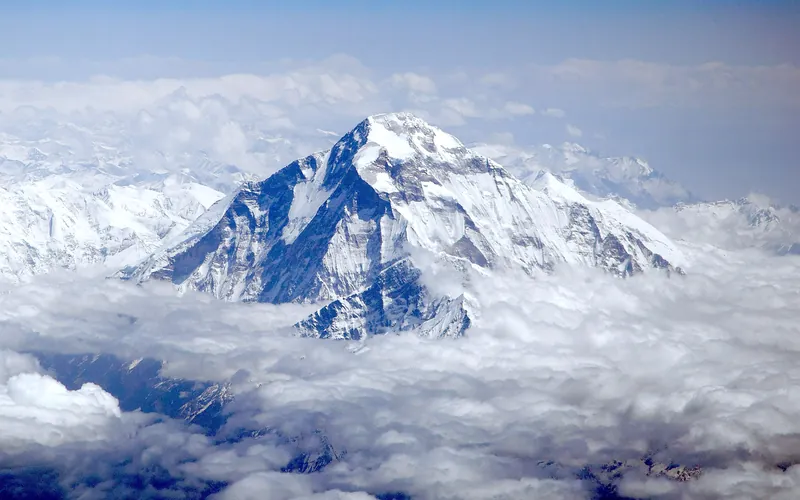
Dhaulagiri I
Dhaulagiri I, at 8,167 meters (26,795 ft), is the seventh-highest mountain on Earth and the highest peak situated entirely within Nepal. Rising steeply above the Kali Gandaki Gorge—the deepest gorge on Earth—opposite Annapurna, Dhaulagiri forms a staggering 7,000-meter vertical rise from the river valley.
Featured Expedition Climber
Pasang Dawa Sherpa
Born in 1977 in the mountain hamlet of Pangboche, Pasang Dawa Sherpa began climbing in the late 1990s and achieved his first Everest summit in 1998. Working primarily with commercial operator Imagine Nepal, Pa Dawa...
Documented Sources & Archival Citations
- Archival DatabaseThe Himalayan Database — The Expedition Archives of Elizabeth Hawley ↗(The Himalayan Database)
Supporting claim: Official expedition record, route logs, and summit outcomes for DHA158101
- Alpine JournalHimalayan Journal & Alpine Club Archival Expedition Chronicles(The Himalayan Club & Alpine Club)
Supporting claim: Archival expedition narrative and historical documentation for 1958 Dhaulagiri I climb
Share Exploration
Global Mountain Intelligence
✓ Link copied to clipboard!