1965 German Gangapurna Expedition
The 1965 German expedition led by Günther Hauser that completed the maiden first ascent of Gangapurna (7,455m) in the Annapurna Himal via the East Ridge.
Mountain Safety & Conditions Disclaimer: High-altitude climbing, glacial travel, and technical ascents entail severe objective risks including avalanches, serac collapses, rapid weather collapse, and altitude illness. Historical route descriptions and summit claims on Mountainity reflect documented archival sources and must not be used as live operational safety assessments. Local regulations, permits, and physical glacial topography change continuously.
Peer Review: Senior Editorial Board & Historical Reviewers • Editorial Standards
Official Expedition Narrative & Archival Record
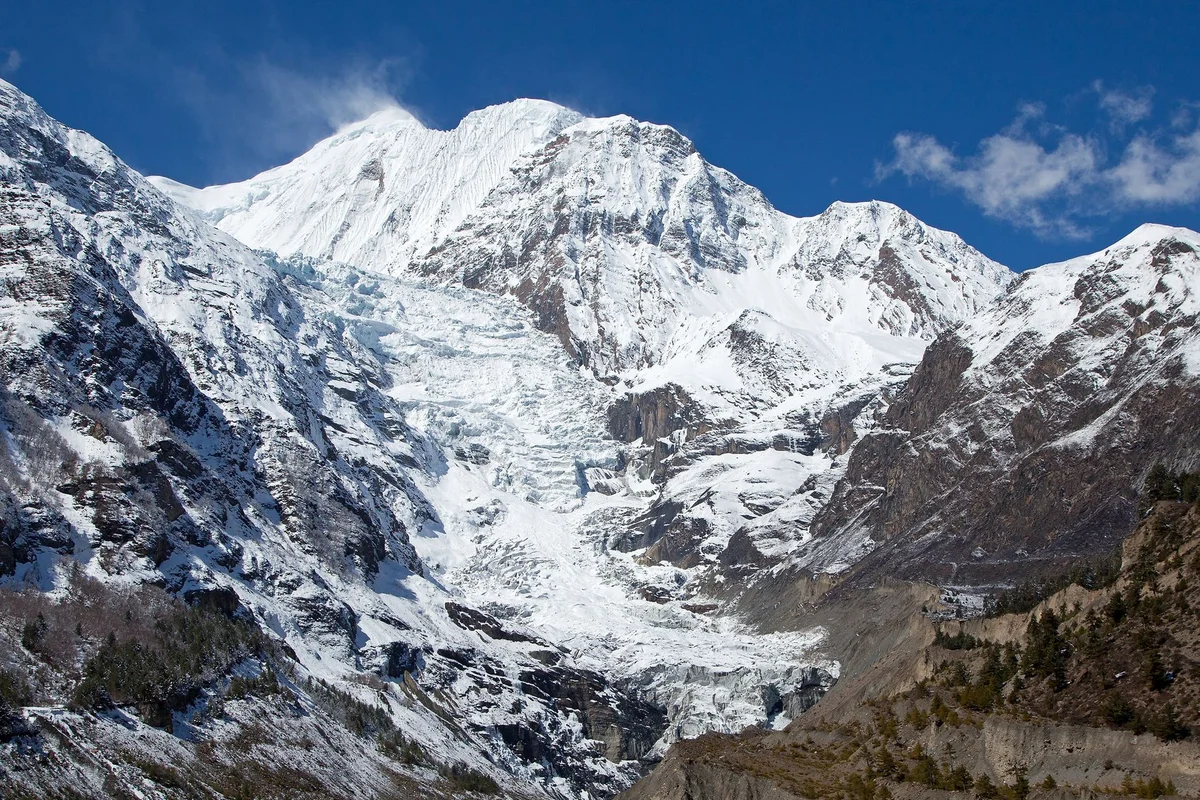
In the spring of 1965, the German Himalayan Expedition, organized by the Deutscher Alpenverein (DAV) and led by prominent mountaineer Günther Hauser, entered the dramatic Annapurna Sanctuary. Their objective was Gangapurna (7,455m / 24,459 ft), an imposing ice-clad sentinel situated along the northern rampart of the Annapurna Cirque between Annapurna III and Glacier Dome. Navigating steep ice walls, heavily crevassed glacial terraces, and knife-edge fluted crests from the Modi Khola, the team methodically pushed upward across the East Ridge. On May 6, 1965, expedition leader Günther Hauser, Ludwig Greissl, Hermann Köllensperger, Erich Reismüller, Ang Temba, and Phu Dorje II completed the historic maiden first ascent to the 7,455-meter summit. Two days later, on May 8, a second summit party comprised of Hermann Wünsche, Otto Seibold, Klaus Ekkerlein, K. H. Ehlers, and Pemba Norbu also stood atop the mountain, recording one of the most comprehensive early successes in the Annapurna range.
Documented Team Composition
- Günther Hauser (Expedition Leader, Summiter, May 6)
- Ludwig Greissl (Summiter, May 6)
- Hermann Köllensperger (Summiter, May 6)
- Erich Reismüller (Summiter, May 6)
- Ang Temba (Summiter, May 6)
- Phu Dorje II (Summiter, May 6)
- Hermann Wünsche (Summiter, May 8)
- Otto Seibold (Summiter, May 8)
- Klaus Ekkerlein (Summiter, May 8)
- K. H. Ehlers (Summiter, May 8)
- Pemba Norbu (Summiter, May 8)
- Dr. Karl Winkler (Expedition Doctor)
Key Statistics & Topographic Figures
- Official Outcome
- Historic Maiden First Ascent
Expedition Status
- Summit Date
- 1965-05-06
Ascent Timestamp
- Target Objective
- gangapurna
Mountain Peak
- Ascent Route
- the documented ascent route
Climbing Path
- Team Size
- 12 Climbers
High-Altitude Team
- Region / Country
- Nepal (Gandaki Province, Kaski & Manang Districts, Annapurna Himal)
Geography
Defined Alpine Terminology & Concepts
- Alpine Expedition
- A planned, self-contained high-altitude mountaineering undertaking operating in remote mountain terrain subject to extreme objective hazards.
- Death Zone
- The high-altitude region above 8,000 meters where atmospheric oxygen pressure is inadequate for sustained human survival.
Frequently Asked Questions: 1965 German Gangapurna Expedition
What was the primary outcome and achievement of the 1965 German Gangapurna Expedition?
Historic Maiden First Ascent. The 1965 German expedition led by Günther Hauser that completed the maiden first ascent of Gangapurna (7,455m) in the Annapurna Himal via the East Ridge.
When did the 1965 German Gangapurna Expedition reach the summit?
The expedition officially reached the summit on 1965-05-06, operating between 1965-03-22 and 1965-05-18.
Who were the documented climbing team members on the 1965 German Gangapurna Expedition?
The documented climbing roster included: Günther Hauser (Expedition Leader, Summiter, May 6), Ludwig Greissl (Summiter, May 6), Hermann Köllensperger (Summiter, May 6), Erich Reismüller (Summiter, May 6), Ang Temba (Summiter, May 6), Phu Dorje II (Summiter, May 6), Hermann Wünsche (Summiter, May 8), Otto Seibold (Summiter, May 8), Klaus Ekkerlein (Summiter, May 8), K. H. Ehlers (Summiter, May 8), Pemba Norbu (Summiter, May 8), Dr. Karl Winkler (Expedition Doctor).
What climbing route and mountain objective were tackled during the 1965 German Gangapurna Expedition?
The expedition tackled gangapurna via the the documented ascent route in Nepal (Gandaki Province, Kaski & Manang Districts, Annapurna Himal).
How are the records and summit claims of the 1965 German Gangapurna Expedition verified?
Summit claims, route topography, and timeline logs for the 1965 German Gangapurna Expedition are cross-referenced with official alpine registries, national mountaineering federations, and primary expedition journals.
Target Objective Peak

Gangapurna
Gangapurna is the 51st highest mountain on Earth at 7,455 meters (24,459 ft). Standing prominently in the heart of the Annapurna Sanctuary in central Nepal, Gangapurna translates to 'Goddess of the Full Harvest' and forms the dramatic high backdrop over the trekking village of Manang.
Documented Sources & Archival Citations
- Primary Alpine JournalAsia, Nepal, Gangapurna ↗— by Günther Hauserin American Alpine Journal, Vol. 15, pp. 191–192 (1966)(American Alpine Club)
Supporting claim: Primary expedition report by leader Günther Hauser recording the first ascents of Gangapurna (7,455m) on May 6 by Hauser, Greissl, Köllensperger, Reismüller, Ang Temba, and Phu Dorje II, followed on May 8 by Wünsche, Seibold, Ekkerlein, Ehlers, and Pemba Norbu.
- Primary Alpine JournalThe Ascent of Gangapurna ↗— by Günther Hauserin The Alpine Journal, Vol. 70, pp. 235–241 (1965)(Alpine Club)
Supporting claim: Contemporary mountaineering chronicle documenting the German Alpine Club team's successful siege and summit pushes on Gangapurna.
- Archival DatabaseThe Himalayan Database — Expedition Chronicle (GANG65101) ↗(Elizabeth Hawley / The Himalayan Database)
Supporting claim: Official Himalayan expedition chronology, camp telemetry, summit records and member log
Share Exploration
Global Mountain Intelligence
✓ Link copied to clipboard!