1974 ITBP Shivling Expedition
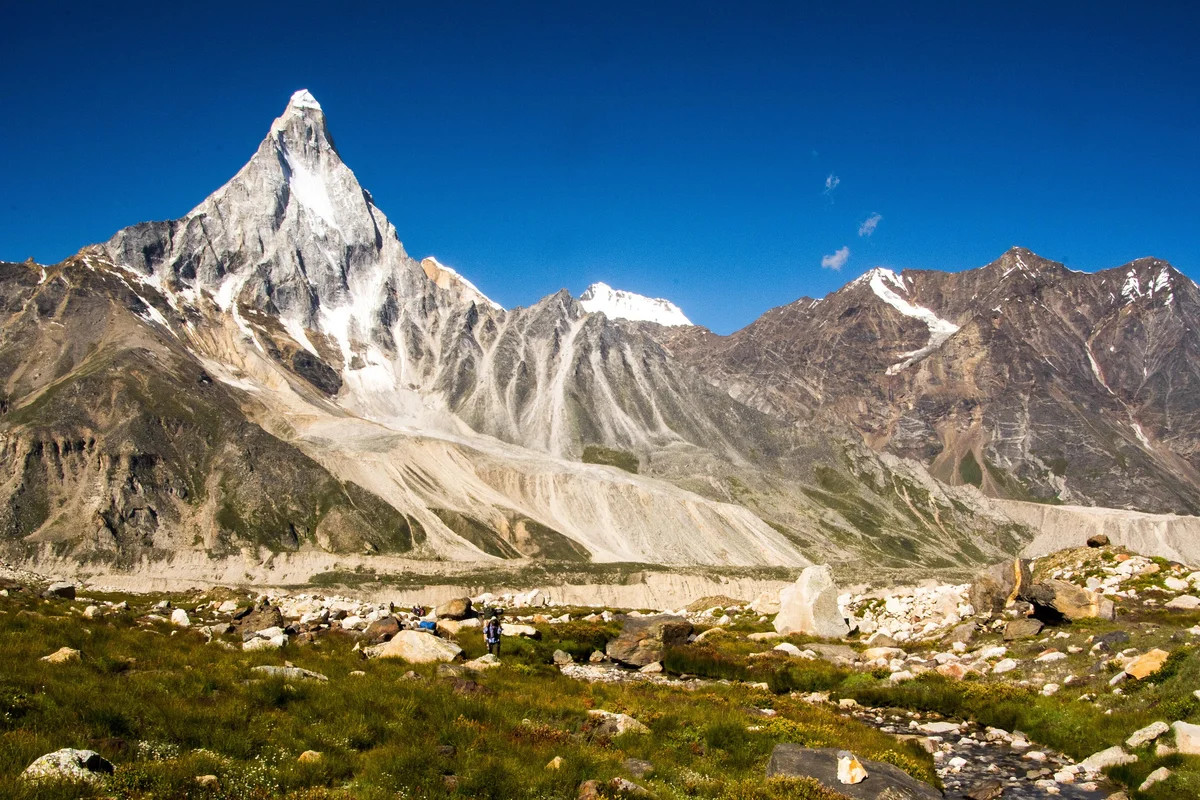
The 1974 Indo-Tibetan Border Police expedition led by Hukam Singh that conquered the revered and dramatic pyramid of Shivling (6,543m).
Mountain Safety & Conditions Disclaimer: High-altitude climbing, glacial travel, and technical ascents entail severe objective risks including avalanches, serac collapses, rapid weather collapse, and altitude illness. Historical route descriptions and summit claims on Mountainity reflect documented archival sources and must not be used as live operational safety assessments. Local regulations, permits, and physical glacial topography change continuously.
Peer Review: Senior Editorial Board & Historical Reviewers • Editorial Standards
Official Expedition Narrative & Archival Record
Shivling (6,543m / 21,467 ft), universally renowned as the 'Matterhorn of the Himalaya' and worshipped by pilgrims as the sacred embodiment of Lord Shiva, rises with breathtaking verticality above the sacred source of the Ganges at Gaumukh. Because of its sheer, ice-encrusted granite walls and hanging seracs, the mountain had repelled all exploratory approaches. In May 1974, the Indo-Tibetan Border Police (ITBP) mounted a determined assault led by Commander Hukam Singh. Establishing base camp on the holy meadows of Tapovan and ascending via the complex Kirti Glacier, the team pioneered a route up the formidable West Ridge. Methodically fixing ropes on sheer ice walls, traversing crumbling rock slabs, and securing camps along exposed ridges, the assault team launched their summit bid on June 3, 1974. Under the leadership of Commander Hukam Singh, five climbers—Laxman Singh, Dorje, Pemba Tharkey, Pasang Tsering, and Ang Tharkay—successfully reached the needle-like 6,543-meter summit, establishing the first ascent of this iconic holy mountain.
Documented Team Composition
- Commander Hukam Singh (Expedition Leader)
- Laxman Singh (Summiter, June 3)
- Dorje (Summiter, June 3)
- Pemba Tharkey (Summiter, June 3)
- Pasang Tsering (Summiter, June 3)
- Ang Tharkay (Summiter, June 3)
- S. P. Chamoli (Expedition Officer)
Key Statistics & Topographic Figures
- Official Outcome
- Historic Maiden First Ascent
Expedition Status
- Summit Date
- 1974-06-03
Ascent Timestamp
- Target Objective
- shivling
Mountain Peak
- Ascent Route
- the documented ascent route
Climbing Path
- Team Size
- 7 Climbers
High-Altitude Team
- Region / Country
- India (Uttarakhand, Uttarkashi District, Garhwal Himalaya, Gangotri Group)
Geography
Defined Alpine Terminology & Concepts
- Alpine Expedition
- A planned, self-contained high-altitude mountaineering undertaking operating in remote mountain terrain subject to extreme objective hazards.
- Death Zone
- The high-altitude region above 8,000 meters where atmospheric oxygen pressure is inadequate for sustained human survival.
Frequently Asked Questions: 1974 ITBP Shivling Expedition
What was the primary outcome and achievement of the 1974 ITBP Shivling Expedition?
Historic Maiden First Ascent. The 1974 Indo-Tibetan Border Police expedition led by Hukam Singh that conquered the revered and dramatic pyramid of Shivling (6,543m).
When did the 1974 ITBP Shivling Expedition reach the summit?
The expedition officially reached the summit on 1974-06-03, operating between 1974-05-10 and 1974-06-15.
Who were the documented climbing team members on the 1974 ITBP Shivling Expedition?
The documented climbing roster included: Commander Hukam Singh (Expedition Leader), Laxman Singh (Summiter, June 3), Dorje (Summiter, June 3), Pemba Tharkey (Summiter, June 3), Pasang Tsering (Summiter, June 3), Ang Tharkay (Summiter, June 3), S. P. Chamoli (Expedition Officer).
What climbing route and mountain objective were tackled during the 1974 ITBP Shivling Expedition?
The expedition tackled shivling via the the documented ascent route in India (Uttarakhand, Uttarkashi District, Garhwal Himalaya, Gangotri Group).
How are the records and summit claims of the 1974 ITBP Shivling Expedition verified?
Summit claims, route topography, and timeline logs for the 1974 ITBP Shivling Expedition are cross-referenced with official alpine registries, national mountaineering federations, and primary expedition journals.
Target Objective Peak

Shivling
Shivling is an extraordinary 6,543-meter (21,467 ft) pyramid of sheer granite and sculpted ice soaring above the sacred meadow of Tapovan at the source of the holy Ganges River in India. Widely revered as the 'Matterhorn of India', its dramatic tapering spire represents the divine lingam of Lord Shiva.
Documented Sources & Archival Citations
- Primary Alpine JournalFirst Ascent of Shivling ↗— by Hukam Singhin The Himalayan Journal, Vol. 33, pp. 76–81 (1974)(The Himalayan Club)
Supporting claim: Primary expedition report by leader Commander Hukam Singh documenting the ITBP reconnaissance, route pioneering on the West Ridge, and successful first ascent of Shivling on June 3, 1974 by Laxman Singh, Dorje, Pemba Tharkey, Pasang Tsering, and Ang Tharkay.
- Primary Alpine JournalAsia, India—Garhwal, Shivling ↗— by H. Adams Carterin American Alpine Journal, Vol. 20, pp. 200–201 (1975)(American Alpine Club)
Supporting claim: Contemporary mountaineering chronicle in the American Alpine Journal recording the historic maiden first ascent of Shivling (6,543m) by the ITBP expedition.
Share Exploration
Global Mountain Intelligence
✓ Link copied to clipboard!