1975 Japanese Teram Kangri Expedition
The 1975 Japanese Shizuoka expedition led by Hajime Katayama that achieved the maiden first ascent of Teram Kangri I (7,462m) in the Siachen Karakoram.
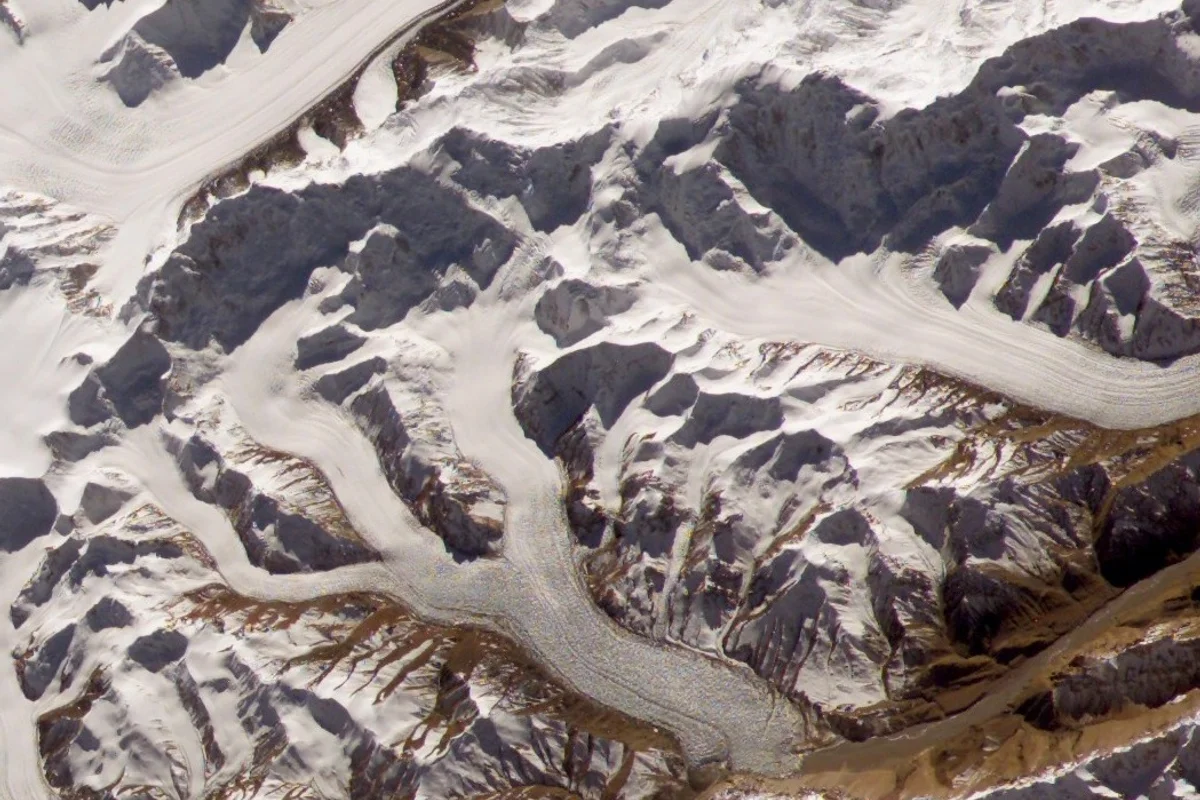
Mountain Safety & Conditions Disclaimer: High-altitude climbing, glacial travel, and technical ascents entail severe objective risks including avalanches, serac collapses, rapid weather collapse, and altitude illness. Historical route descriptions and summit claims on Mountainity reflect documented archival sources and must not be used as live operational safety assessments. Local regulations, permits, and physical glacial topography change continuously.
Peer Review: Senior Editorial Board & Historical Reviewers • Editorial Standards
Official Expedition Narrative & Archival Record
Teram Kangri I (7,462m / 24,482 ft) stands as the supreme summit of the remote Rimo Muztagh group, rising high above the junction of the Teram Shehr and Siachen glaciers in the high Karakoram. Guarded by complex icefalls, colossal serac walls, and severe logistical isolation, the peak remained one of the highest untouched objectives in the Karakoram into the mid-1970s. In the summer of 1975, the Shizuoka Alpine Club of Japan, under the leadership of Hajime Katayama, mounted a determined expedition authorized via the Pakistani approach up the Bilafond Glacier and across the high Bilafond La pass onto the Siachen glacier sheet. Over weeks of rigorous expeditionary work, the team placed five high camps up the southern approaches and breached the crevassed South Ridge. On August 10, 1975, Kazuo Kodaka and Yasunori Kobayashi achieved the historic maiden first ascent of Teram Kangri I in clear, sub-zero weather. Two days later, on August 12, expedition leader Hajime Katayama and Motomu Ataka completed the second summit wave, recording a landmark achievement in the high Siachen wilderness.
Documented Team Composition
- Hajime Katayama (Expedition Leader & Summiter, August 12)
- Kazuo Kodaka (Summiter, August 10)
- Yasunori Kobayashi (Summiter, August 10)
- Motomu Ataka (Summiter, August 12)
- Kenji Hirai (Deputy Leader)
- Dr. Yoshio Ogata (Expedition Physician)
- T. Suzuki (Climber)
Key Statistics & Topographic Figures
- Official Outcome
- Historic Maiden First Ascent
Expedition Status
- Summit Date
- 1975-08-10
Ascent Timestamp
- Target Objective
- teram-kangri-i
Mountain Peak
- Ascent Route
- the documented ascent route
Climbing Path
- Team Size
- 7 Climbers
High-Altitude Team
- Region / Country
- Disputed / Karakoram (Rimo Muztagh / Siachen Sector, Karakoram Range)
Geography
Defined Alpine Terminology & Concepts
- Alpine Expedition
- A planned, self-contained high-altitude mountaineering undertaking operating in remote mountain terrain subject to extreme objective hazards.
- Death Zone
- The high-altitude region above 8,000 meters where atmospheric oxygen pressure is inadequate for sustained human survival.
Frequently Asked Questions: 1975 Japanese Teram Kangri Expedition
What was the primary outcome and achievement of the 1975 Japanese Teram Kangri Expedition?
Historic Maiden First Ascent. The 1975 Japanese Shizuoka expedition led by Hajime Katayama that achieved the maiden first ascent of Teram Kangri I (7,462m) in the Siachen Karakoram.
When did the 1975 Japanese Teram Kangri Expedition reach the summit?
The expedition officially reached the summit on 1975-08-10, operating between 1975-06-15 and 1975-08-25.
Who were the documented climbing team members on the 1975 Japanese Teram Kangri Expedition?
The documented climbing roster included: Hajime Katayama (Expedition Leader & Summiter, August 12), Kazuo Kodaka (Summiter, August 10), Yasunori Kobayashi (Summiter, August 10), Motomu Ataka (Summiter, August 12), Kenji Hirai (Deputy Leader), Dr. Yoshio Ogata (Expedition Physician), T. Suzuki (Climber).
What climbing route and mountain objective were tackled during the 1975 Japanese Teram Kangri Expedition?
The expedition tackled teram-kangri-i via the the documented ascent route in Disputed / Karakoram (Rimo Muztagh / Siachen Sector, Karakoram Range).
How are the records and summit claims of the 1975 Japanese Teram Kangri Expedition verified?
Summit claims, route topography, and timeline logs for the 1975 Japanese Teram Kangri Expedition are cross-referenced with official alpine registries, national mountaineering federations, and primary expedition journals.
Target Objective Peak

Teram Kangri I
Teram Kangri I (7,462 m / 24,482 ft) is the highest summit of the remote Teram Kangri massif and the Siachen Muztagh subrange of the Eastern Karakoram. Named by British explorer Tom Longstaff in 1909 when viewing the massif from the Bilafond La—a name rooted in Yarkandi legend of a buried town near the Teram Shehr Glacier—the peak lies near the Siachen Glacier junction. Its rugged granite and glaciated ridges above high glacial basins were first surmounted on August 10, 1975, by a joint Japanese expedition.
Documented Sources & Archival Citations
- Primary Alpine JournalFirst Ascent of Teram Kangri I ↗— by Hajime Katayamain American Alpine Journal, Vol. 20, pp. 542–543 (1976)(American Alpine Club)
Supporting claim: Official expedition summary by Hajime Katayama detailing the approach across Bilafond La and the August 10–12 summit ascents of Teram Kangri I.
- Primary Alpine JournalThe Ascent of Teram Kangri ↗— by Hajime Katayamain The Himalayan Journal, Vol. 34, pp. 58–64 (1976)(The Himalayan Club)
Supporting claim: Firsthand historical expedition narrative recording route logistics, camps, and both summit waves on the South Ridge.
Share Exploration
Global Mountain Intelligence
✓ Link copied to clipboard!