1978 Yukio Ogawa Dhaulagiri II Historic Expedition
In 1978, the Japan expedition led by Yukio Ogawa tackled Dhaulagiri II (7751m) via the technical E Ridge from S, demonstrating advanced siege and alpine tactics in the Big Wall era.
Mountain Safety & Conditions Disclaimer: High-altitude climbing, glacial travel, and technical ascents entail severe objective risks including avalanches, serac collapses, rapid weather collapse, and altitude illness. Historical route descriptions and summit claims on Mountainity reflect documented archival sources and must not be used as live operational safety assessments. Local regulations, permits, and physical glacial topography change continuously.
Peer Review: Senior Editorial Board & Historical Reviewers • Editorial Standards
Official Expedition Narrative & Archival Record
During the transformative 1970s Big Wall era in the Himalayas, the 1978 expedition to Dhaulagiri II (7751m) stood as a bold high-altitude endeavor led by Yukio Ogawa. Supported by Japanese Dhaulagiri II Expedition of Nagoya Alpine Club, the climbing party approached through Pokhara->Beni->Myagdi Khola (BC). Operating in arduous weather conditions, the team established a succession of camps: TempBC(3700m),BC(5000m),C1(16/04,5500m),C2(17/04,5900m),C3(29/04,6600m),C4(7250m),Biv(07/05,7550m),Smt(08/05). Climbers navigated formidable technical terrain and objective hazards along the E Ridge from S, culminating in a triumphant summit push on 08/05/1978 that etched their names into Himalayan history. Archival records preserved in Elizabeth Hawley's Himalayan Database document the expedition's enduring contribution to global mountaineering heritage.
Documented Team Composition
- Yukio Ogawa (Japan, Expedition Leader, Summited (08/05/1978))
- Masaiku Ogawa (Japan, Climber, Climbing Member)
- Iwao Yamada (Japan, Climber, Climbing Member)
- Katsumi Nagai (Japan, Climber, Climbing Member)
- Teruji Koike (Japan, Climber, Summited (08/05/1978))
- Takao Utsu (Japan, Climber, Climbing Member)
- Hideo Amano (Japan, Climber, Climbing Member)
- Chihiro Mutho (Japan, Climber, Climbing Member)
- Masaru Takahashi (Japan, Climber, Climbing Member)
- Hidgiake Komaki (Japan, Climber, Climbing Member)
- Pemba Nurbu/Norbu Sherpa (Nepal, Climber, Climbing Member)
Key Statistics & Topographic Figures
- Official Outcome
- Successful Ascent via E Ridge from S
Expedition Status
- Summit Date
- 1978-05-08
Ascent Timestamp
- Target Objective
- dhaulagiri-ii
Mountain Peak
- Ascent Route
- the documented ascent route
Climbing Path
- Team Size
- 11 Climbers
High-Altitude Team
- Region / Country
- Nepal (Himalayas)
Geography
Defined Alpine Terminology & Concepts
- Alpine Expedition
- A planned, self-contained high-altitude mountaineering undertaking operating in remote mountain terrain subject to extreme objective hazards.
- Death Zone
- The high-altitude region above 8,000 meters where atmospheric oxygen pressure is inadequate for sustained human survival.
Frequently Asked Questions: 1978 Yukio Ogawa Dhaulagiri II Historic Expedition
What was the primary outcome and achievement of the 1978 Yukio Ogawa Dhaulagiri II Historic Expedition?
Successful Ascent via E Ridge from S. In 1978, the Japan expedition led by Yukio Ogawa tackled Dhaulagiri II (7751m) via the technical E Ridge from S, demonstrating advanced siege and alpine tactics in the Big Wall era.
When did the 1978 Yukio Ogawa Dhaulagiri II Historic Expedition reach the summit?
The expedition officially reached the summit on 1978-05-08, operating between 1978-04-01 and 1978-05-08.
Who were the documented climbing team members on the 1978 Yukio Ogawa Dhaulagiri II Historic Expedition?
The documented climbing roster included: Yukio Ogawa (Japan, Expedition Leader, Summited (08/05/1978)), Masaiku Ogawa (Japan, Climber, Climbing Member), Iwao Yamada (Japan, Climber, Climbing Member), Katsumi Nagai (Japan, Climber, Climbing Member), Teruji Koike (Japan, Climber, Summited (08/05/1978)), Takao Utsu (Japan, Climber, Climbing Member), Hideo Amano (Japan, Climber, Climbing Member), Chihiro Mutho (Japan, Climber, Climbing Member), Masaru Takahashi (Japan, Climber, Climbing Member), Hidgiake Komaki (Japan, Climber, Climbing Member), Pemba Nurbu/Norbu Sherpa (Nepal, Climber, Climbing Member).
What climbing route and mountain objective were tackled during the 1978 Yukio Ogawa Dhaulagiri II Historic Expedition?
The expedition tackled dhaulagiri-ii via the the documented ascent route in Nepal (Himalayas).
How are the records and summit claims of the 1978 Yukio Ogawa Dhaulagiri II Historic Expedition verified?
Summit claims, route topography, and timeline logs for the 1978 Yukio Ogawa Dhaulagiri II Historic Expedition are cross-referenced with official alpine registries, national mountaineering federations, and primary expedition journals.
Target Objective Peak
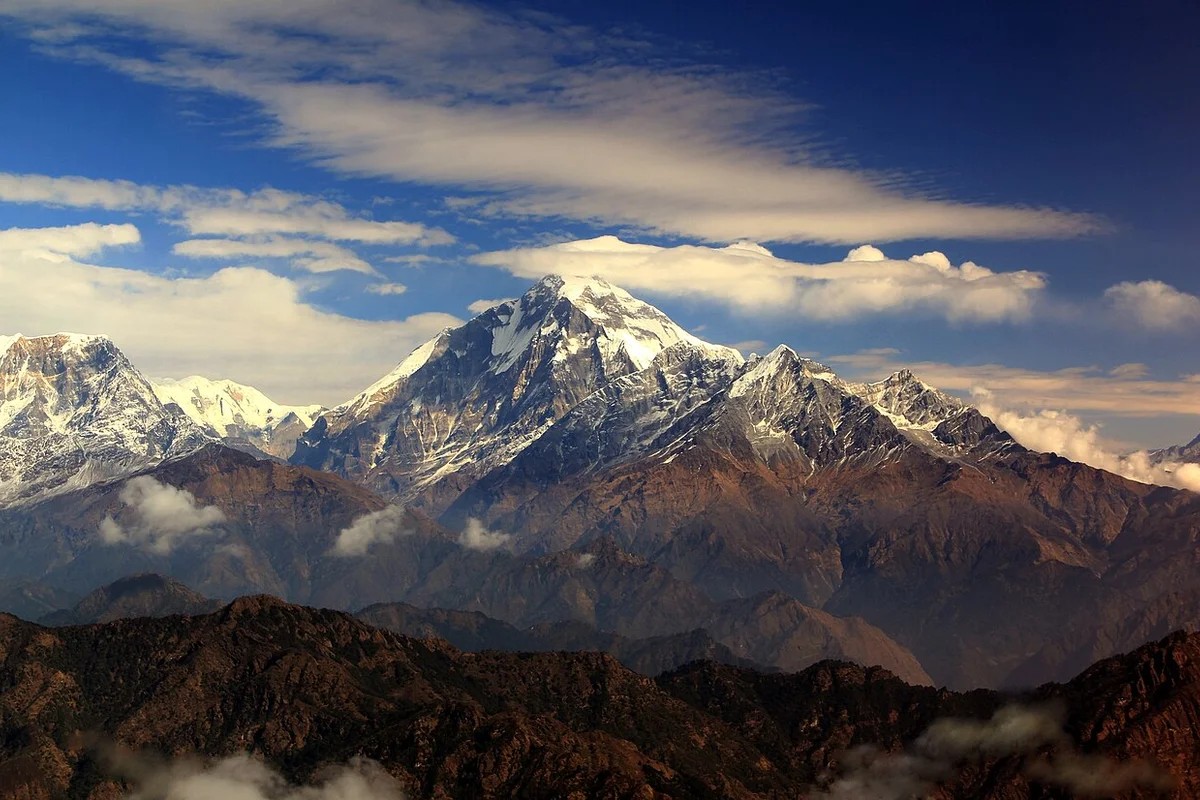

Dhaulagiri II
Dhaulagiri II is the 30th highest mountain on Earth at 7,751 meters (25,430 ft). Standing as the second highest peak of the Dhaulagiri range in western Nepal, it is an independent mountain of immense stature with a prominence of 2,396 meters above the remote Hidden Valley.
Documented Sources & Archival Citations
- Archival DatabaseThe Himalayan Database — The Expedition Archives of Elizabeth Hawley ↗(The Himalayan Database)
Supporting claim: Official expedition record, route logs, and summit outcomes for DHA278101
- Alpine JournalHimalayan Journal & Alpine Club Archival Expedition Chronicles(The Himalayan Club & Alpine Club)
Supporting claim: Archival expedition narrative and historical documentation for 1978 Dhaulagiri II climb
Share Exploration
Global Mountain Intelligence
✓ Link copied to clipboard!