1979 American-Nepalese Gauri Sankar First Ascent
On May 8, 1979, American climber John Roskelley and Nepali Sherpa Dorje achieved the historic maiden first ascent of sacred Gauri Sankar (7,134m) via the formidable West Face.
Mountain Safety & Conditions Disclaimer: High-altitude climbing, glacial travel, and technical ascents entail severe objective risks including avalanches, serac collapses, rapid weather collapse, and altitude illness. Historical route descriptions and summit claims on Mountainity reflect documented archival sources and must not be used as live operational safety assessments. Local regulations, permits, and physical glacial topography change continuously.
Peer Review: Senior Editorial Board & Historical Reviewers • Editorial Standards
Official Expedition Narrative & Archival Record
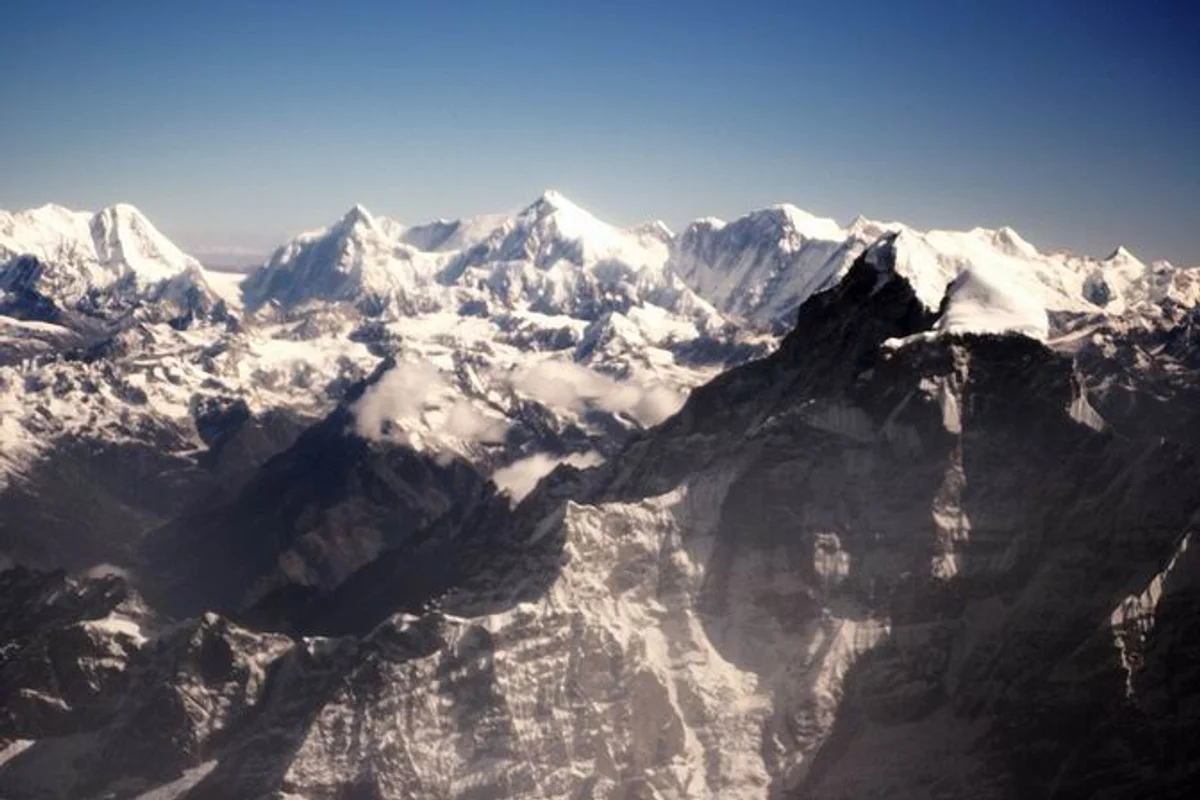
Gauri Sankar (7,134m / 23,406 ft) in the Rolwaling Himal of eastern Nepal was long considered by international mountaineers to be one of the most formidable, steep, and technically daunting peaks in High Asia. Revered by local Hindu and Buddhist populations as the sacred abode of Shiva and Parvati, the peak had repelled more than half a dozen serious expeditions throughout the 1960s and 1970s. In the spring of 1979, a joint American-Nepalese expedition organized under the leadership of Michael Yager obtained permission to attempt the virgin summit via the staggering 2,000-meter West Face. The team established Base Camp in the Rolwaling Valley in early April and spent weeks establishing camps on vertical granite headwalls, navigating hanging seracs, and fixing ropes across shattered schist couloirs in freezing temperatures. On May 8, 1979, lead assault climbers John Roskelley and Dorje Sherpa launched a decisive bid from their highest bivouac. Overcoming sustained Grade V rock and steep ice cruxes under intense exposure, the duo reached the 7,134-meter South Summit (the true apex) in the afternoon, completing one of the most celebrated big-wall first ascents in modern Himalayan history.
Documented Team Composition
- Michael Yager (Expedition Leader, USA)
- John Roskelley (Summiter, USA)
- Dorje Sherpa (Summiter, Nepal)
- Dennis Hennek (Climber, USA)
- Koobir Sherpa (Climber, Nepal)
- Jim States (Expedition Doctor, USA)
Key Statistics & Topographic Figures
- Official Outcome
- Historic Maiden First Ascent via the West Face
Expedition Status
- Summit Date
- 1979-05-08
Ascent Timestamp
- Target Objective
- gauri-sankar
Mountain Peak
- Ascent Route
- the documented ascent route
Climbing Path
- Team Size
- 6 Climbers
High-Altitude Team
- Region / Country
- Nepal (Rolwaling Himal, Janakpur Zone)
Geography
Defined Alpine Terminology & Concepts
- Alpine Expedition
- A planned, self-contained high-altitude mountaineering undertaking operating in remote mountain terrain subject to extreme objective hazards.
- Death Zone
- The high-altitude region above 8,000 meters where atmospheric oxygen pressure is inadequate for sustained human survival.
Frequently Asked Questions: 1979 American-Nepalese Gauri Sankar First Ascent
What was the primary outcome and achievement of the 1979 American-Nepalese Gauri Sankar First Ascent?
Historic Maiden First Ascent via the West Face. On May 8, 1979, American climber John Roskelley and Nepali Sherpa Dorje achieved the historic maiden first ascent of sacred Gauri Sankar (7,134m) via the formidable West Face.
When did the 1979 American-Nepalese Gauri Sankar First Ascent reach the summit?
The expedition officially reached the summit on 1979-05-08, operating between 1979-04-01 and 1979-05-18.
Who were the documented climbing team members on the 1979 American-Nepalese Gauri Sankar First Ascent?
The documented climbing roster included: Michael Yager (Expedition Leader, USA), John Roskelley (Summiter, USA), Dorje Sherpa (Summiter, Nepal), Dennis Hennek (Climber, USA), Koobir Sherpa (Climber, Nepal), Jim States (Expedition Doctor, USA).
What climbing route and mountain objective were tackled during the 1979 American-Nepalese Gauri Sankar First Ascent?
The expedition tackled gauri-sankar via the the documented ascent route in Nepal (Rolwaling Himal, Janakpur Zone).
How are the records and summit claims of the 1979 American-Nepalese Gauri Sankar First Ascent verified?
Summit claims, route topography, and timeline logs for the 1979 American-Nepalese Gauri Sankar First Ascent are cross-referenced with official alpine registries, national mountaineering federations, and primary expedition journals.
Target Objective Peak


Gauri Sankar
Gauri Sankar (7,134 m / 23,406 ft) is the second-highest peak of the Rolwaling Himal along the Nepal–Tibet frontier and serves as the reference meridian for Nepal Standard Time. Known locally by the Sherpa community as Jomo Tseringma, the twin-summited massif derives its Nepali name from the Hindu deities Gauri (Parvati) and Shankar (Shiva). Guarded by plunging granite buttresses, sweeping ice faces, and unstable avalanche gullies on the border of Dolakha District, it repelled numerous strong attempts before its first ascent in 1979 by an American–Nepalese team led by John Roskelley and Dorje Sherpa via the formidable West Face. Modern expeditions approaching through the Rolwaling Valley encounter complex moraine travel, mixed rock and blue-ice cruxes, and rapid monsoon-edge weather shifts requiring self-sufficient alpine logistics.
Documented Sources & Archival Citations
- Primary Alpine JournalGauri Sankar, First Ascent ↗— by John Roskelleyin American Alpine Journal, Vol. 22, pp. 417–426 (1980)(American Alpine Club)
Supporting claim: Official expedition report documenting the historic first ascent of Gauri Sankar on May 8, 1979.
- Primary Alpine JournalThe First Ascent of Gaurishankar ↗— by Michael Yagerin The Himalayan Journal, Vol. 37, pp. 55–62 (1981)(The Himalayan Club)
Supporting claim: Expedition leader's detailed narrative of route logistics, high camps, and the successful summit climb.
Share Exploration
Global Mountain Intelligence
✓ Link copied to clipboard!