1985 Indo-British Rimo III First Ascent
On July 14, 1985, British climbers Dave Wilkinson and Jim Fotheringham achieved the maiden first ascent of Rimo III (7,233m) in alpine style from the North Terong Glacier.
Mountain Safety & Conditions Disclaimer: High-altitude climbing, glacial travel, and technical ascents entail severe objective risks including avalanches, serac collapses, rapid weather collapse, and altitude illness. Historical route descriptions and summit claims on Mountainity reflect documented archival sources and must not be used as live operational safety assessments. Local regulations, permits, and physical glacial topography change continuously.
Peer Review: Senior Editorial Board & Historical Reviewers • Editorial Standards
Official Expedition Narrative & Archival Record
Rimo III (7,233m / 23,730 ft) anchors the central ramparts of the Rimo Muztagh in the Eastern Karakoram, rising above the heavily crevassed North Terong Glacier east of the Siachen conflict zone. In the summer of 1985, a landmark joint expedition organized by the Himalayan Club and the British Alpine Climbing Group was co-led by Harish Kapadia and Dave Wilkinson. Penetrating the previously closed Terong basin, the team conducted geographical surveys while identifying a feasible line on Rimo III. Eschewing siege tactics, fixed ropes, and high-altitude porters above Camp 2, British climbers Dave Wilkinson and Jim Fotheringham committed to a bold alpine-style push. Overcoming sustained technical ice pitches and knife-edge snow crests on the Northeast Face and East Ridge, the pair gained the virgin 7,233-meter summit on July 14, 1985, completing one of the purest high-altitude alpine-style first ascents in modern Karakoram history.
Documented Team Composition
- Harish Kapadia (Indian Expedition Co-Leader, India)
- Dave Wilkinson (British Expedition Co-Leader & Summiter, UK — July 14, 1985)
- Jim Fotheringham (Summiter, UK — July 14, 1985)
- Stephen Venables (Climbing Member, UK)
- Tony Saunders (Climbing Member, UK)
- Bogie Thakre (Climbing Member, India)
- Zerksis Boga (Climbing Member, India)
- Hukam Singh (Liaison & Climbing Member, India)
Key Statistics & Topographic Figures
- Official Outcome
- Historic Alpine-Style Maiden Ascent via the Northeast Face and East Ridge
Expedition Status
- Summit Date
- 1985-07-14
Ascent Timestamp
- Target Objective
- rimo-iii
Mountain Peak
- Ascent Route
- the documented ascent route
Climbing Path
- Team Size
- 8 Climbers
High-Altitude Team
- Region / Country
- India (Rimo Muztagh, Eastern Karakoram, Ladakh)
Geography
Defined Alpine Terminology & Concepts
- Alpine Expedition
- A planned, self-contained high-altitude mountaineering undertaking operating in remote mountain terrain subject to extreme objective hazards.
- Death Zone
- The high-altitude region above 8,000 meters where atmospheric oxygen pressure is inadequate for sustained human survival.
Frequently Asked Questions: 1985 Indo-British Rimo III First Ascent
What was the primary outcome and achievement of the 1985 Indo-British Rimo III First Ascent?
Historic Alpine-Style Maiden Ascent via the Northeast Face and East Ridge. On July 14, 1985, British climbers Dave Wilkinson and Jim Fotheringham achieved the maiden first ascent of Rimo III (7,233m) in alpine style from the North Terong Glacier.
When did the 1985 Indo-British Rimo III First Ascent reach the summit?
The expedition officially reached the summit on 1985-07-14, operating between 1985-06-10 and 1985-07-28.
Who were the documented climbing team members on the 1985 Indo-British Rimo III First Ascent?
The documented climbing roster included: Harish Kapadia (Indian Expedition Co-Leader, India), Dave Wilkinson (British Expedition Co-Leader & Summiter, UK — July 14, 1985), Jim Fotheringham (Summiter, UK — July 14, 1985), Stephen Venables (Climbing Member, UK), Tony Saunders (Climbing Member, UK), Bogie Thakre (Climbing Member, India), Zerksis Boga (Climbing Member, India), Hukam Singh (Liaison & Climbing Member, India).
What climbing route and mountain objective were tackled during the 1985 Indo-British Rimo III First Ascent?
The expedition tackled rimo-iii via the the documented ascent route in India (Rimo Muztagh, Eastern Karakoram, Ladakh).
How are the records and summit claims of the 1985 Indo-British Rimo III First Ascent verified?
Summit claims, route topography, and timeline logs for the 1985 Indo-British Rimo III First Ascent are cross-referenced with official alpine registries, national mountaineering federations, and primary expedition journals.
Target Objective Peak

Rimo III
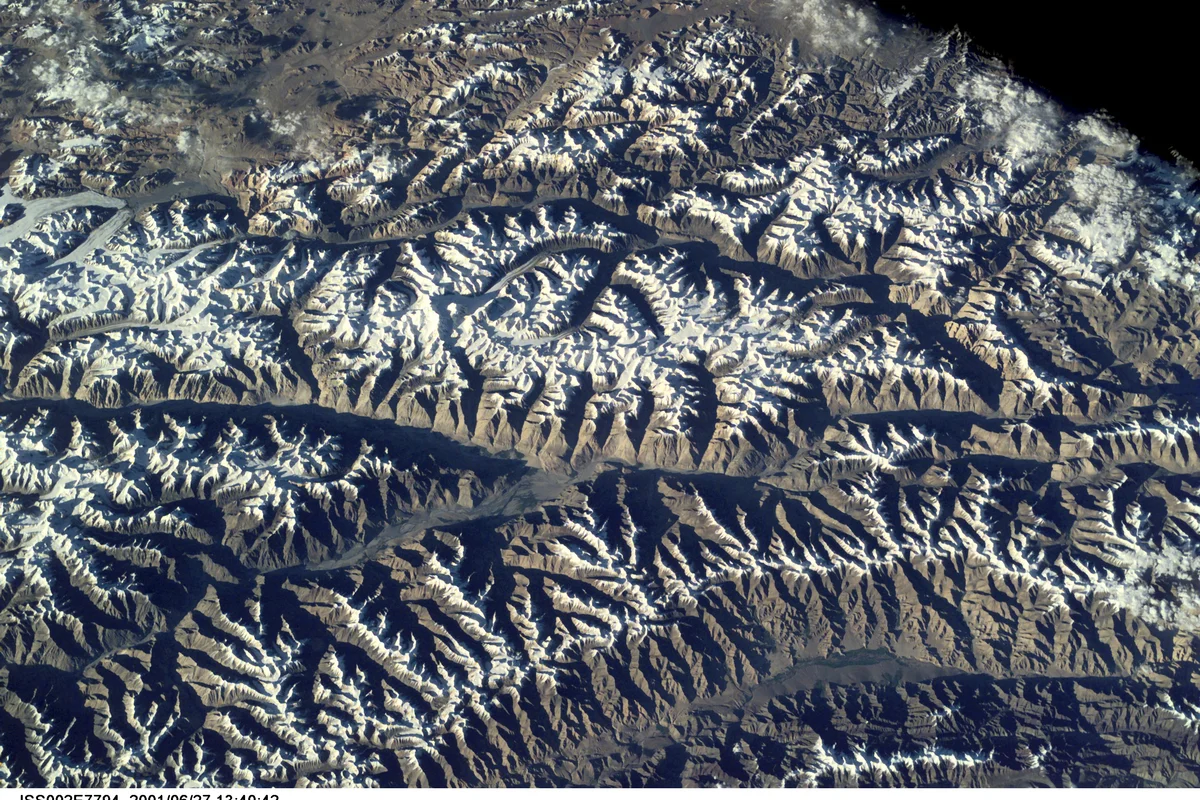
Rimo III rises to an official surveyed elevation of 7233 meters (23,730 feet) above sea level in the rugged Rimo Karakoram. Characterized by steep rock headwalls, complex icefalls, and prominent ridgelines, it is positioned among the dramatic high-altitude peaks of India. The mountain's geography features severe glaciated flanks feeding local glacier systems. Climbers approaching Rimo III typically establish remote base camps across high moraines before tackling mixed snow and rock buttresses. Modern expeditions require complete self-sufficiency, careful acclimatization schedules, and navigation through active serac zones. The Rimo Massif lies in the northern part of the remote Rimo Muztagh, a subrange of the Karakoram range. It is located about 20 km northeast of the snout of the Siachen Glacier and its main summit, Rimo I (alternatively Rimo Kangri I) is the world's 71st highest mountain with an elevation of 7,385 metres (24,229 ft). The massif heads the large Central Rimo Glacier (on the north side) and South Rimo Glacier (on the east side), as well as the smaller North Terong Glacier (on the west side). Rimo means "striped mountain". The Rimo Glacier, drains to the Shyok river. Due to its remote location in the heart of the eastern Karakoram, Rimo was little-known and almost entirely unvisited until the twentieth century. Explorers Filippo De Filippi and Philip and Jenny Visser visited the area in 1914 and 1929 respectively. Adding to its isolation is the unsettled political and military situation between India and Pakistan in the region, especially the conflict around the nearby Siachen Glacier. This means that India controls access to the massif. Documented ascents and attempts on Rimo III highlight the technical difficulty and sustained exposure typical of 7,000-meter peaks in this subrange. Variable weather systems, combined with sudden wind shifts and avalanche hazards, make summit pushes demanding undertakings that require seasoned alpine judgment.
Documented Sources & Archival Citations
- Primary Alpine JournalRimo: The First Ascent of Rimo III and Exploration of Terong Valley ↗— by Harish Kapadiain The Himalayan Journal, Vol. 42, pp. 45–56 (1986)(The Himalayan Club)
Supporting claim: Official expedition co-leader's narrative detailing the Terong Valley exploration and July 14, 1985 first ascent.
- Primary Alpine JournalRimo III ↗— by Dave Wilkinsonin The Alpine Journal, Vol. 91, pp. 17–23 (1986)(The Alpine Club)
Supporting claim: Firsthand summit narrative by Dave Wilkinson detailing the Northeast Face alpine-style ascent.
- Primary Alpine JournalEast Karakoram, Rimo III and Other Peaks ↗— by Harish Kapadiain The American Alpine Journal, Vol. 28, pp. 251–254 (1986)(American Alpine Club)
Supporting claim: AAJ archival documentation of the joint Indo-British ascent and Eastern Karakoram geography.
Share Exploration
Global Mountain Intelligence
✓ Link copied to clipboard!