1986 Japanese-Chinese Kula Kangri Expedition
The 1986 joint Japanese-Chinese expedition led by Kazumasa Hirai that achieved the maiden first ascent of Kula Kangri (7,538m) in the Eastern Himalaya via the West Ridge.
Mountain Safety & Conditions Disclaimer: High-altitude climbing, glacial travel, and technical ascents entail severe objective risks including avalanches, serac collapses, rapid weather collapse, and altitude illness. Historical route descriptions and summit claims on Mountainity reflect documented archival sources and must not be used as live operational safety assessments. Local regulations, permits, and physical glacial topography change continuously.
Peer Review: Senior Editorial Board & Historical Reviewers • Editorial Standards
Official Expedition Narrative & Archival Record
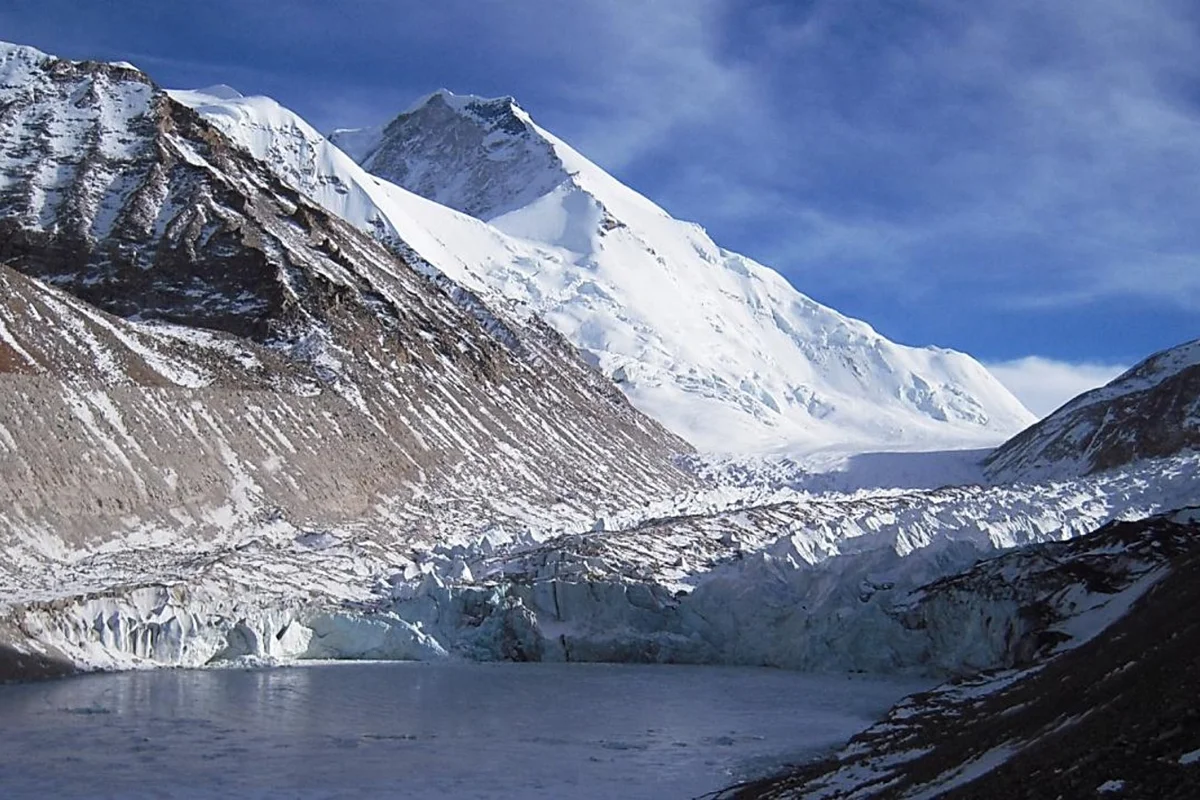
Kula Kangri (7,538m / 24,731 ft), rising as the supreme glacial citadel of the Eastern Himalaya on the frontier between Tibet and Bhutan, had long been regarded by early explorers as one of the great unclimbed prizes of Central Asia. In spring 1986, the Kobe University Scientific and Mountaineering Expedition to Tibet, organized jointly with the Chinese Mountaineering Association, mounted a major assault under the leadership of Kazumasa Hirai alongside Chinese leader Wang Zhenhua. Approaching from the north via the Kula Kangri Glacier in Tibet, the team established Base Camp at 5,200 meters and methodically pioneered a difficult route up through massive icefalls and serac barriers to place Camp IV on the high western col. Pushing along the exposed, wind-blasted West Ridge, the first assault party—comprising Chiharu Itani, Jiro Sakamoto, Hiroshi Ozaki, and Eiho Ohtani—reached the 7,538-meter summit on April 21, 1986, at 4:15 PM. On the following day, April 22, a second wave consisting of Tsuneo Morinaga and Hiroshi Hasegawa also reached the summit, securing a historic first ascent of this formidable Asian giant.
Documented Team Composition
- Kazumasa Hirai (Expedition Leader / Japan)
- Wang Zhenhua (Expedition Leader / China)
- Chiharu Itani (Summiter, Apr 21)
- Jiro Sakamoto (Summiter, Apr 21)
- Hiroshi Ozaki (Summiter, Apr 21)
- Eiho Ohtani (Summiter, Apr 21)
- Tsuneo Morinaga (Summiter, Apr 22)
- Hiroshi Hasegawa (Summiter, Apr 22)
Key Statistics & Topographic Figures
- Official Outcome
- Historic Maiden First Ascent
Expedition Status
- Summit Date
- 1986-04-21
Ascent Timestamp
- Target Objective
- kula-kangri
Mountain Peak
- Ascent Route
- the documented ascent route
Climbing Path
- Team Size
- 8 Climbers
High-Altitude Team
- Region / Country
- Tibet / China (Tibet Autonomous Region, Lhozhag County, Eastern Himalaya)
Geography
Defined Alpine Terminology & Concepts
- Alpine Expedition
- A planned, self-contained high-altitude mountaineering undertaking operating in remote mountain terrain subject to extreme objective hazards.
- Death Zone
- The high-altitude region above 8,000 meters where atmospheric oxygen pressure is inadequate for sustained human survival.
Frequently Asked Questions: 1986 Japanese-Chinese Kula Kangri Expedition
What was the primary outcome and achievement of the 1986 Japanese-Chinese Kula Kangri Expedition?
Historic Maiden First Ascent. The 1986 joint Japanese-Chinese expedition led by Kazumasa Hirai that achieved the maiden first ascent of Kula Kangri (7,538m) in the Eastern Himalaya via the West Ridge.
When did the 1986 Japanese-Chinese Kula Kangri Expedition reach the summit?
The expedition officially reached the summit on 1986-04-21, operating between 1986-03-25 and 1986-05-05.
Who were the documented climbing team members on the 1986 Japanese-Chinese Kula Kangri Expedition?
The documented climbing roster included: Kazumasa Hirai (Expedition Leader / Japan), Wang Zhenhua (Expedition Leader / China), Chiharu Itani (Summiter, Apr 21), Jiro Sakamoto (Summiter, Apr 21), Hiroshi Ozaki (Summiter, Apr 21), Eiho Ohtani (Summiter, Apr 21), Tsuneo Morinaga (Summiter, Apr 22), Hiroshi Hasegawa (Summiter, Apr 22).
What climbing route and mountain objective were tackled during the 1986 Japanese-Chinese Kula Kangri Expedition?
The expedition tackled kula-kangri via the the documented ascent route in Tibet / China (Tibet Autonomous Region, Lhozhag County, Eastern Himalaya).
How are the records and summit claims of the 1986 Japanese-Chinese Kula Kangri Expedition verified?
Summit claims, route topography, and timeline logs for the 1986 Japanese-Chinese Kula Kangri Expedition are cross-referenced with official alpine registries, national mountaineering federations, and primary expedition journals.
Target Objective Peak

Kula Kangri
Kula Kangri is the 41st highest mountain on Earth at 7,538 meters (24,731 ft). Rising in the remote eastern Himalayas along the Tibet-Bhutan frontier in Lhozhag County, Kula Kangri features a formidable 2-kilometer summit ridge flanked by three distinct 7,000-meter peaks.
Documented Sources & Archival Citations
- Primary Alpine JournalKula Kangri ↗— by Kazumasa Hiraiin American Alpine Journal, Vol. 29, pp. 296–298 (1987)(American Alpine Club)
Supporting claim: Official expedition report by leader Kazumasa Hirai documenting the joint Japanese-Chinese maiden first ascent of Kula Kangri (7,538m) via the West Ridge.
- Primary Alpine JournalThe First Ascent of Kula Kangri ↗— by Kazumasa Hiraiin Japanese Alpine News, Vol. 1 (1987)(Japanese Alpine Club)
Supporting claim: Detailed expedition monograph describing high camps, logistics, and summit waves on April 21 and 22, 1986.
Share Exploration
Global Mountain Intelligence
✓ Link copied to clipboard!