1992 Joint Chinese-Japanese Namcha Barwa Expedition
The joint Chinese-Japanese expedition led by Tsuneo Shigehiro and Jiabu, which achieved the historic first ascent of Namcha Barwa (7,782m), the highest unclimbed peak on Earth at the time.
Mountain Safety & Conditions Disclaimer: High-altitude climbing, glacial travel, and technical ascents entail severe objective risks including avalanches, serac collapses, rapid weather collapse, and altitude illness. Historical route descriptions and summit claims on Mountainity reflect documented archival sources and must not be used as live operational safety assessments. Local regulations, permits, and physical glacial topography change continuously.
Peer Review: Senior Editorial Board & Historical Reviewers • Editorial Standards
Official Expedition Narrative & Archival Record
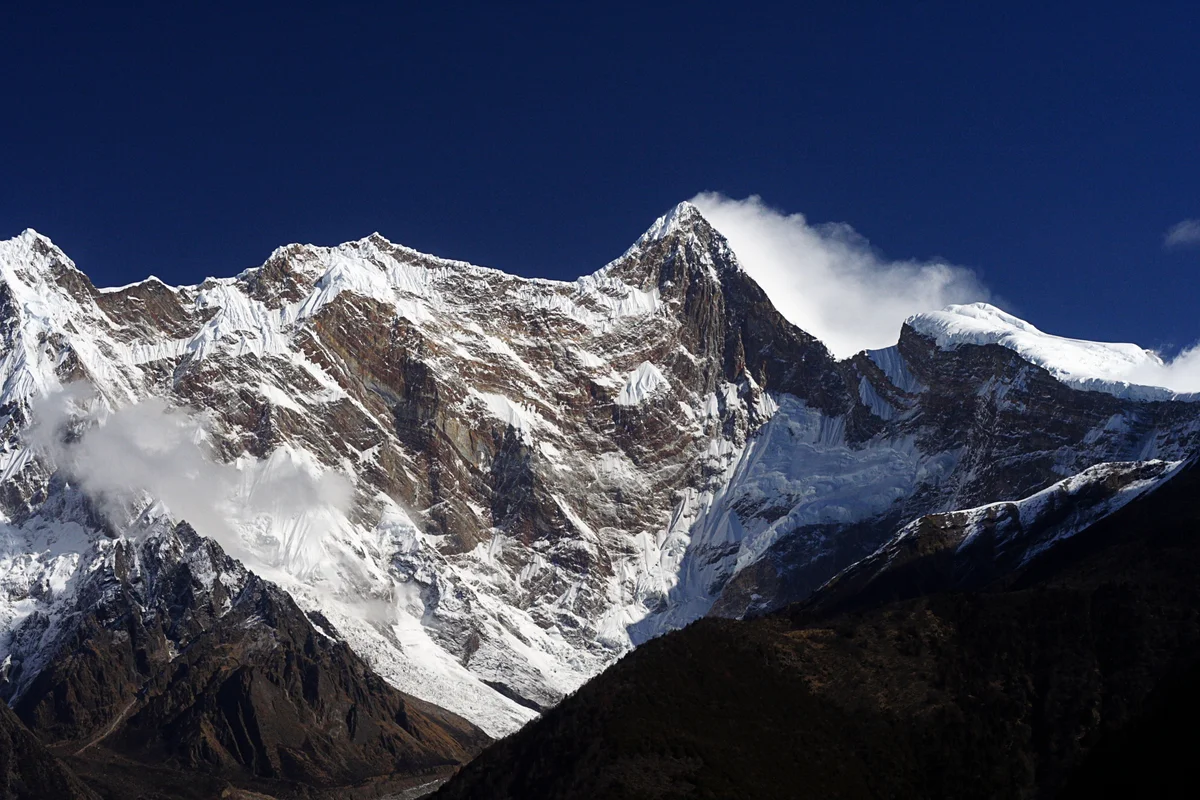
In the autumn of 1992, a powerful joint expedition organized by the Chinese Mountaineering Association and the Japanese Alpine Club assembled at the Great Bend of the Yarlung Tsangpo river to attempt Namcha Barwa (7,782m / 25,531 ft). Rising abruptly in sheer relief of over 5,000 meters above the gorge, the mountain was widely regarded as the ultimate prize in world mountaineering, standing as the highest unclimbed independent mountain on Earth following the tragic 1991 joint reconnaissance where a climber died in an avalanche. Co-led by Tsuneo Shigehiro and Tibetan mountaineering leader Jiabu, the expedition established five high camps along the hazardous South Ridge, braving sudden monsoon storms, extreme wind, and knife-edge ice crests. On October 30, 1992, a unified assault team of eleven climbers—six Japanese and five Chinese/Tibetan mountaineers—stepped onto the summit, conquering the mythical peak and closing one of the greatest chapters of global alpine exploration.
Documented Team Composition
- Tsuneo Shigehiro (Japanese Expedition Leader / Summiter)
- Jiabu (Chinese/Tibetan Expedition Leader / Summiter)
- Tsuguo Slater (Summiter)
- Hiroshi Yamamoto (Summiter)
- Atsushi Yamamoto (Summiter)
- Kazuaki Minegishi (Summiter)
- Daqiong (Summiter)
- Bianba Zaxi (Summiter)
- Ren Na (Summiter)
- Sangzhu (Summiter)
- Luoze (Summiter)
Key Statistics & Topographic Figures
- Official Outcome
- Historic Maiden First Ascent
Expedition Status
- Summit Date
- 1992-10-30
Ascent Timestamp
- Target Objective
- namcha-barwa
Mountain Peak
- Ascent Route
- the documented ascent route
Climbing Path
- Team Size
- 11 Climbers
High-Altitude Team
- Region / Country
- China (Tibet Autonomous Region, Nyingchi, Eastern Himalayan Syntaxis)
Geography
Defined Alpine Terminology & Concepts
- Alpine Expedition
- A planned, self-contained high-altitude mountaineering undertaking operating in remote mountain terrain subject to extreme objective hazards.
- Death Zone
- The high-altitude region above 8,000 meters where atmospheric oxygen pressure is inadequate for sustained human survival.
Frequently Asked Questions: 1992 Joint Chinese-Japanese Namcha Barwa Expedition
What was the primary outcome and achievement of the 1992 Joint Chinese-Japanese Namcha Barwa Expedition?
Historic Maiden First Ascent. The joint Chinese-Japanese expedition led by Tsuneo Shigehiro and Jiabu, which achieved the historic first ascent of Namcha Barwa (7,782m), the highest unclimbed peak on Earth at the time.
When did the 1992 Joint Chinese-Japanese Namcha Barwa Expedition reach the summit?
The expedition officially reached the summit on 1992-10-30, operating between 1992-09-10 and 1992-11-15.
Who were the documented climbing team members on the 1992 Joint Chinese-Japanese Namcha Barwa Expedition?
The documented climbing roster included: Tsuneo Shigehiro (Japanese Expedition Leader / Summiter), Jiabu (Chinese/Tibetan Expedition Leader / Summiter), Tsuguo Slater (Summiter), Hiroshi Yamamoto (Summiter), Atsushi Yamamoto (Summiter), Kazuaki Minegishi (Summiter), Daqiong (Summiter), Bianba Zaxi (Summiter), Ren Na (Summiter), Sangzhu (Summiter), Luoze (Summiter).
What climbing route and mountain objective were tackled during the 1992 Joint Chinese-Japanese Namcha Barwa Expedition?
The expedition tackled namcha-barwa via the the documented ascent route in China (Tibet Autonomous Region, Nyingchi, Eastern Himalayan Syntaxis).
How are the records and summit claims of the 1992 Joint Chinese-Japanese Namcha Barwa Expedition verified?
Summit claims, route topography, and timeline logs for the 1992 Joint Chinese-Japanese Namcha Barwa Expedition are cross-referenced with official alpine registries, national mountaineering federations, and primary expedition journals.
Target Objective Peak

Namcha Barwa
Namcha Barwa is the 28th highest mountain on Earth at 7,782 meters (25,531 ft) and the traditional eastern anchor of the entire Himalayan chain. Rising within the legendary Great Bend of the Yarlung Tsangpo River, it towers over the Yarlung Tsangpo Grand Canyon, the deepest gorge on Earth.
Documented Sources & Archival Citations
- Primary Alpine JournalNamcha Barwa ↗— by Tsuneo Shigehiroin American Alpine Journal, Vol. 35, pp. 279–282 (1993)(American Alpine Club)
Supporting claim: Official expedition narrative by leader Tsuneo Shigehiro documenting the successful maiden first ascent of Namcha Barwa (7,782m) on October 30, 1992, by eleven Japanese and Chinese climbers.
- Primary Alpine JournalThe Ascent of Namcha Barwa ↗— by Tsuneo Shigehiroin The Himalayan Journal, Vol. 49, pp. 45–54 (1993)(The Himalayan Club)
Supporting claim: Detailed chronicle of the 1992 joint expedition, route-finding on the South Ridge, and the historic summit success.
Share Exploration
Global Mountain Intelligence
✓ Link copied to clipboard!