2000 Christian Kuntner Makalu Historic Expedition
In 2000, the Italy expedition led by Christian Kuntner forged a demanding line up Makalu (8485m) via the Makalu La-NW Ridge, expanding 1990s technical alpine boundaries.
Mountain Safety & Conditions Disclaimer: High-altitude climbing, glacial travel, and technical ascents entail severe objective risks including avalanches, serac collapses, rapid weather collapse, and altitude illness. Historical route descriptions and summit claims on Mountainity reflect documented archival sources and must not be used as live operational safety assessments. Local regulations, permits, and physical glacial topography change continuously.
Peer Review: Senior Editorial Board & Historical Reviewers • Editorial Standards
Official Expedition Narrative & Archival Record
During the innovative 1990s technical direct era in the Himalayas, the 2000 expedition to Makalu (8485m) stood as a bold showcase of lightweight alpine efficiency and steep wall mastery under the direction of Christian Kuntner. Supported by Makalu 2000, the climbing team moved through the traditional Himalayan approach through valleys to Makalu Base Camp. Confronting extreme exposure, fierce mountain winds, and steep mixed terrain, climbers established: BC(17/04,5500m),C1(26/04,6100m),C2(06/05,7500m),Smt(15/05). Committed to clean climbing ethics along the Makalu La-NW Ridge, the summit party broke through technical cruxes to reach the summit on 15/05/2000 in a celebrated achievement. This campaign is fully documented in Elizabeth Hawley's Himalayan Database archives as a testament to modern high-altitude technique.
Documented Team Composition
- Stephan Paul Andres (Italy, Climber, Summited (15/05/2000))
- Marco Bianchi (Italy, Climber, Climbing Member)
- Abele Blanc (Italy, Climber, Summited (15/05/2000))
- Christian Kuntner (Italy, Expedition Leader, Summited (15/05/2000))
- Andrea Rosa (Italy, Climber, Climbing Member)
Key Statistics & Topographic Figures
- Official Outcome
- Successful Technical Ascent via Makalu La-NW Ridge
Expedition Status
- Summit Date
- 2000-05-15
Ascent Timestamp
- Target Objective
- makalu
Mountain Peak
- Ascent Route
- the documented ascent route
Climbing Path
- Team Size
- 5 Climbers
High-Altitude Team
- Region / Country
- Nepal (Himalayas)
Geography
Defined Alpine Terminology & Concepts
- Alpine Expedition
- A planned, self-contained high-altitude mountaineering undertaking operating in remote mountain terrain subject to extreme objective hazards.
- Death Zone
- The high-altitude region above 8,000 meters where atmospheric oxygen pressure is inadequate for sustained human survival.
Frequently Asked Questions: 2000 Christian Kuntner Makalu Historic Expedition
What was the primary outcome and achievement of the 2000 Christian Kuntner Makalu Historic Expedition?
Successful Technical Ascent via Makalu La-NW Ridge. In 2000, the Italy expedition led by Christian Kuntner forged a demanding line up Makalu (8485m) via the Makalu La-NW Ridge, expanding 1990s technical alpine boundaries.
When did the 2000 Christian Kuntner Makalu Historic Expedition reach the summit?
The expedition officially reached the summit on 2000-05-15, operating between 0004-17-01 and 2000-05-15.
Who were the documented climbing team members on the 2000 Christian Kuntner Makalu Historic Expedition?
The documented climbing roster included: Stephan Paul Andres (Italy, Climber, Summited (15/05/2000)), Marco Bianchi (Italy, Climber, Climbing Member), Abele Blanc (Italy, Climber, Summited (15/05/2000)), Christian Kuntner (Italy, Expedition Leader, Summited (15/05/2000)), Andrea Rosa (Italy, Climber, Climbing Member).
What climbing route and mountain objective were tackled during the 2000 Christian Kuntner Makalu Historic Expedition?
The expedition tackled makalu via the the documented ascent route in Nepal (Himalayas).
How are the records and summit claims of the 2000 Christian Kuntner Makalu Historic Expedition verified?
Summit claims, route topography, and timeline logs for the 2000 Christian Kuntner Makalu Historic Expedition are cross-referenced with official alpine registries, national mountaineering federations, and primary expedition journals.
Target Objective Peak


Makalu
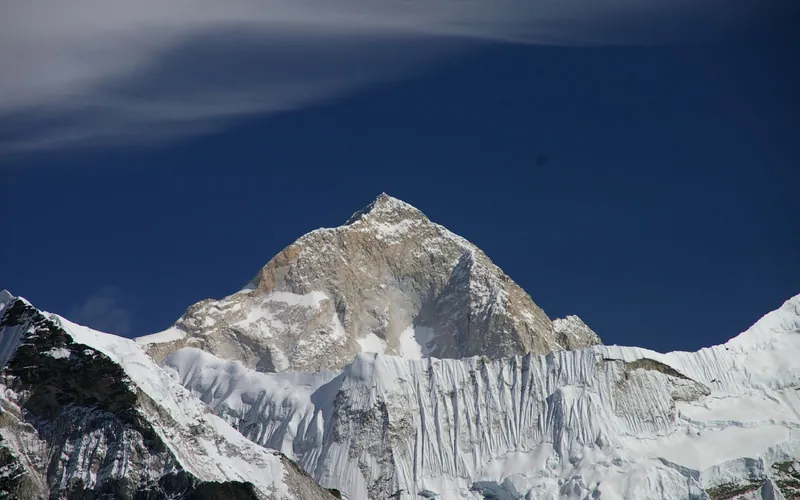
Makalu, at 8,485 meters (27,838 ft), is the fifth-highest mountain on Earth, located 19 km southeast of Mount Everest. An isolated four-sided granite pyramid, it is known for technical knife-edge ridges, severe exposure, and punishing weather, making it one of the most challenging eight-thousanders.
Featured Expedition Climbers
Abele Blanc
Born in the high alpine valleys of northwestern Italy, Abele Blanc developed into one of the country's most respected UIAGM mountain guides. Dedicated to clean high-altitude climbing, Blanc undertook multiple ascents...
Christian Kuntner
Christian Kuntner (January 14, 1962 – May 18, 2005) was an iconic Italian-South Tyrolean extreme alpinist. Renowned for climbing 13 of the 14 eight-thousanders without supplemental oxygen in lightweight alpine style,...
Documented Sources & Archival Citations
- Archival DatabaseThe Himalayan Database — The Expedition Archives of Elizabeth Hawley ↗(The Himalayan Database)
Supporting claim: Official expedition record, route logs, and summit outcomes for MAKA00103
- Alpine JournalHimalayan Journal & Alpine Club Archival Expedition Chronicles(The Himalayan Club & Alpine Club)
Supporting claim: Archival expedition narrative and historical documentation for 2000 Makalu climb
Share Exploration
Global Mountain Intelligence
✓ Link copied to clipboard!