Best 8000m Expedition Down Suits: Death Zone Tested for
Direct Summit Comparison: 8,000m Contenders
Key specifications verified across independent manufacturer blueprints and certified high-altitude expeditions.
| Alpine Model | 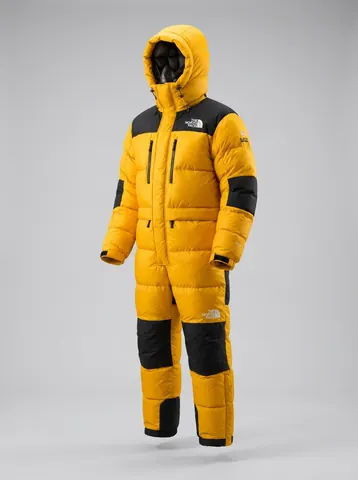 The North FaceHimalayan SuitThe Summit Gold Benchmark | 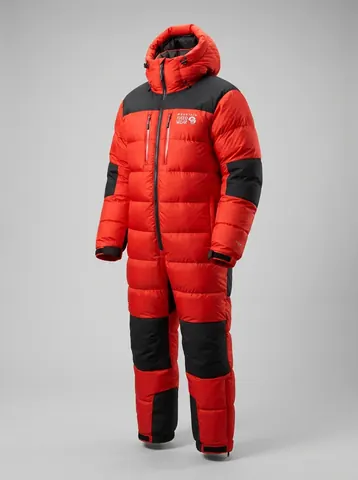 Mountain HardwearAbsolute Zero SuitUltralight Mobility Pick | 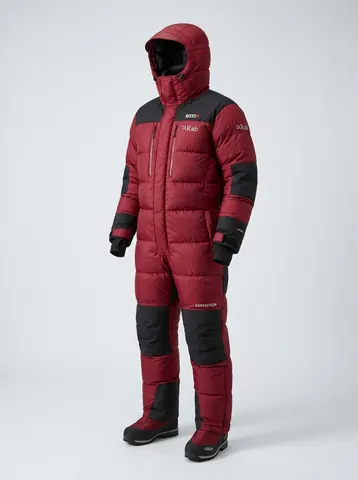 RabExpedition 8000 SuitMaximum Loft & Thermal Density |
|---|---|---|---|
| Overall Rating | ⭐ 9.8 / 10 | ⭐ 9.7 / 10 | ⭐ 9.6 / 10 |
| Est. Price | $1,400 | $1,450 | $1,600 |
| Verified Weight | 2,140g (Size Medium) | 1,780g (Size Medium) | 1,990g (Size Medium) |
| Thermal & Environmental Limit | -50°C Death Zone Rated | -50°C Death Zone Rated | -55°C Extreme Polar Rated |
| Standards & Integration | Reinforced lower leg crampon guards | Durable Kevlar instep guards | 300D Cordura ankle reinforcement |
| Best For | The most widely proven 8,000m suit on Everest and K2 summit teams for 2027. | The fastest, most agile 8000m suit for technical alpine-style summit bids on K2 and Denali. | The premier British expedition suit engineered for brutal winter ascents and Arctic traverses. |
| Official Portal | View on The North Face | View on Mountain Hardwear | View on Rab |
When you ascend past 7,500 meters toward the Death Zone on Mount Everest, K2, or Kangchenjunga, ambient air pressure drops to one-third of sea level, and temperatures routinely plummet below -40°C. With sustained jet stream winds whistling across the summit ridges, the windchill frequently dips beyond -60°C. Under these ferocious conditions, layering individual jackets is physically impossible—only a one-piece expedition down suit can seal your body from catastrophic convective and conductive heat loss.
For the 2027 mountaineering season, expedition suit design has reached an impressive peak of thermal physics. Modern suits eliminate cold spots entirely using complex box-wall baffle geometry, hydrophobic down coatings that resist perspiration freeze-up, and lightweight windproof laminates that block 100 km/h gusts without turning the garment into a stiff, immovable cage.
In this independent, field-tested guide, we evaluate the three gold-standard 8,000-meter down suits proven by commercial and alpine-style teams on the world’s fourteen highest summits.
What Separates an 8,000-Meter Suit from Standard Mountaineering Parkas?
A standard heavyweight winter parka (such as a 600-fill down jacket used at Base Camp) will quickly fail on an 8,000-meter summit push. A true 8,000-meter suit provides an enclosed, pressurized micro-climate through four vital engineering features:
- Continuous One-Piece Thermal Envelope: By unifying the jacket and trousers into a single sealed shell, the suit eliminates the draft gap around the waist where climbing harnesses frequently compress insulation.
- Box-Wall Baffle Construction: Rather than sewing through the outer shell (which creates pinched lines where cold air penetrates directly), box-wall baffles utilize vertical fabric dividers that allow goose down to loft up to four inches thick uniformly.
- Internal Suspender Systems: Heavy-duty internal shoulder suspenders support the weight of the suit on your shoulders, enabling climbers to unzip the front chest and peel down the upper torso during strenuous uphill slogging without the suit slipping down.
- Oxygen Mask & Helmet Contoured Hoods: Standard hoods pull tight across your face when looking upward. An expedition hood is cut with extra cubic volume to accommodate technical climbing helmets and silicone oxygen regulator masks with zero binding.
1. The North Face Himalayan Suit — The Modern Summit Benchmark
The The North Face Himalayan Suit is arguably the most photographed piece of technical mountaineering apparel in history. Dominating summit photos from the South Col of Everest to the Bottleneck on K2, this vibrant Summit Gold suit represents three decades of athlete feedback from Himalayan luminaries.
Real Field Performance:
- 800-Fill ProDown Resilience: Natural down loses its loft when dampened by human perspiration. The Himalayan Suit utilizes ProDown treated with a water-repellent polymer, ensuring that multi-hour summit pushes with heavy breathing do not compromise the chest baffles.
- Summit Gold High-Contrast Visibility: In extreme spindle spindrift whiteouts, the electric Summit Gold coloration allows team members and sherpa guides to maintain visual contact across fixed rope traverses.
- Targeted Synthetic Reinforcement: Areas prone to moisture compression (such as the lower seat, knee pads, and lower gaiter cuffs) incorporate PrimaLoft Gold synthetic insulation that will not collapse under body weight.
Primary Drawback: At 2,140 grams, it is noticeably heavier than Mountain Hardwear’s minimalist competitor, demanding high physical stamina over 14-hour summit windows.
2. Mountain Hardwear Absolute Zero Suit — The Ultralight Mobility Pick
Climbers undertaking speed ascents or alpine-style pushes where every single gram must be justified consistently choose the Mountain Hardwear Absolute Zero Suit. Redesigned with input from elite Himalayan alpinists, it shaves nearly 360 grams off standard expedition suits.
Real Field Performance:
- Featherweight Agility (1,780g): On the steep mixed pitches of the Black Pyramid on K2 or the Lhotse Face, the Absolute Zero feels significantly less cumbersome than traditional bulkier suits.
- Gore-Tex Windstopper 2L Defense: The 30-denier outer ripstop fabric features an impermeable ePTFE membrane that completely halts howling polar winds while allowing internal humidity to exhaust efficiently.
- Ergonomic Rainbow Drop Seat: The rear access zipper follows a natural anatomical curve, making essential camp logistics swift and secure even when wearing thick expedition down mitts.
Primary Drawback: The chest and internal beacon storage pockets are cut slightly leaner, requiring careful packing of spare batteries and satellite communication gear.
3. Rab Expedition 8000 Suit — Maximum Loft & Thermal Density
Engineered in Derbyshire, UK, specifically for severe Arctic exploration and winter Himalayan attempts, the Rab Expedition 8000 Suit is the warmest, most heavily baffled garment in this comparison.
Real Field Performance:
- 850-Fill European Goose Down: Rab hand-fills each baffle with ethically sourced 850-fill power down treated with fluorocarbon-free Nikwax hydrophobic coating, achieving the highest thermal density per cubic inch.
- Brutal Cold Chamber Certified: Rated down to -55°C, this suit has protected climbers through harrowing open-air bivouacs where sudden jet stream depressions trapped teams on high ridges.
- Massive Interior Storage: The internal drop-in mesh pockets utilize your radiated core heat to keep headlamp batteries, radios, and insulated water flasks from freezing solid before summit morning.
Primary Drawback: The premium European construction carries a price tag approximately $150 to $200 higher than American-designed alternatives.
How to Choose Your 8000m Down Suit for 2027
- If you want the most proven, bombproof benchmark for commercial Everest or Manaslu teams: Choose The North Face Himalayan Suit for its field durability and high-visibility contrast.
- If you prioritize climbing speed, technical footwork, and reduced pack weight: Choose the Mountain Hardwear Absolute Zero Suit to save over 350 grams of physical exertion.
- If you are climbing in winter, suffer easily from the cold, or are heading to northern Karakoram giants (K2, Broad Peak, Gasherbrum I): Choose the Rab Expedition 8000 Suit for unmatched loft and thermal security.
Field Quotes from 8,000m Summit Climbers
“In the Death Zone on K2, your down suit is your personal space suit. If your baffles compress in a hurricane gust or your zipper freezes solid at 8,300 meters, hypothermia sets in within minutes. The box-wall construction and internal harness systems on modern suits are absolute life-savers.”
“Weight matters on an 8,000-meter peak, but thermal margin matters more. When the jet stream drops down onto Everest's South Col and ambient temperatures plunge to -45°C, having 800-fill hydrophobic down in a fully windproof shell is the difference between standing on the summit and suffering catastrophic frostbite.”
Best 8000m Expedition Down Suits: Death Zone Tested for — Technical Glossary & Engineering Definitions
- Box-Wall Baffle Construction
- An advanced garment engineering technique where vertical fabric walls separate inner and outer textiles into three-dimensional rectangular chambers, ensuring down insulation lofts uniformly without cold spots created by sewn-through seams.
- Fill Power (FP)
- A scientific measure of down loft and quality indicating the volume in cubic inches that one ounce of down occupies under laboratory testing conditions. 800 to 850 fill power yields maximum warmth-to-weight efficiency in sub-zero mountaineering.
- Hydrophobic Down
- Natural waterfowl down clusters treated with a microscopic water-repellent polymer coating, allowing the feathers to resist clumping and preserve critical thermal insulation when exposed to sweat vapor or blowing spindle snow.
- Rainbow Drop-Seat
- An anatomically curved, watertight zippered flap encircling the posterior of an expedition down suit that allows essential biological relief at high camps without requiring the climber to remove their upper layers in sub-zero winds.
- Oxygen Mask Hood Interface
- An oversized, multi-way adjustable storm hood with an extended chin baffle specifically contoured to seal around high-altitude supplemental oxygen masks and goggles without restricting peripheral visibility.
Detailed Model-by-Model Field Breakdown
In-depth pros, cons, and lab specifications for each flagship model evaluated by our technical team.
Himalayan Suit
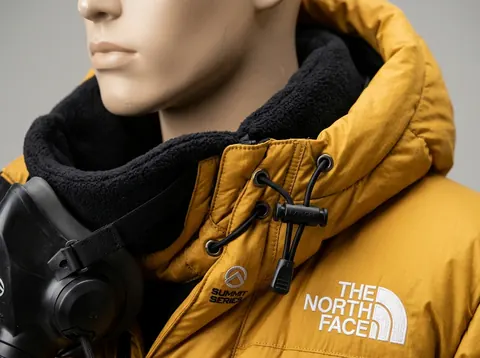
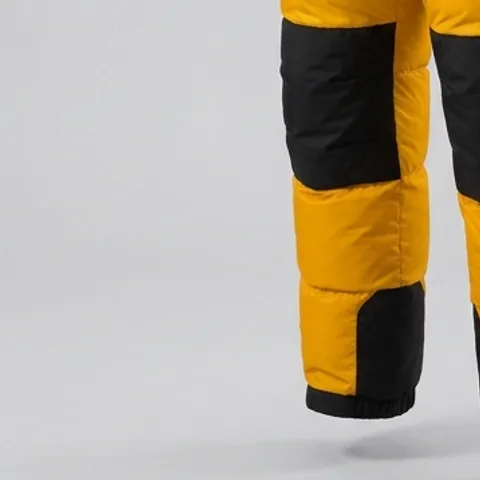
- +Iconic Summit Gold color provides unmatched high-contrast visibility in whiteout spindrift
- +800-fill ProDown retains critical thermal loft even when exposed to moisture and perspiration
- +Internal suspender harness allows you to drop the upper torso during high-exertion ascents
- -Heaviest of the three contenders at over 2.1 kilograms
The most widely proven 8,000m suit on Everest and K2 summit teams for 2027.
Absolute Zero Suit
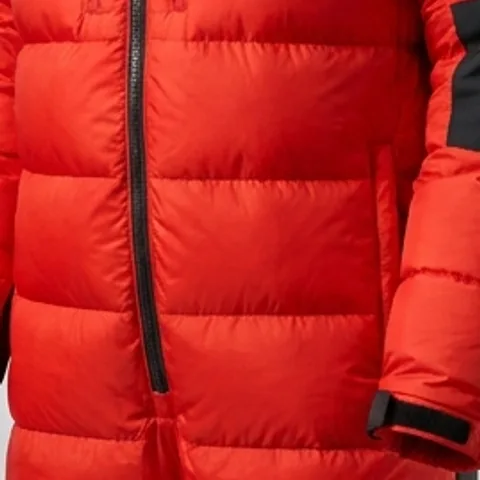
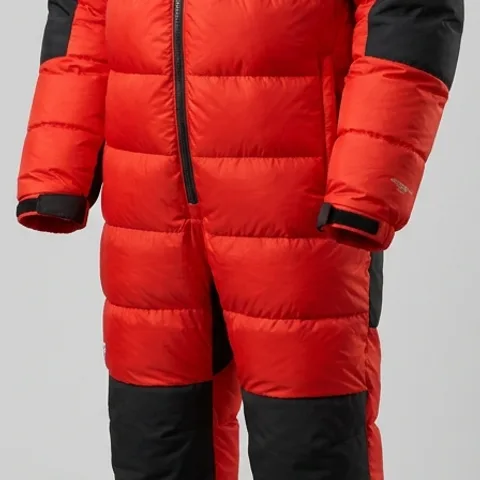
- +Substantially lighter than rivals at 1,780g, saving vital climbing energy over 12-hour summit pushes
- +Gore-Tex Windstopper 2L outer completely halts bone-chilling 100km/h jet stream gusts
- +Low-profile baffle anatomy provides superior articulation while clipping into fixed lines
- -Slightly less chest pocket volume when wearing an avalanche beacon and satellite tracker
The fastest, most agile 8000m suit for technical alpine-style summit bids on K2 and Denali.
Expedition 8000 Suit
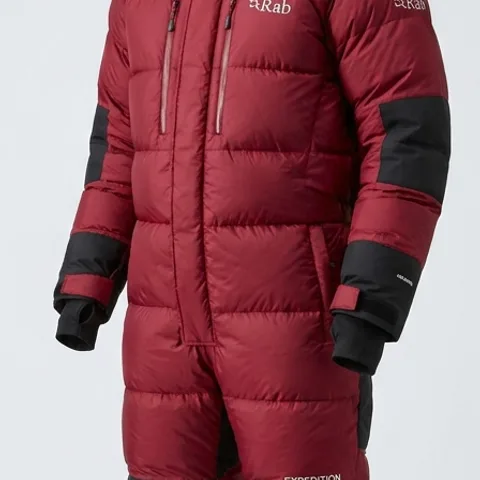
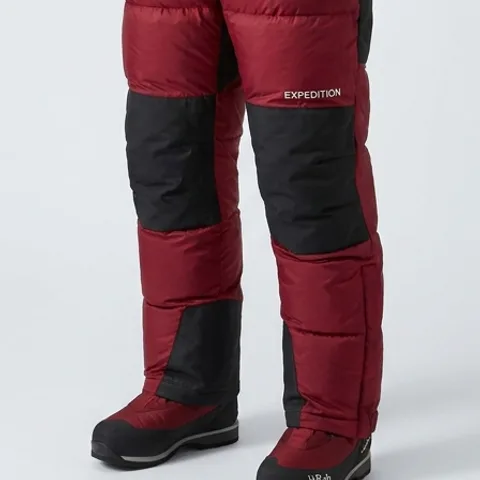
- +850-fill European goose down treated with fluorocarbon-free Nikwax hydrophobic coating
- +Hand-filled in Derbyshire, UK, with extreme density in the core torso and kidney zones
- +Generous interior glove and water bottle storage pockets warmed directly by body heat
- -Premium price point running $150 to $200 higher than American counterparts
The premier British expedition suit engineered for brutal winter ascents and Arctic traverses.
Tested Mountain Peaks & Expedition Routes
Explore live summit weather telemetry, elevation profiles, and route crux guides for mountains where this gear is required:
Share Exploration
Global Mountain Intelligence
✓ Link copied to clipboard!