Best Satellite Communicators for Mountaineering:
Direct Summit Comparison: 8,000m Contenders
Key specifications verified across independent manufacturer blueprints and certified high-altitude expeditions.
| Alpine Model | 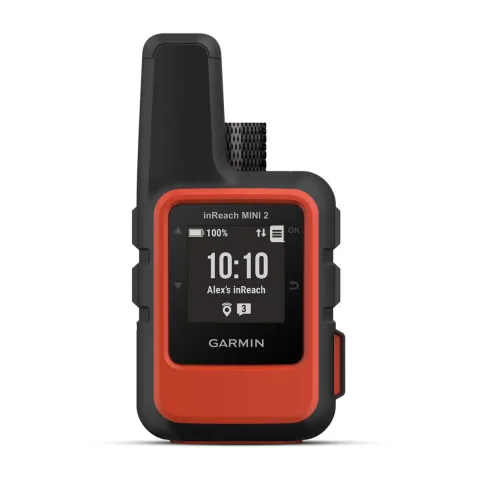 GarmininReach Mini 2The Ultralight Alpine Standard | 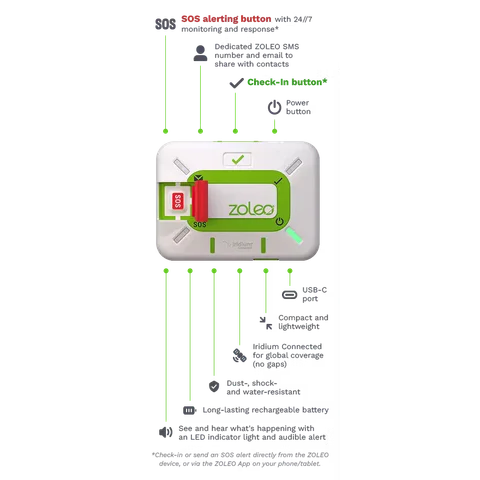 ZOLEOSatellite CommunicatorBest Value & Seamless Messaging | 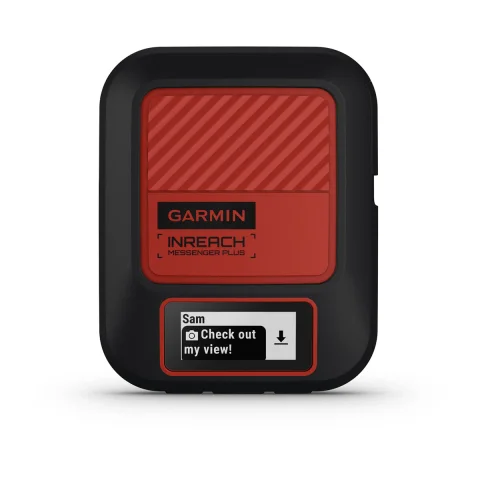 GarmininReach Messenger PlusNext-Gen Photo & Voice SOS |
|---|---|---|---|
| Overall Rating | ⭐ 9.8 / 10 | ⭐ 9.6 / 10 | ⭐ 9.7 / 10 |
| Est. Price | $400 | $200 | $500 |
| Verified Weight | 100g (3.5 oz) | 150g (5.3 oz) | 114g (4.0 oz) |
| Thermal & Environmental Limit | -20°C to 60°C Operating Range | -20°C to 55°C Operating Range | -20°C to 60°C Operating Range |
| Standards & Integration | Carabiner lanyard loop attachment | Mil-Spec drop-tested casing | Reinforced IPX7 waterproof body |
| Best For | The indisputable gold standard for lightweight alpinists, ski mountaineers, and solo climbers for 2027. | The most cost-effective and seamless communication tool for expedition teams and multi-day trekking parties. | The most technically advanced satellite messenger on the planet, revolutionizing medical triage in remote mountains. |
| Official Portal | View on Garmin | View on ZOLEO | View on Garmin |
When climbing in the Karakoram, the Himalayas, or the Alaska Range, leaving cellular reception behind is an immediate reality within hours of departing the trailhead. While isolating yourself in the wilderness is part of the alpine ethos, an unforeseen rockfall injury, sudden pulmonary edema, or a catastrophic blizzard requires immediate external intervention. In the modern era, relying on whistle blasts or flares has been superseded by satellite communicators.
For the 2027 climbing season, satellite technology has evolved far beyond basic one-way beacon pings. Today’s devices provide two-way interactive SOS messaging, real-time breadcrumb tracking for family back home, point-specific satellite weather forecasts, and now even voice notes and photos transmitted through low-Earth orbit constellations.
In this field-tested guide, we evaluate the three leading satellite communicators trusted by elite mountaineering expeditions across the globe.
What Makes a Satellite Communicator Mountaineering-Grade?
Not all satellite messengers are engineered to survive alpine summits. A true mountaineering communicator must meet five uncompromising requirements:
- Iridium Pole-to-Pole Network: Geostationary satellites (like those used by some legacy systems) hover over the equator and lose line-of-sight in northern latitudes (like Alaska) or deep glacial valleys. The Iridium LEO constellation orbits pole-to-pole, guaranteeing reception even when trapped beneath a sheer 2,000-meter north face.
- Dedicated Physical SOS Button: In sub-zero cold or while suffering traumatic injury, touchscreens fail. A physical button protected by a mechanical safety latch that you can depress with thick mittens is essential.
- Sub-Zero Battery Chemistry: Cold temperatures rapidly drain standard lithium-ion cells. Mountaineering units feature optimized low-power firmwares that provide 10 to 25 days of continuous 10-minute GPS tracking at -20°C.
- Interactive Two-Way Triage: Knowing that your SOS was received and being able to explain to search-and-rescue whether you need a ground team with a litter or a high-altitude helicopter with supplemental oxygen is paramount.
- Standalone Functionality: If your smartphone battery freezes or gets dropped down a crevasse, your satellite communicator must still be able to trigger an SOS, check satellite acquisition, and navigate back to camp on its own.
1. Garmin inReach Mini 2 — The Ultralight Alpine Standard
The Garmin inReach Mini 2 is the undisputed benchmark in lightweight alpine safety. Weighing just 100 grams, it is small enough to clip directly to your backpack shoulder strap or harness loop where it remains instantly accessible.
Real Field Performance:
- Featherlight Footprint (100g): On technical mixed alpine routes where ounces translate to speed, the Mini 2 adds practically zero noticeable weight.
- TracBack Navigation: In sudden whiteouts where blowing snow erases crampon tracks, the Mini 2 displays a directional arrow guiding you along your exact incoming GPS route back to the safety of high camp.
- Garmin Messenger App Synergy: When paired with your smartphone, texting feels as seamless as standard SMS, automatically switching to satellite only when cellular reception disappears.
Primary Drawback: Composing text messages directly on the device using the scroll buttons is slow and requires patience if your phone is unavailable.
2. ZOLEO Satellite Communicator — Best Value & Seamless Messaging
The ZOLEO Satellite Communicator takes a communication-first approach, bridging the gap between cellular networks and satellite orbits at a significantly lower hardware entry cost of just $200.
Real Field Performance:
- Dedicated SMS & Email Address: Unlike other systems where outbound numbers change, ZOLEO assigns you a permanent dedicated phone number and email address, allowing contacts to message you directly without waiting for you to initiate first.
- Automated Network Fallback: If you have cellular signal at base camp, ZOLEO routes messages through cellular data; the second you step into the dead zone on the glacier, it silently switches to the Iridium satellite network without missing a text.
- One-Touch Check-In: A large physical check-in button on the front lets you broadcast an “I’m OK” message with GPS coordinates to five contacts instantly with one click.
Primary Drawback: The unit lacks a built-in display screen; reading and replying to incoming messages requires an active Bluetooth connection to a powered smartphone.
3. Garmin inReach Messenger Plus — Next-Gen Photo & Voice SOS
Released as the newest evolution in satellite emergency hardware, the Garmin inReach Messenger Plus introduces capabilities that were previously science fiction in sub-zero mountaineering.
Real Field Performance:
- Voice Message & Photo Transmissions: For the first time, climbers can send a 30-second voice memo or compressed photo through the Iridium network. For medical emergencies (such as photographing frostbite progression or letting a flight doctor hear a patient’s lung crackles from HAPE), this represents a revolutionary breakthrough.
- Colossal Battery Life (600 Hours): The internal battery delivers up to 25 days of 10-minute tracking, outlasting multi-week Himalayan siege expeditions without recharging.
- Reverse Power Bank Feature: In emergency bivouacs where your smartphone battery has died from cold, you can plug your phone into the Messenger Plus to provide enough juice to compose messages and review maps.
Primary Drawback: At $500 hardware cost and slightly higher subscription requirements for high-bandwidth media, it requires a larger upfront financial commitment.
How to Choose Your Satellite Communicator for 2027
- If you are a technical alpinist, ski mountaineer, or fast-and-light climber: The Garmin inReach Mini 2 remains the gold standard for minimal bulk and autonomous TracBack survival.
- If you are leading expedition base camps, trekking groups, or want the lowest hardware cost: The ZOLEO Satellite Communicator provides the most intuitive and affordable messaging bridge.
- If you want maximum battery endurance, reverse phone charging, and voice/photo medical triage: The Garmin inReach Messenger Plus delivers unprecedented emergency capability for 2027.
Field Quotes from 8,000m Summit Climbers
“When an avalanche struck our team near Camp 1 on Denali, cellular networks were completely non-existent. Being able to text Garmin Response with our exact coordinates and medical status reduced our helicopter evacuation window from twenty-four hours to under three. A satellite messenger is not optional gear—it is an alpine helmet for your lifeline.”
“In the Karakoram, weather changes in twenty minutes. Receiving updated barometric pressure and wind velocity forecasts over satellite at 6,500 meters allowed us to retreat before a 120 km/h blizzard engulfed the ridge. It saved our lives.”
Best Satellite Communicators for Mountaineering: — Technical Glossary & Engineering Definitions
- Iridium Satellite Constellation
- A commercial system of 66 active cross-linked low-Earth orbit (LEO) satellites providing 100% pole-to-pole global coverage without coverage gaps, critical for communications in deep mountain valleys and polar latitudes.
- Two-Way Interactive SOS
- An emergency protocol where the user receives confirmation that their distress alert was received, can exchange text messages with 24/7 rescue coordinators, describe specific injuries, and receive estimated evacuation helicopter arrival times.
- TracBack Navigation
- A firmware-level GPS feature that continuously records breadcrumb track points and allows the mountaineer to retrace their exact route back to camp in total whiteout spindrift conditions.
- Reverse Charging
- The electronic capability of a satellite communicator's internal lithium battery to transfer emergency power to an external smartphone via USB-C to ensure phone functionality during rescue coordination.
- Dark Sky Meteorology Telemetry
- High-resolution satellite weather forecasts delivered directly to your device showing temperature, wind speed, precipitation probability, and barometric pressure trends for your exact GPS coordinates without cellular data.
Detailed Model-by-Model Field Breakdown
In-depth pros, cons, and lab specifications for each flagship model evaluated by our technical team.
inReach Mini 2
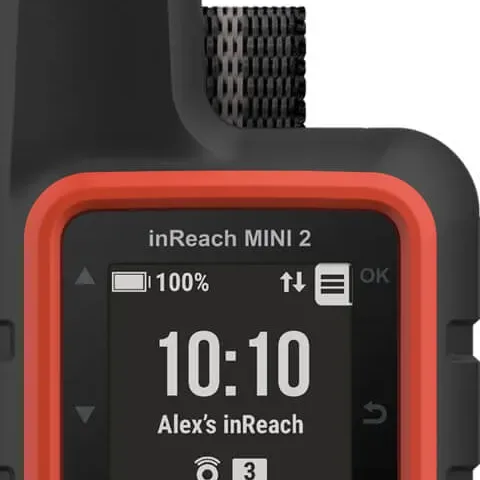
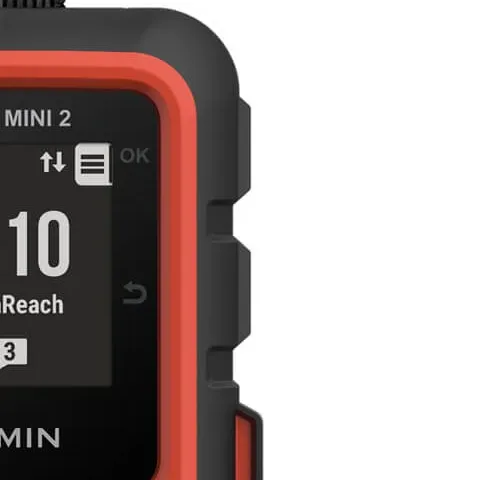
- +Featherlight 100g footprint clips unnoticed to shoulder straps or harness gear loops
- +Up to 14 days of battery life in standard 10-minute tracking mode with sky view
- +TracBack routing guides you step-by-step along your original GPS track in sudden whiteouts
- -Virtual on-screen keyboard is slow for standalone texting without a smartphone
The indisputable gold standard for lightweight alpinists, ski mountaineers, and solo climbers for 2027.
Satellite Communicator
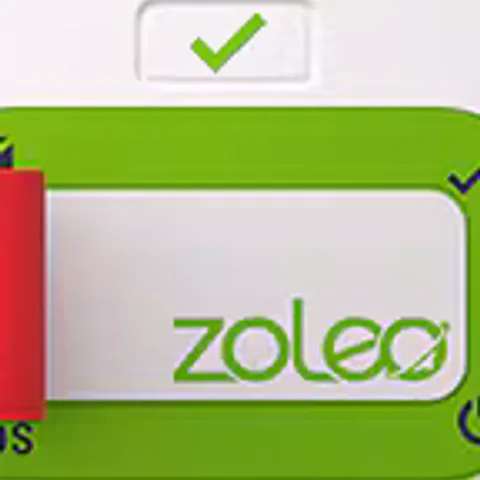
- +Unbeatable $200 hardware entry price point making satellite safety accessible to all climbers
- +Unique dedicated SMS number and email that transitions automatically between Wi-Fi, cellular, and satellite
- +Simple one-touch Check-In button sends pre-set 'I am OK' coordinates with zero phone interaction
- -No integrated screen; dependent on a connected smartphone for reading and composing incoming text messages
The most cost-effective and seamless communication tool for expedition teams and multi-day trekking parties.
inReach Messenger Plus
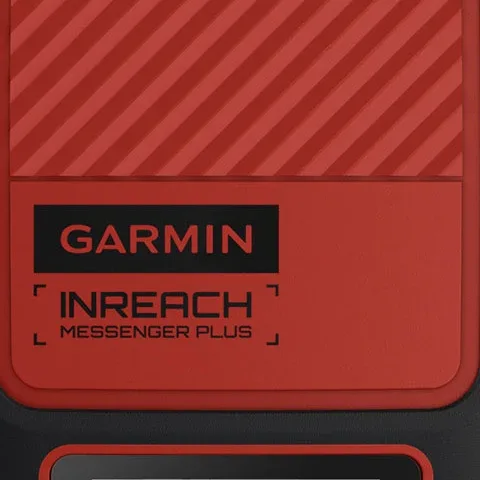
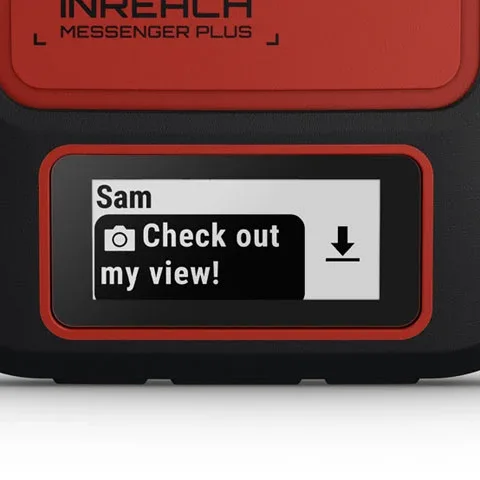
- +Revolutionary capability to send 30-second voice messages and photos over the Iridium satellite network
- +Gigantic battery life delivering up to 600 hours (25 days) of continuous 10-minute tracking
- +Acts as a reverse power bank to jumpstart your dying smartphone battery in emergency bivouacs
- -Voice and photo transmissions consume more plan data and require higher monthly tiers
The most technically advanced satellite messenger on the planet, revolutionizing medical triage in remote mountains.
Tested Mountain Peaks & Expedition Routes
Explore live summit weather telemetry, elevation profiles, and route crux guides for mountains where this gear is required:
Share Exploration
Global Mountain Intelligence
✓ Link copied to clipboard!