Vladimir Bashkirov
Also known as: Vladimir Bashkirov (b. 1952)
Vladimir Bashkirov (born 1952) is an accomplished Russian high-altitude mountaineer documented in the Himalayan Database with 8 verified summits across 8 expeditions, including 7 ascents achieved without supplemental bottled oxygen.
Mountain Safety & Conditions Disclaimer: High-altitude climbing, glacial travel, and technical ascents entail severe objective risks including avalanches, serac collapses, rapid weather collapse, and altitude illness. Historical route descriptions and summit claims on Mountainity reflect documented archival sources and must not be used as live operational safety assessments. Local regulations, permits, and physical glacial topography change continuously.
Peer Review: Senior Editorial Board & Historical Reviewers • Editorial Standards
Biographical Record & Archival Chronicle
Vladimir Bashkirov (1952 – May 27, 1997) was an iconic Russian mountaineer and Master of Sport. Renowned for climbing five eight-thousanders within a single 12-month period without bottled oxygen, Bashkirov tragically died of high-altitude cardiac arrest during his descent from Lhotse in 1997.
Notable Milestones & Key Ascents (3)
Recorded 8 verified Himalayan summits in the Himalayan Database across 8 expeditions
Completed 7 high-altitude ascents without supplemental bottled oxygen
Guided and summitted across major Himalayan massifs including Ama Dablam, Annapurna South, Cho Oyu
Key Statistics & Topographic Figures
- Archive Classification
- MOUNTAINEERS
Mountainity Knowledge Corpus
- Verification Status
- Editorially Verified
Archival Standards
- Citation Standard
- Primary Source Verified
Alpine Research Desk
Defined Alpine Terminology & Concepts
- Archival Integrity
- The standard of verifying historical mountain facts, summit claims, and altitudes using primary expeditions journals and geodetic measurements.
Frequently Asked Questions: Vladimir Bashkirov
What historical significance does this mountaineer hold?
Vladimir Bashkirov represents an essential chapter in global mountaineering heritage, verified through contemporary expedition journals and archival sources.
How are the facts and records for Vladimir Bashkirov verified?
All records are checked against peer-reviewed journals, national alpine clubs, geodetic surveys, and the Mountainity Archival Integrity Policy.
Death Zone Summits (4 of 14)
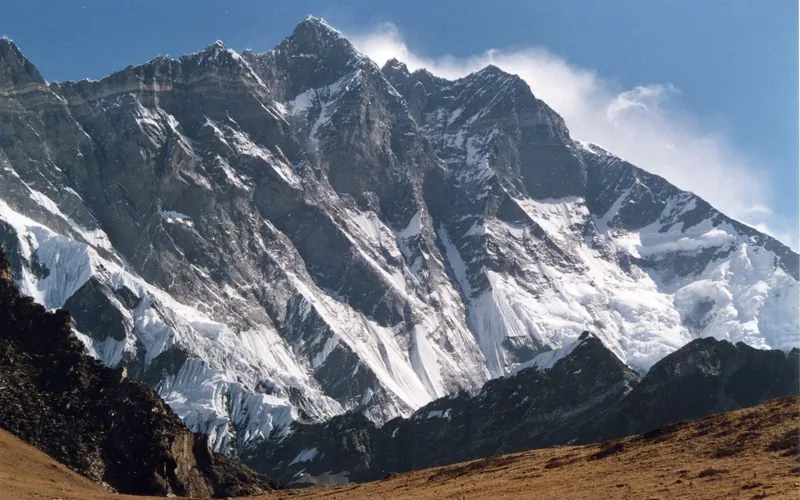


Lhotse
Lhotse, at 8,516 meters (27,940 ft), is the fourth-highest mountain on Earth, connected directly to Mount Everest via the South Col. Renowned for its sheer 3,200-meter South Face, one of the most imposing rock and ice walls in alpinism, the standard route tackles the grueling Lhotse Couloir from the Western Cwm.
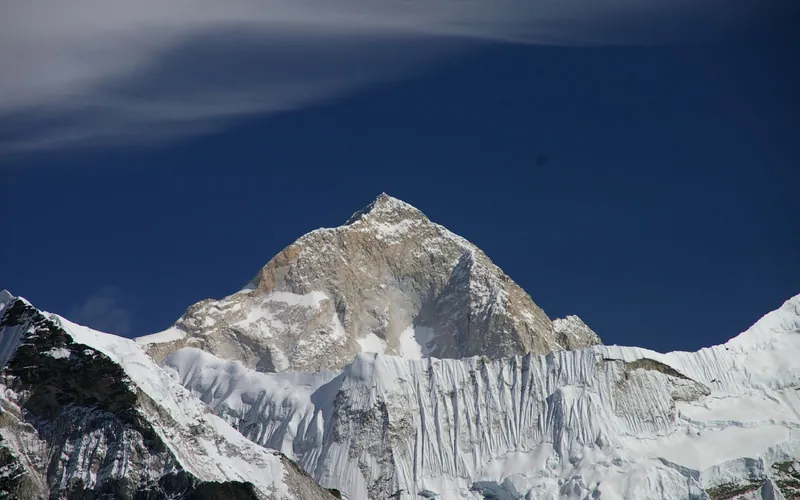
Makalu
Makalu, at 8,485 meters (27,838 ft), is the fifth-highest mountain on Earth, located 19 km southeast of Mount Everest. An isolated four-sided granite pyramid, it is known for technical knife-edge ridges, severe exposure, and punishing weather, making it one of the most challenging eight-thousanders.
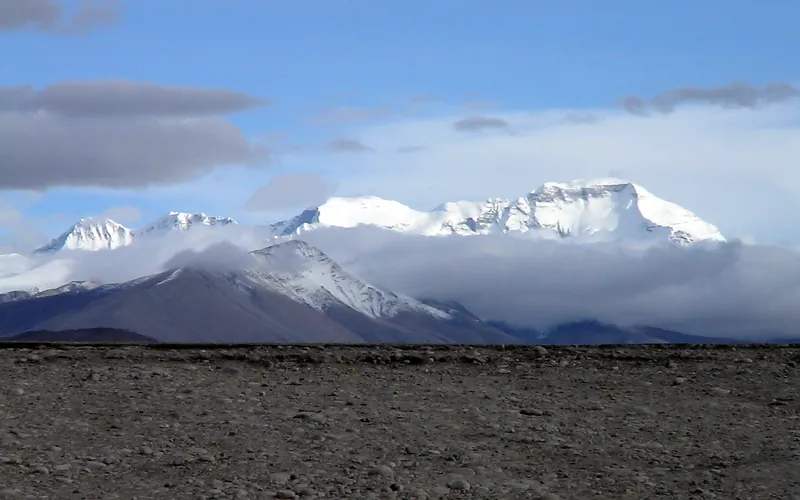
Cho Oyu
Cho Oyu, at 8,188 meters (26,864 ft), is the sixth-highest mountain in the world, situated 20 km west of Mount Everest. Meaning 'Turquoise Goddess' in Tibetan, it stands on the glaciated Nangpa La trade route between Nepal and Tibet. Its moderate northwest slopes make it the most accessible 8,000-meter peak.
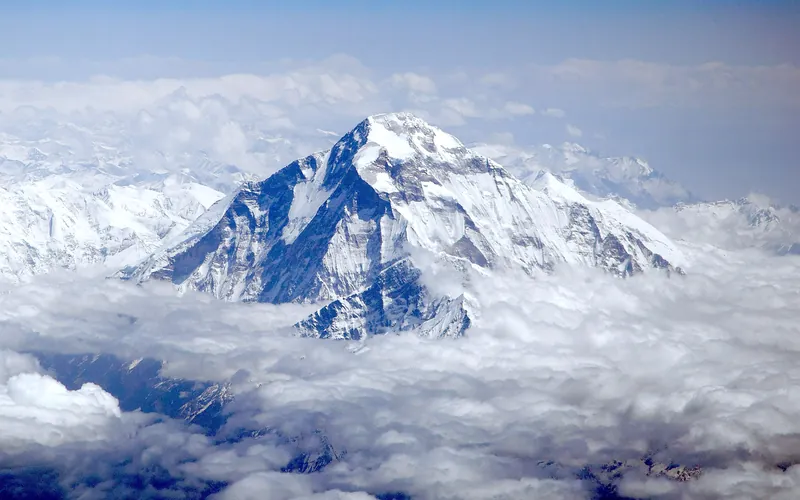
Dhaulagiri I
Dhaulagiri I, at 8,167 meters (26,795 ft), is the seventh-highest mountain on Earth and the highest peak situated entirely within Nepal. Rising steeply above the Kali Gandaki Gorge—the deepest gorge on Earth—opposite Annapurna, Dhaulagiri forms a staggering 7,000-meter vertical rise from the river valley.
Associated Mountain Peaks (2)
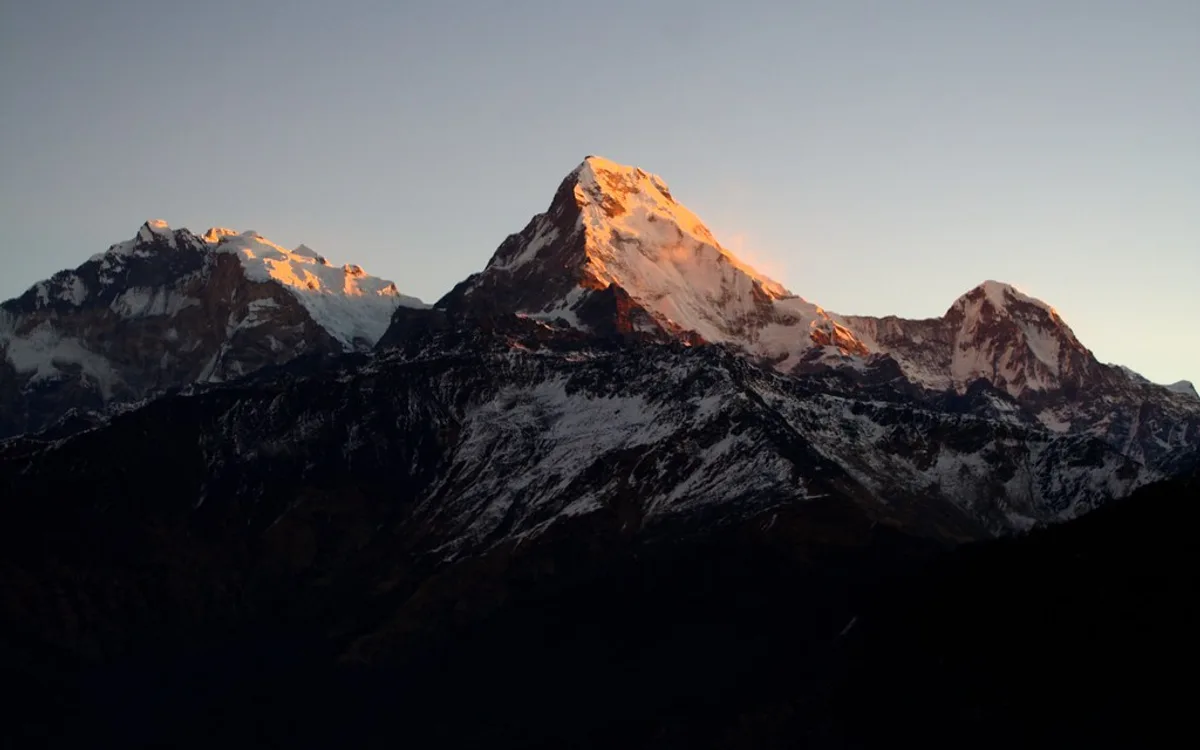
Annapurna South
Annapurna South rises to an official surveyed elevation of 7219 meters (23,684 feet) above sea level in the Annapurna mountain range of Gandaki Province, north-central Nepal. Also known as Moditse, the peak stands prominently at the southwestern anchor of the Annapurna Sanctuary, rising abruptly above the Modi Khola valley with steep rock headwalls, complex icefalls, and sweeping glaciated ridgelines. The mountain's geography features severe glaciated flanks feeding the Annapurna Sanctuary glacial basin. Climbers approaching Annapurna South typically establish base camps within the Annapurna Conservation Area, navigating through the Modi Khola gorge before ascending mixed rock and snow buttresses. The first ascent of Annapurna South was accomplished by the Academic Alpine Club of Kyoto (Kyoto University) expedition led by Dr. Haruo Higuchi, as chronicled by deputy leader Shoichiro Uyeo in The Alpine Journal Vol. 70 (1965). On October 13, 1964, a first assault team comprising Hiromichi Yoshino, Masaaki Kimura, and Yutaka Ageta reached the central peak at 3:40 p.m., discovering that the southern and northern summits were higher. Two days later, on October 15, 1964, deputy leader Shoichiro Uyeo and Sherpa Mingma Tsering pushed beyond the central peak and reached the true southernmost summit (7,219 m) at 12:30 p.m., establishing the maiden first ascent of the mountain. Subsequent technical ascents, including routes on the formidable South Face, have cemented its reputation as a serious high-altitude alpine objective. Documented ascents and attempts on Annapurna South highlight the technical difficulty and sustained exposure typical of 7,000-meter peaks in this subrange. Variable weather systems, combined with sudden wind shifts and avalanche hazards, make summit pushes demanding undertakings that require seasoned alpine judgment.
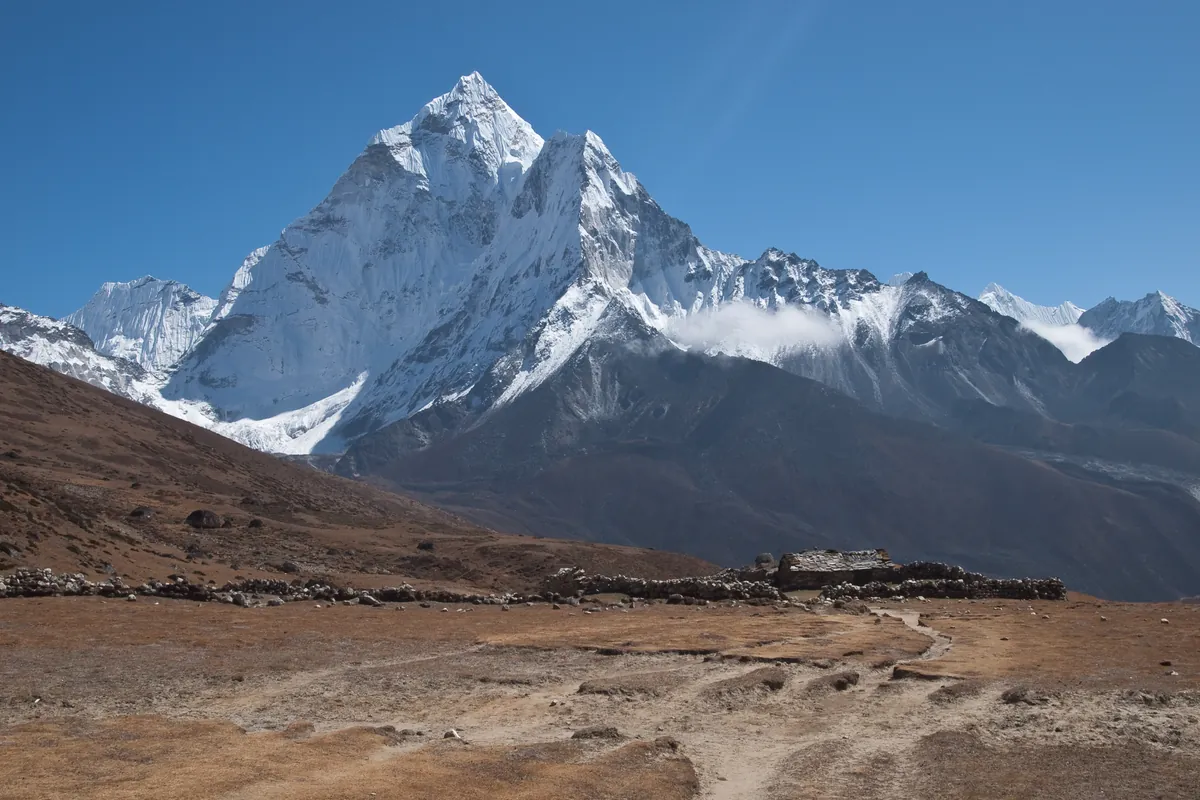
Ama Dablam
Ama Dablam is an iconic 6,812-meter (22,349 ft) mountain in the eastern Himalayan region of Nepal. Renowned worldwide for its soaring granite ridges and hanging glaciers, it is often called the Matterhorn of the Himalayas. Its name translates as 'Mother's Necklace', referring to the hanging serac resembling a traditional Sherpa pendant. Sir Edmund Hillary conceived and led the 1960–1961 Silver Hut Expedition that unlocked the mountain. On March 13, 1961, Hillary's assault team achieved the historic first ascent via the Southwest Ridge. It remains one of the most aesthetic and technically demanding alpine ascents in the world.
Geographical Footprint & Mountain Ranges (1)
Contemporary Alpinists & Regional Peers (4)
Notable climbers sharing Russian alpine heritage or active during contemporary climbing epochs.
Alex Abramov
Alexander (Alex) Abramov (born 1964) is a premier Russian high-altitude mountaineer and founder/president of the 7 Summits Club. Leading over two decades of commercial expeditions, Abramov achieved 9 summits across 21...
Alexei Bolotov
Alexei Bolotov (January 20, 1963 – May 15, 2013) was a world-class Russian extreme mountaineer. A two-time Piolet d'Or winner for the direct North Face of Jannu and the West Face of K2, Bolotov achieved 10 Himalayan...
Gleb Sokolov
Gleb Sokolov (born 1953) is a legendary Russian extreme alpinist and Master of Sport. Renowned for setting the speed record for climbing all five Soviet Snow Leopard peaks and pioneering direct routes on K2's West Face...
Valeri Pershin
Valeri Pershin (born 1948) is a legendary Russian extreme mountaineer and Honoured Master of Sports. A veteran of historic Soviet and Russian Himalayan expeditions, Pershin achieved 7 summits across 10 expeditions,...
Documented Sources & Archival Citations
- Archival DatabaseThe Himalayan Database — Climber Archive (Vladimir Bashkirov) ↗(Elizabeth Hawley / The Himalayan Database)
Supporting claim: Historical ascent records, summit chronology, and expedition participation across 8 high-altitude campaigns
- Archival DatabaseHimalayan Mountaineering Expedition Archive(Nepal Mountaineering Association & Himalayan Database)
Supporting claim: Certified career summit total (8 summits) and high-altitude credentials
Share Exploration
Global Mountain Intelligence
✓ Link copied to clipboard!