Tutse (Peak 6)
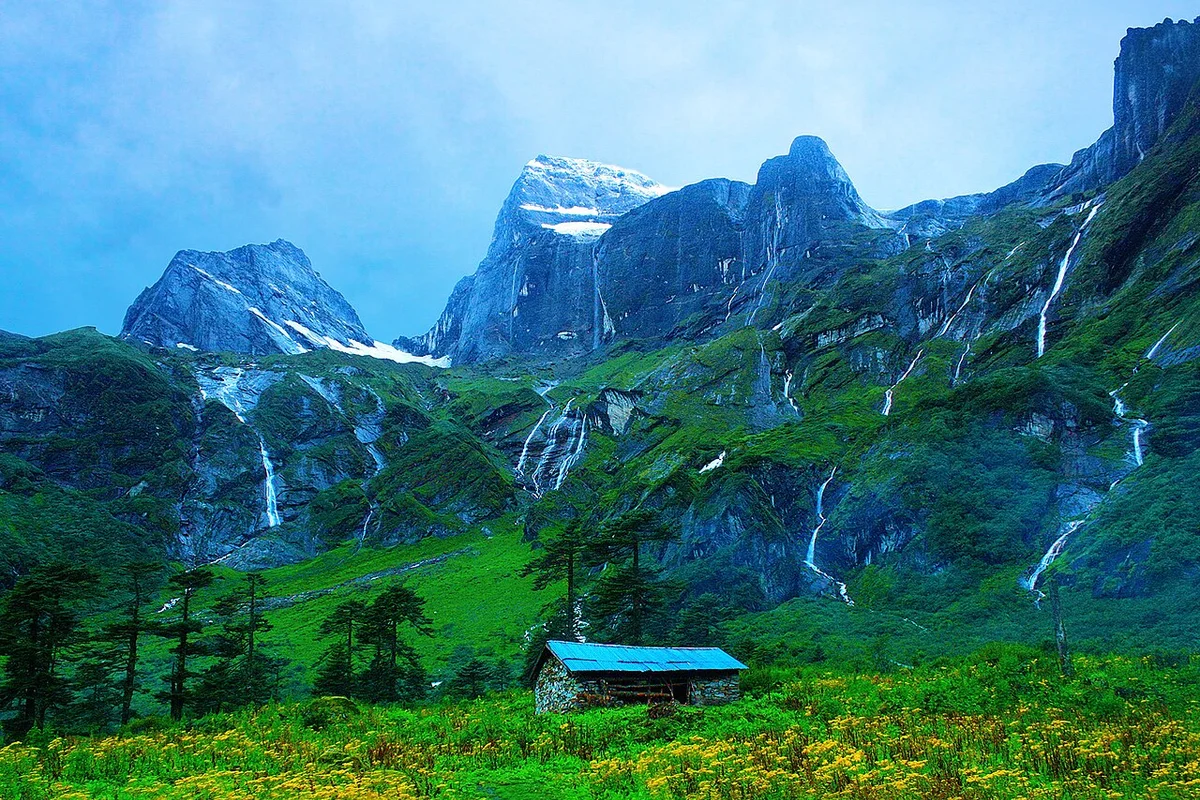
Tutse (Peak 6) is a majestic 6,000-meter peak rising to 6758 meters in the Himalaya (Koshi, Nepal). Documented in international mountaineering archives following its historic first ascent in 1981 by British team led by Doug Scott (United Kingdom), the peak presents technical ridgelines and high-altitude alpine terrain.
 Nepal
Mountain Safety & Conditions Disclaimer: High-altitude climbing, glacial travel, and technical ascents entail severe objective risks including avalanches, serac collapses, rapid weather collapse, and altitude illness. Historical route descriptions and summit claims on Mountainity reflect documented archival sources and must not be used as live operational safety assessments. Local regulations, permits, and physical glacial topography change continuously.
Peer Review: Senior Editorial Board & Historical Reviewers • Editorial Standards
Historic First Ascent
1981Key Statistics & Topographic Figures
- Official Elevation
- 6,758 m (22,172 ft)
Official Cartographic Survey
- Topographic Prominence
- 610 m
Relief Metric
- First Ascent Date
- 1981
British team led by Doug Scott
- Territory Codes
- NP
Sovereignty
Documented Historical Testimony
“The mountains are calling, and we must honor their grandeur with truth and historical precision.”
Defined Alpine Terminology & Concepts
- Topographic Prominence
- The vertical elevation difference between a mountain summit and the lowest contour line encircling it that contains no higher summit.
- Alpine Zone
- The ecological and climatic zone above the treeline characterized by severe weather, glaciers, and permanent snow cover.
Tutse (Peak 6) Mountain Weather Forecast
Meteorological Feed Unavailable
Unable to reach meteorological station endpoint. Please verify your connection or retry.
Loading condition...
Target Elevation: 6,758 mSafe summit ridge climbing requires gusts below 40 km/h.
Evaluating thermal loss...
Tracking glacial freezing boundary...
Assessing whiteout and cloud immersion hazards...
High-altitude snow glare requires Category 4 glacier glasses to prevent snow blindness.
Evaluating oxygen partial pressure...
Detailed 14-Day Summit Window & Weather Timeline
Explore day-by-day summit push safety windows, wind shear analysis, and extended multi-day forecasts for Tutse (Peak 6).
Explore Tutse (Peak 6) (6,758 m) in Interactive 3D
Inspect steep glacial walls, hanging seracs, ridge approaches, and elevation relief with 360° rotation and terrain tilt.
Plan Your Tutse (Peak 6) Expedition Budget & Flights
Model verified government royalties, commercial guide packages, equipment allocations, and compare gateway flights worldwide.
Search & Compare Expedition Flights
Find available flight connections to the airports serving your next mountain adventure.
Tutse (Peak 6) Mountaineering Gear Checklist
Customise your equipment plan across 17 technical categories tailored to Tutse (Peak 6)'s 6,758 m altitude profile, technical route cruxes, and season.
Frequently Asked Questions: Tutse (Peak 6)
What is the verified elevation of Tutse (Peak 6)?
Tutse (Peak 6) has an official elevation of 6,758 meters (22,172 feet) above sea level (Official Cartographic Survey).
When was Tutse (Peak 6) first climbed?
Tutse (Peak 6) was first summited on 1981 by British team led by Doug Scott.
What mountain range and territories encompass Tutse (Peak 6)?
Tutse (Peak 6) is situated in Koshi across territory codes NP.
Documented Sources & Archival Citations
- Archival DatabaseThe Himalayan Database — Peak Archive (Tutse) ↗(Elizabeth Hawley / The Himalayan Database)
Supporting claim: Official Nepal Himalayan peak registry, ascent records and geographical classification
Share Exploration
Global Mountain Intelligence
✓ Link copied to clipboard!